Dinarello Alberto, Betto Riccardo Massimiliano, Diamante Linda, Tesoriere Annachiara, Ghirardo Rachele, Cioccarelli Chiara, Meneghetti Giacomo, Peron Margherita, Laquatra Claudio, Tiso Natascia, Martello Graziano, Argenton Francesco
Department of Biology, University of Padova, Padova, Italy.
Department of Molecular Medicine, University of Padova, Padova, Italy.
Cell Death Discov. 2023 Jul 5;9(1):226. doi: 10.1038/s41420-023-01507-w.
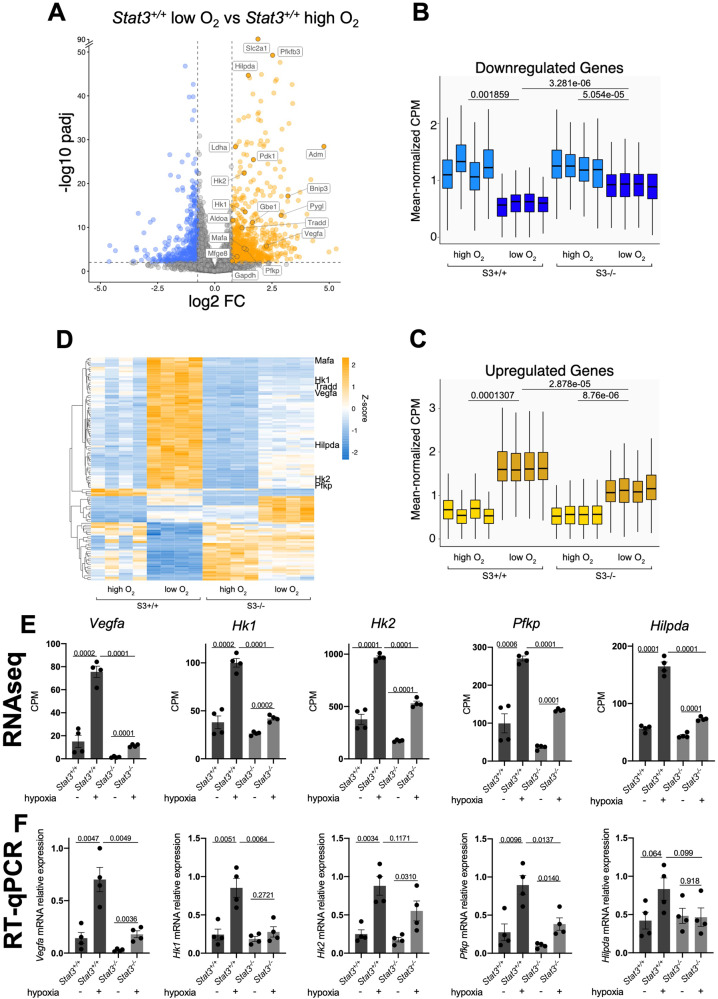
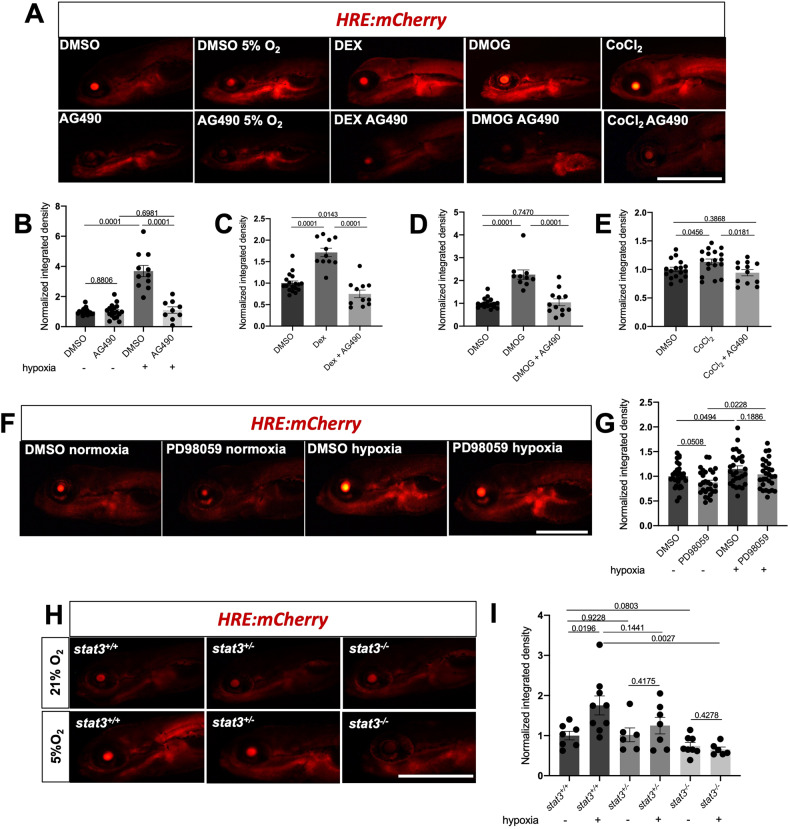
STAT3 and HIF1α are two fundamental transcription factors involved in many merging processes, like angiogenesis, metabolism, and cell differentiation. Notably, under pathological conditions, the two factors have been shown to interact genetically, but both the molecular mechanisms underlying such interactions and their relevance under physiological conditions remain unclear. In mouse embryonic stem cells (ESCs) we manage to determine the specific subset of hypoxia-induced genes that need STAT3 to be properly transcribed and, among them, fundamental genes like Vegfa, Hk1, Hk2, Pfkp and Hilpda are worth mentioning. Unexpectedly, we also demonstrated that the absence of STAT3 does not affect the expression of Hif1α mRNA nor the stabilization of HIF1α protein, but the STAT3-driven regulation of the hypoxia-dependent subset of gene could rely on the physical interaction between STAT3 and HIF1α. To further elucidate the physiological roles of this STAT3 non-canonical nuclear activity, we used a CRISPR/Cas9 zebrafish stat3 knock-out line. Notably, hypoxia-related fluorescence of the hypoxia zebrafish reporter line (HRE:mCherry) cannot be induced when Stat3 is not active and, while Stat3 Y705 phosphorylation seems to have a pivotal role in this process, S727 does not affect the Stat3-dependent hypoxia response. Hypoxia is fundamental for vascularization, angiogenesis and immune cells mobilization; all processes that, surprisingly, cannot be induced by low oxygen levels when Stat3 is genetically ablated. All in all, here we report the specific STAT3/HIF1α-dependent subset of genes in vitro and, for the first time with an in vivo model, we determined some of the physiological roles of STAT3-hypoxia crosstalk.
信号转导和转录激活因子3(STAT3)和缺氧诱导因子1α(HIF1α)是两个参与许多重要过程的关键转录因子,如血管生成、新陈代谢和细胞分化。值得注意的是,在病理条件下,这两个因子已被证明存在基因相互作用,但这种相互作用的分子机制及其在生理条件下的相关性仍不清楚。在小鼠胚胎干细胞(ESC)中,我们成功确定了缺氧诱导基因的特定子集,这些基因需要STAT3才能正常转录,其中Vegfa、Hk1、Hk2、Pfkp和Hilpda等重要基因值得一提。出乎意料的是,我们还证明,STAT3的缺失并不影响Hif1α mRNA的表达,也不影响HIF1α蛋白的稳定性,但STAT3驱动的对缺氧依赖性基因子集的调控可能依赖于STAT3与HIF1α之间的物理相互作用。为了进一步阐明这种STAT3非经典核活性的生理作用,我们使用了CRISPR/Cas9斑马鱼stat3基因敲除品系。值得注意的是,当Stat3不活跃时,缺氧斑马鱼报告基因系(HRE:mCherry)的缺氧相关荧光无法被诱导,虽然Stat3 Y705磷酸化似乎在这个过程中起关键作用,但S727并不影响Stat3依赖性缺氧反应。缺氧对于血管形成、血管生成和免疫细胞动员至关重要;令人惊讶的是,当Stat3基因被敲除时,所有这些过程都不能由低氧水平诱导。总而言之,我们在此报告了体外特定的STAT3/HIF1α依赖性基因子集,并且首次通过体内模型确定了STAT3-缺氧相互作用的一些生理作用。