Department of Healthcare Management, Policy and Economics, Faculty of Management and Medical Information Sciences, Kerman University of Medical Sciences, Kerman, 7616913555, Iran.
Health Foresight and Innovation Research Center, Institute for Futures Studies in Health, Kerman University of Medical Sciences, Kerman, Iran.
BMC Health Serv Res. 2023 Jul 6;23(1):732. doi: 10.1186/s12913-023-09507-3.
Hospitals have a vital role in the future of health systems with upcoming structure, resources, and process changes. Identifying the potential aspects of change helps managers proactively approach them, use the opportunities, and avoid threats. This study presents a mind map of future changes in Iranian hospitals to develop a base for further related studies or prepare evidence for interventions and future-related decisions.
This study is a qualitative-exploratory one, conducted in two phases. In the first phase, in-depth and semi-structured interviews were conducted to identify future hospital changes over 15 years. The interviews were analyzed using the content analysis method and MAXQDA 2018 software and holding two expert panels to develop the mind map using the 2016 Visio software.
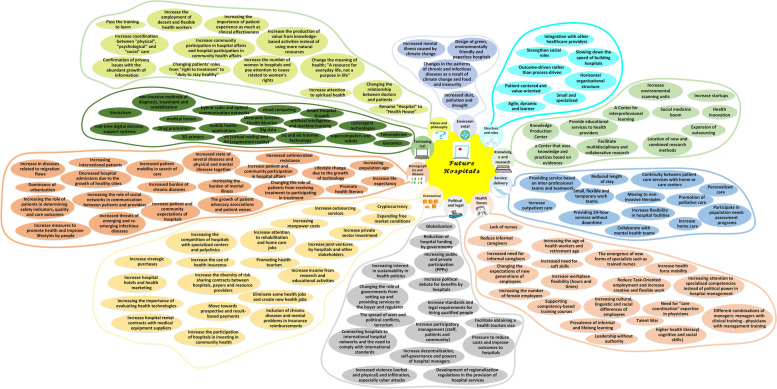
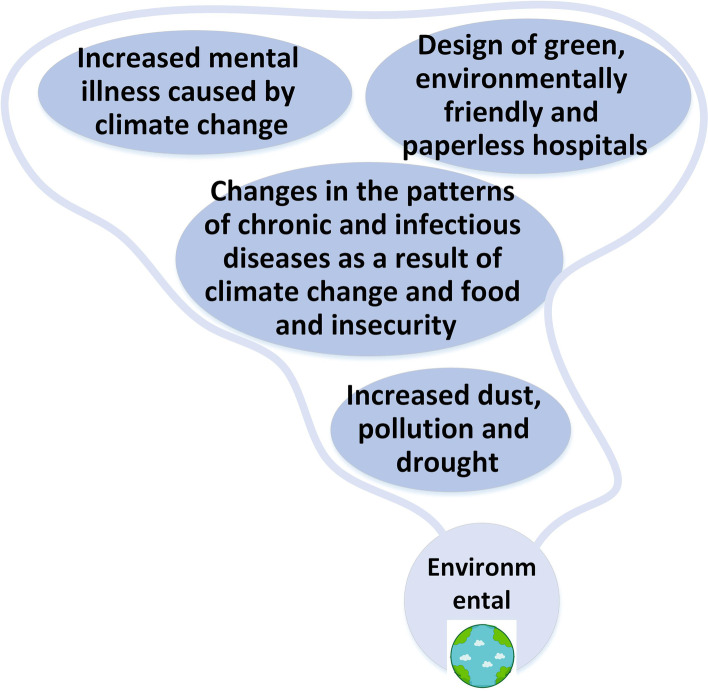
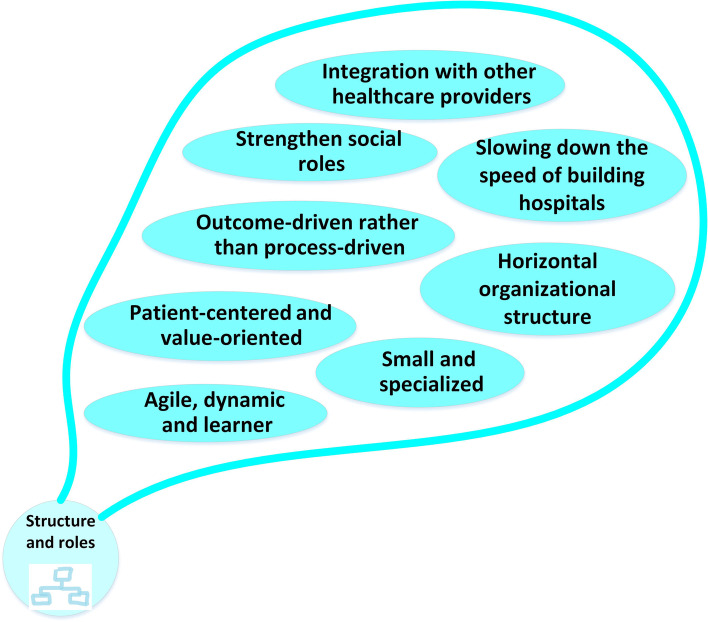
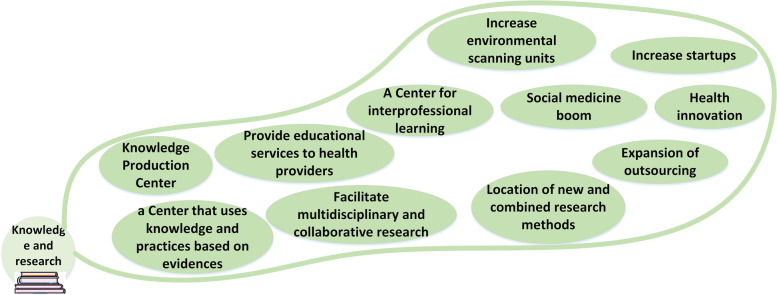
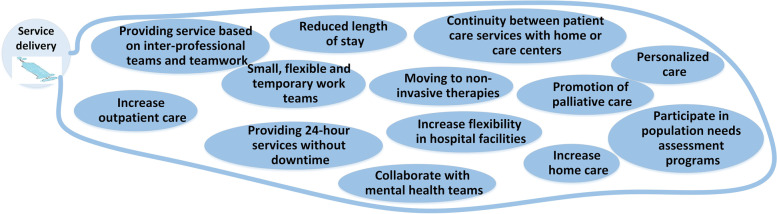
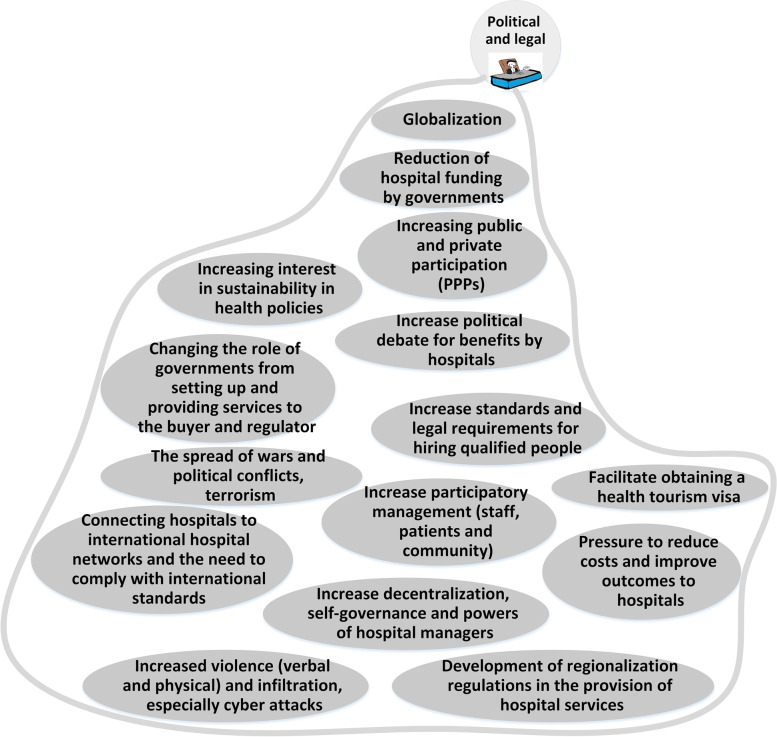
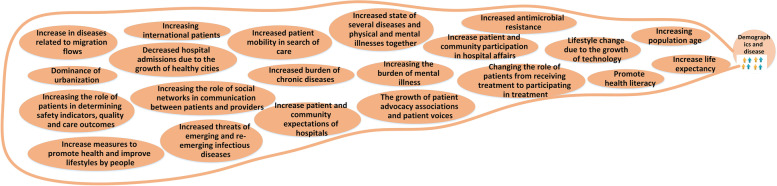
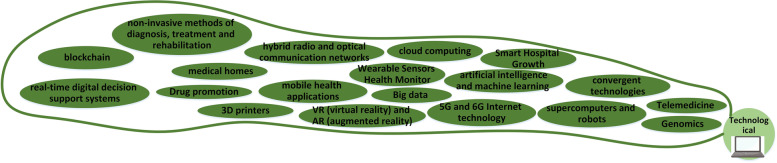
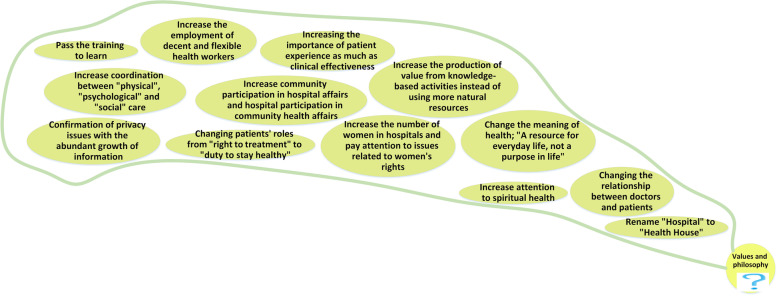
In the first phase, 33 interviews led to 144 change patterns. In the second phase, a mind map of changes was drawn according to experts' opinions with ten categories: structure and role, knowledge management and research, service delivery, health forces, political and legal, economic, demographic and disease, technological, and values and philosophy, and environmental.
Many changes affecting hospitals rooted in the past continue to the future, but the point is the increasing intensity and speed of changes. Healthcare systems need a systematic approach to monitoring the environment to be updated, agile and proactive. These monitoring systems are essential in providing evidence for Macro-level decision-makers.
随着未来结构、资源和流程的变化,医院在卫生系统的未来中发挥着至关重要的作用。识别潜在的变革方面有助于管理者主动应对,利用机遇,避免威胁。本研究提出了伊朗医院未来变革的思维导图,为进一步的相关研究奠定基础,或为干预措施和未来相关决策提供依据。
这是一项定性探索性研究,分两个阶段进行。在第一阶段,进行了深入的半结构化访谈,以确定未来 15 年内医院的变化。使用内容分析法和 MAXQDA 2018 软件对访谈进行分析,并通过召开两次专家小组会议,使用 2016 年的 Visio 软件绘制思维导图。
在第一阶段,33 次访谈导致了 144 种变革模式。在第二阶段,根据专家意见绘制了一张变革思维导图,共分为十个类别:结构和角色、知识管理和研究、服务提供、卫生力量、政治和法律、经济、人口和疾病、技术以及价值观和哲学、环境。
许多影响医院的变革源自过去,并延续到未来,但关键是变革的强度和速度不断增加。医疗保健系统需要系统地监测环境,以保持更新、灵活和积极主动。这些监测系统对于宏观层面的决策者提供证据至关重要。