Lazzerini Pietro Enea, Abbate Antonio, Boutjdir Mohamed, Capecchi Pier Leopoldo
Department of Medical Sciences, Surgery and Neurosciences, University of Siena, Siena, Italy.
Robert M. Berne Cardiovascular Research Center, Department of Medicine, Division of Cardiovascular Medicine, University of Virginia, Charlottesville, Virginia, USA.
JACC Basic Transl Sci. 2023 Feb 15;8(6):728-750. doi: 10.1016/j.jacbts.2022.12.004. eCollection 2023 Jun.
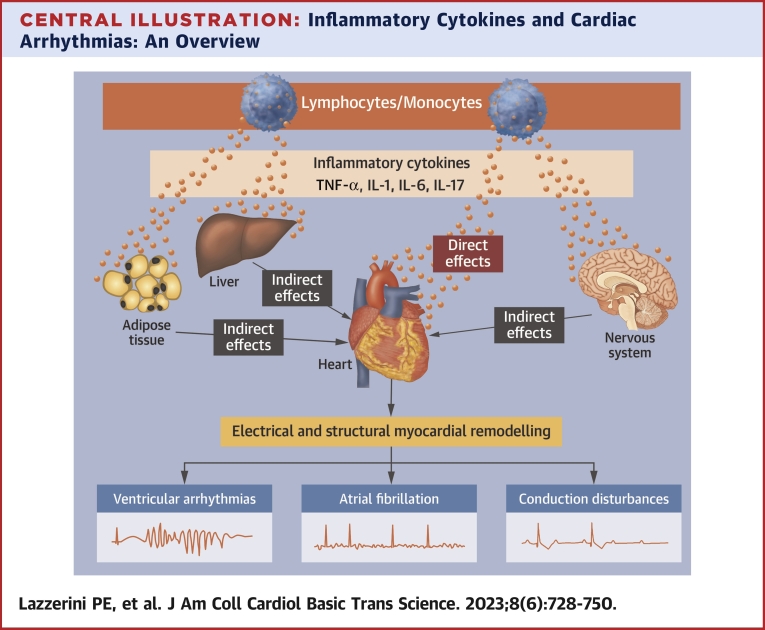
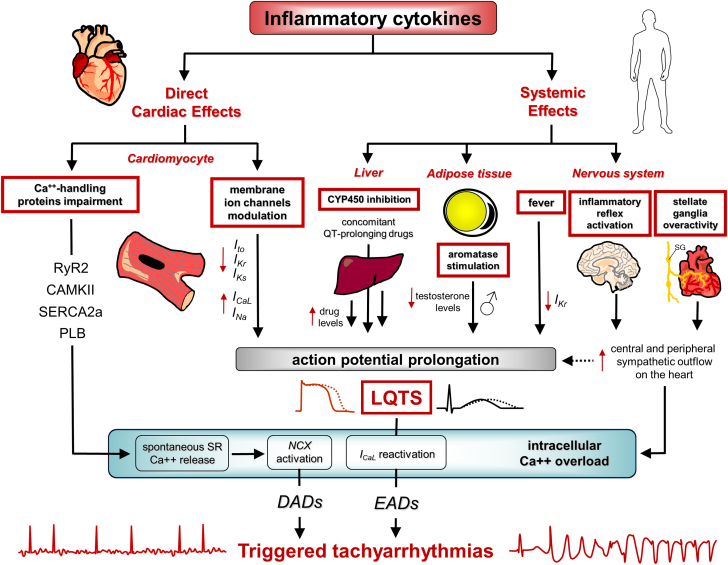
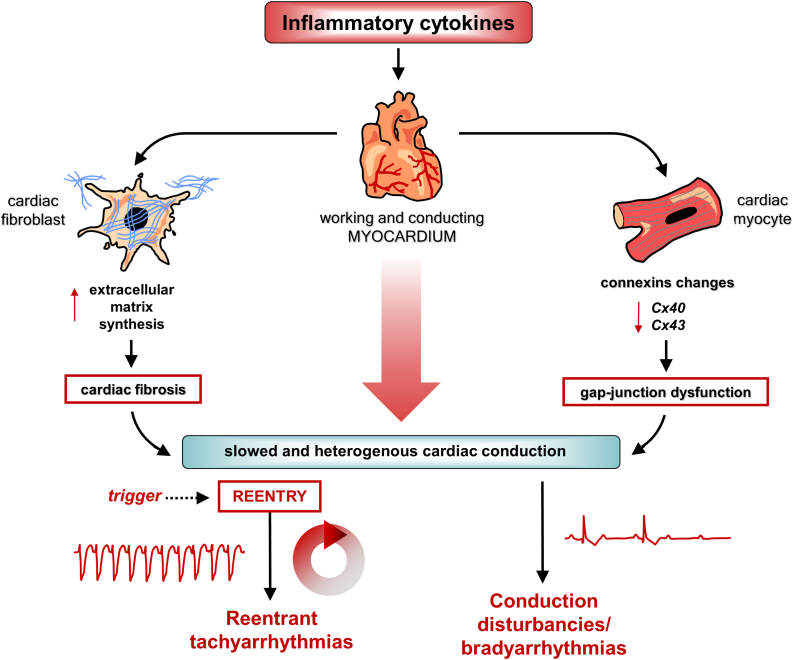
Inflammatory activation is increasingly recognized as a nonconventional risk factor for arrhythmias, and experimental studies provided robust evidence that this association is mediated by direct arrhythmogenic effects of proinflammatory cytokines on cardiac cells. Additionally, inflammatory cytokines can favor arrhythmias indirectly through multiple systemic effects. Accumulating data confirm the clinical relevance of these mechanisms; the largest evidence being available for atrial fibrillation, acquired long-QT syndrome, and ventricular arrhythmias. However, clinical management of arrhythmias largely neglects inflammatory cytokines. This review integrates basic science and clinical research to present an updated overview of the topic and provides future directions for patient's management.
炎症激活日益被认为是心律失常的一种非常规危险因素,实验研究提供了有力证据,表明这种关联是由促炎细胞因子对心脏细胞的直接致心律失常作用介导的。此外,炎性细胞因子可通过多种全身效应间接促进心律失常。越来越多的数据证实了这些机制的临床相关性;关于心房颤动、获得性长QT综合征和室性心律失常的证据最为充分。然而,心律失常的临床管理很大程度上忽视了炎性细胞因子。这篇综述整合了基础科学和临床研究,对该主题进行了最新概述,并为患者管理提供了未来方向。