Tang Xiaolong, Yan Zaihua, Miao Yandong, Ha Wuhua, Li Zheng, Yang Lixia, Mi Denghai
The First Clinical Medical College, Lanzhou University, Lanzhou, Gansu, China.
The Second Department of Gastrointestinal Surgery, Affiliated Hospital of North Sichuan Medical College, Nanchong, Sichuan, China.
Front Oncol. 2023 Jun 23;13:1209156. doi: 10.3389/fonc.2023.1209156. eCollection 2023.
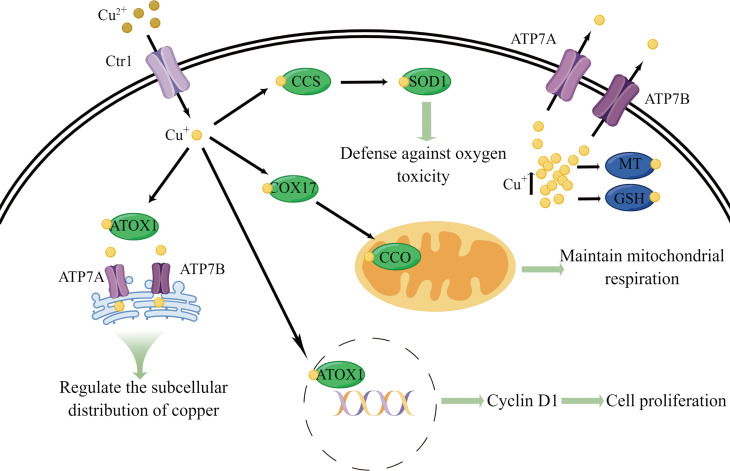
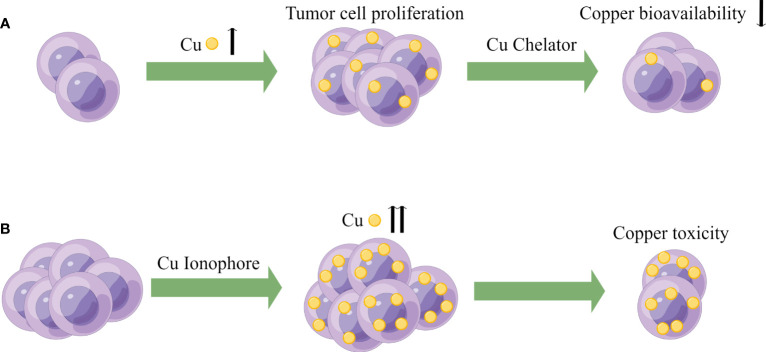
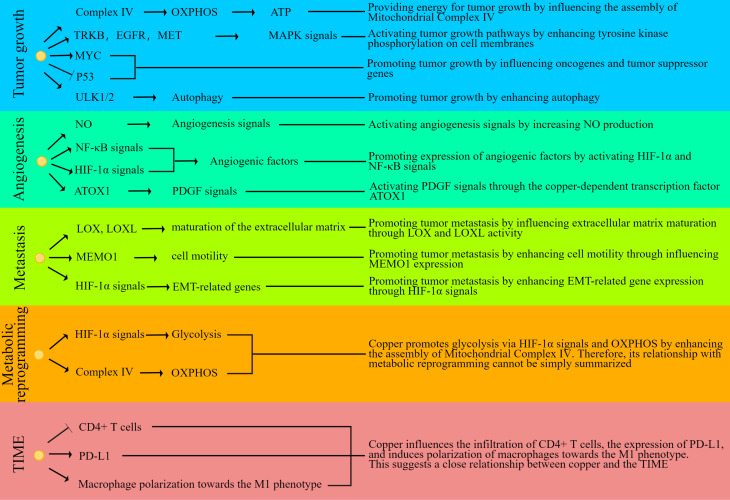
As an essential nutrient, copper's redox properties are both beneficial and toxic to cells. Therefore, leveraging the characteristics of copper-dependent diseases or using copper toxicity to treat copper-sensitive diseases may offer new strategies for specific disease treatments. In particular, copper concentration is typically higher in cancer cells, making copper a critical limiting nutrient for cancer cell growth and proliferation. Hence, intervening in copper metabolism specific to cancer cells may become a potential tumor treatment strategy, directly impacting tumor growth and metastasis. In this review, we discuss the metabolism of copper in the body and summarize research progress on the role of copper in promoting tumor cell growth or inducing programmed cell death in tumor cells. Additionally, we elucidate the role of copper-related drugs in cancer treatment, intending to provide new perspectives for cancer treatment.
作为一种必需营养素,铜的氧化还原特性对细胞既有益又有毒。因此,利用铜依赖性疾病的特征或利用铜毒性来治疗对铜敏感的疾病可能为特定疾病的治疗提供新策略。特别是,癌细胞中的铜浓度通常较高,这使得铜成为癌细胞生长和增殖的关键限制营养素。因此,干预癌细胞特有的铜代谢可能成为一种潜在的肿瘤治疗策略,直接影响肿瘤的生长和转移。在这篇综述中,我们讨论了体内铜的代谢,并总结了铜在促进肿瘤细胞生长或诱导肿瘤细胞程序性死亡方面作用的研究进展。此外,我们阐明了铜相关药物在癌症治疗中的作用,旨在为癌症治疗提供新的视角。