Varkey Biji P, Joseph Jaison, Haokip Hoineiting Rebecca, Sharma Suresh K, Mathews Elezebeth, Ameen Shahul, Narasimha Venkata Lakshmi, Dhandapani Manju, Grover Sandeep
Government of Kerala, Thiruvananthapuram, Kerala, India.
Dept. of Psychiatric Nursing, College of Nursing, Pt. B.D. Sharma University of Health Sciences, Rohtak, Haryana, India.
Indian J Psychol Med. 2023 Jul;45(4):338-344. doi: 10.1177/02537176221130252. Epub 2022 Oct 27.
Patients with dementia usually have multiple comorbidities. The presence of comorbidities may exacerbate the progression of dementia and decreases the patient's ability to participate in health maintenance activities. However, there is hardly any meta-analysis estimating the magnitude of comorbidities among patients with dementia in the Indian context.
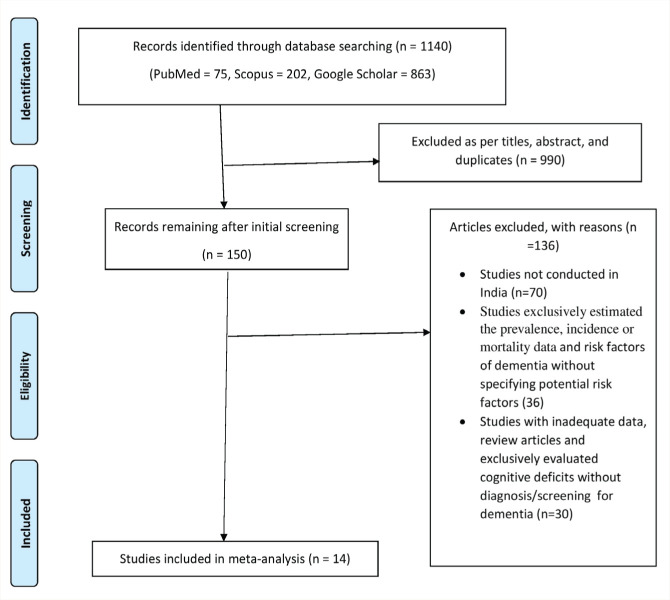
We searched PubMed, Scopus, and Google Scholar, and relevant studies conducted in India were included. The risk of bias was assessed and a random-effects meta-analysis model was used in which I statistics were calculated to measure heterogeneity among studies.
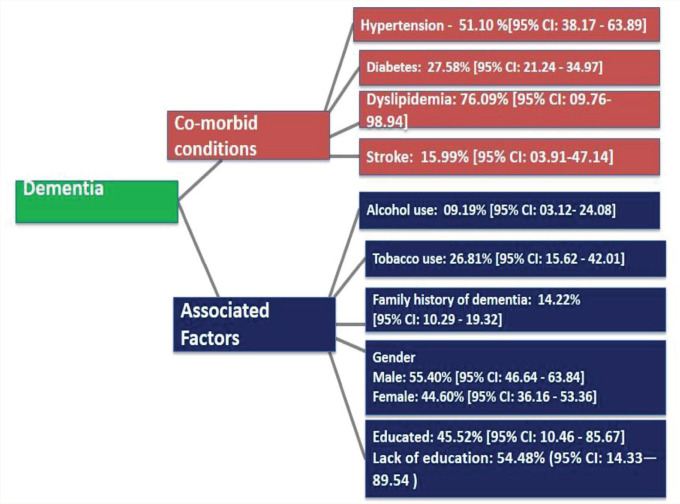
Fourteen studies were included in the meta-analysis based on the inclusion and exclusion criteria. Altogether, we found the coexistence of comorbid conditions such as hypertension (51.10%), diabetes (27.58%), stroke (15.99%), and factors like tobacco use (26.81 %) and alcohol use (9.19%) among patients with dementia in this setting. The level of heterogeneity was high due to differences in the methodologies in the included studies.
Our study found hypertension as the most common comorbid condition among patients with dementia in India. The observed lacuna of methodological limitations in the studies included in the current meta-analysis provides the urgent need for good quality research to successfully meet the challenges ahead while devising appropriate strategies to treat the comorbidities among patients with dementia.
痴呆症患者通常有多种合并症。合并症的存在可能会加剧痴呆症的进展,并降低患者参与健康维持活动的能力。然而,在印度背景下,几乎没有任何荟萃分析来估计痴呆症患者中合并症的严重程度。
我们检索了PubMed、Scopus和谷歌学术,并纳入了在印度进行的相关研究。评估了偏倚风险,并使用随机效应荟萃分析模型,计算I统计量以衡量研究之间的异质性。
根据纳入和排除标准,有14项研究被纳入荟萃分析。我们总共发现,在这种情况下,痴呆症患者中存在高血压(51.10%)、糖尿病(27.58%)、中风(15.99%)等合并症,以及吸烟(26.81%)和饮酒(9.19%)等因素。由于纳入研究的方法存在差异,异质性水平较高。
我们的研究发现,高血压是印度痴呆症患者中最常见的合并症。当前荟萃分析中纳入的研究存在方法学局限性这一空白,迫切需要高质量的研究,以便在制定治疗痴呆症患者合并症的适当策略时,成功应对未来的挑战。