Department of Biochemistry, University of Colorado Boulder, Boulder, CO 80303, USA; BioFrontiers Institute, University of Colorado Boulder, Boulder, CO 80303, USA.
Department of Biochemistry, University of Colorado Boulder, Boulder, CO 80303, USA; BioFrontiers Institute, University of Colorado Boulder, Boulder, CO 80303, USA.
Cell Rep. 2023 Jul 25;42(7):112768. doi: 10.1016/j.celrep.2023.112768. Epub 2023 Jul 9.
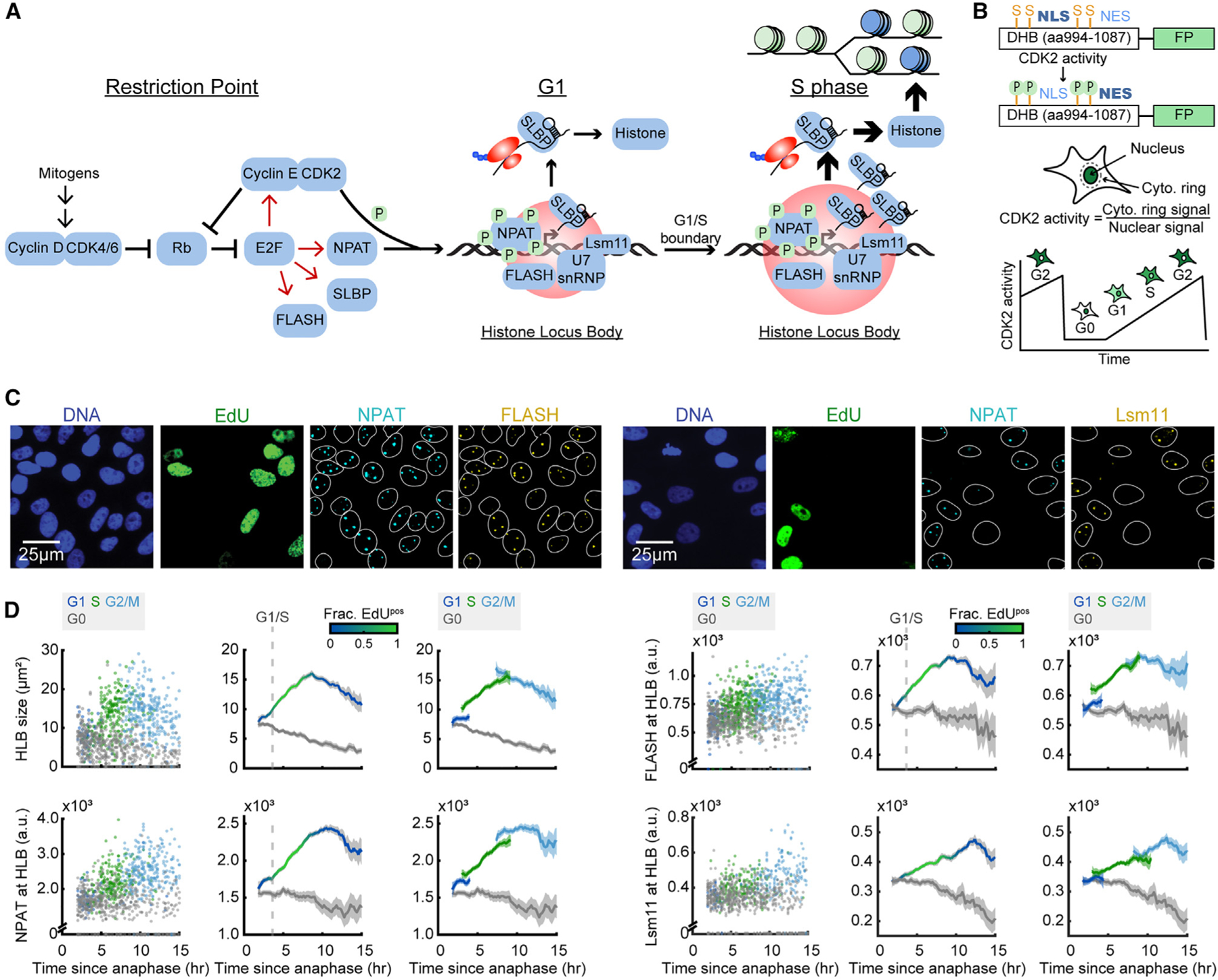
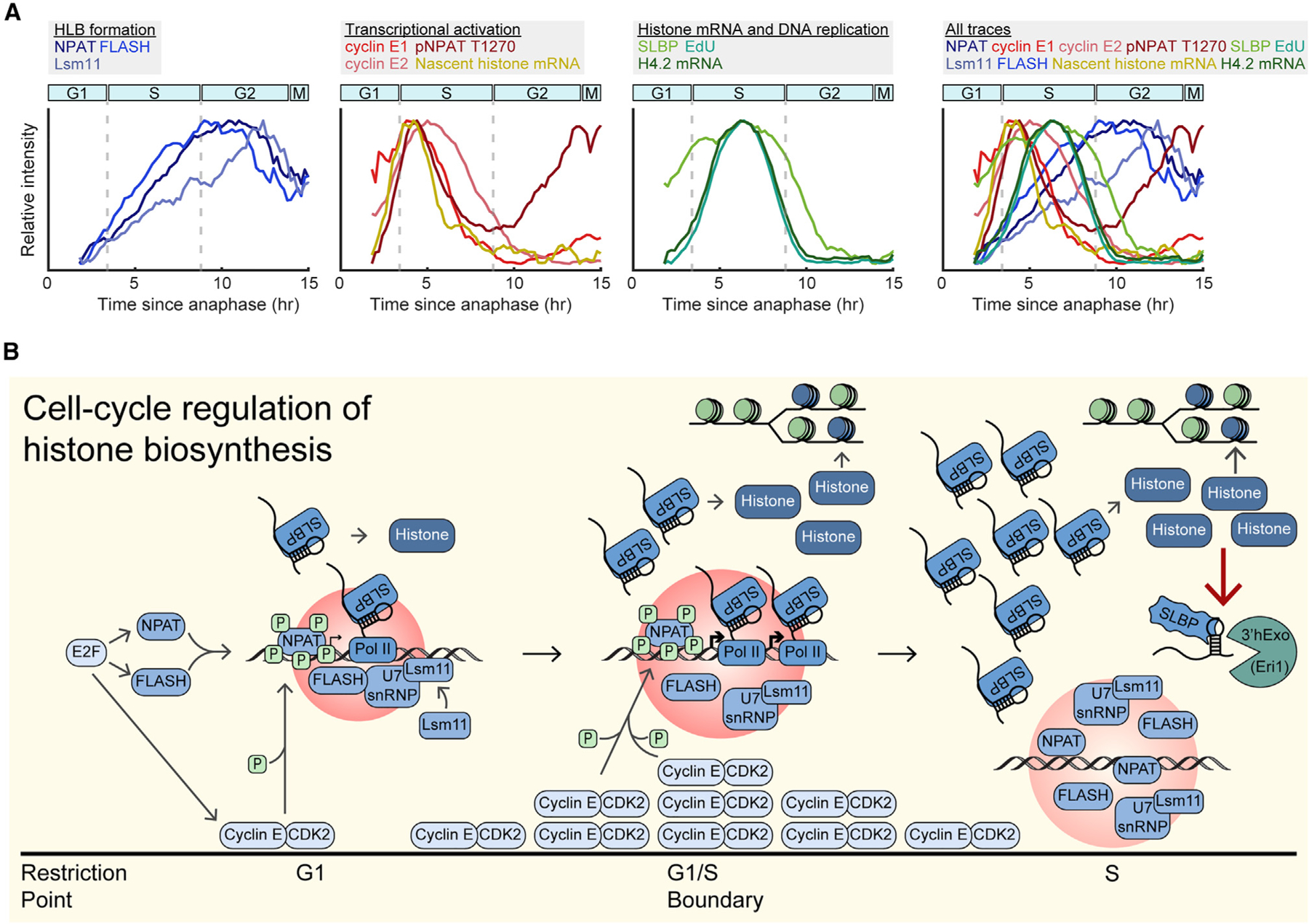
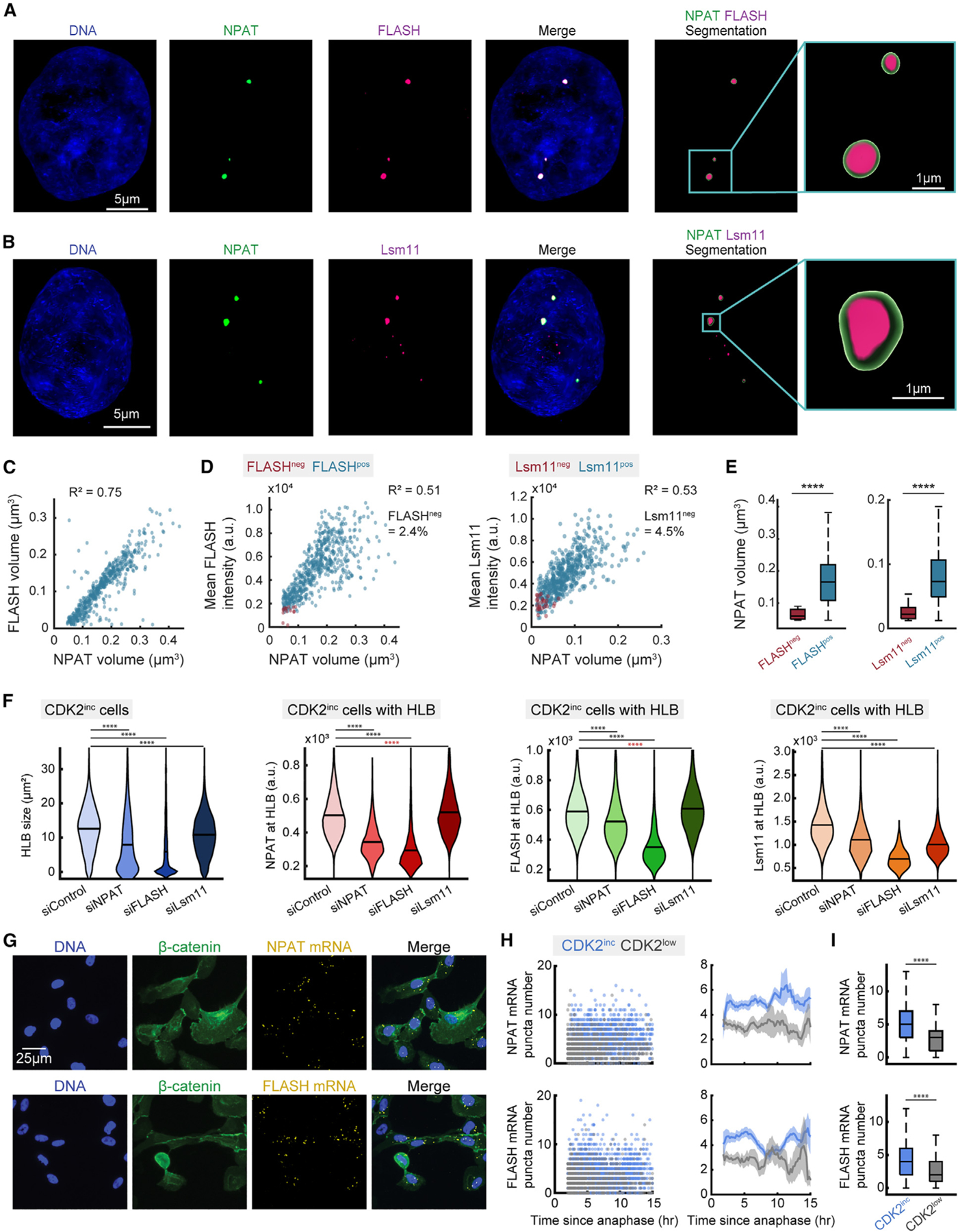
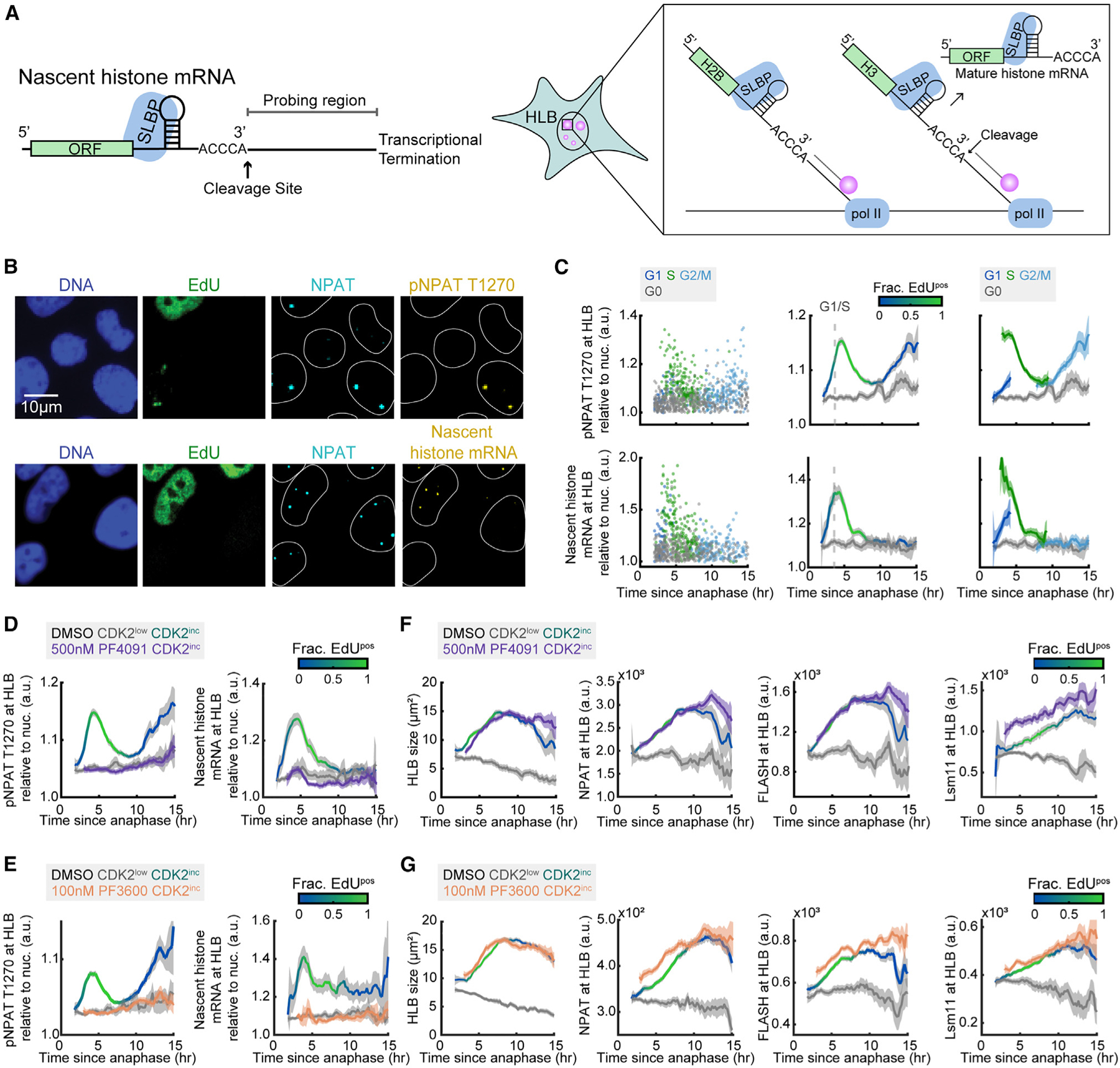
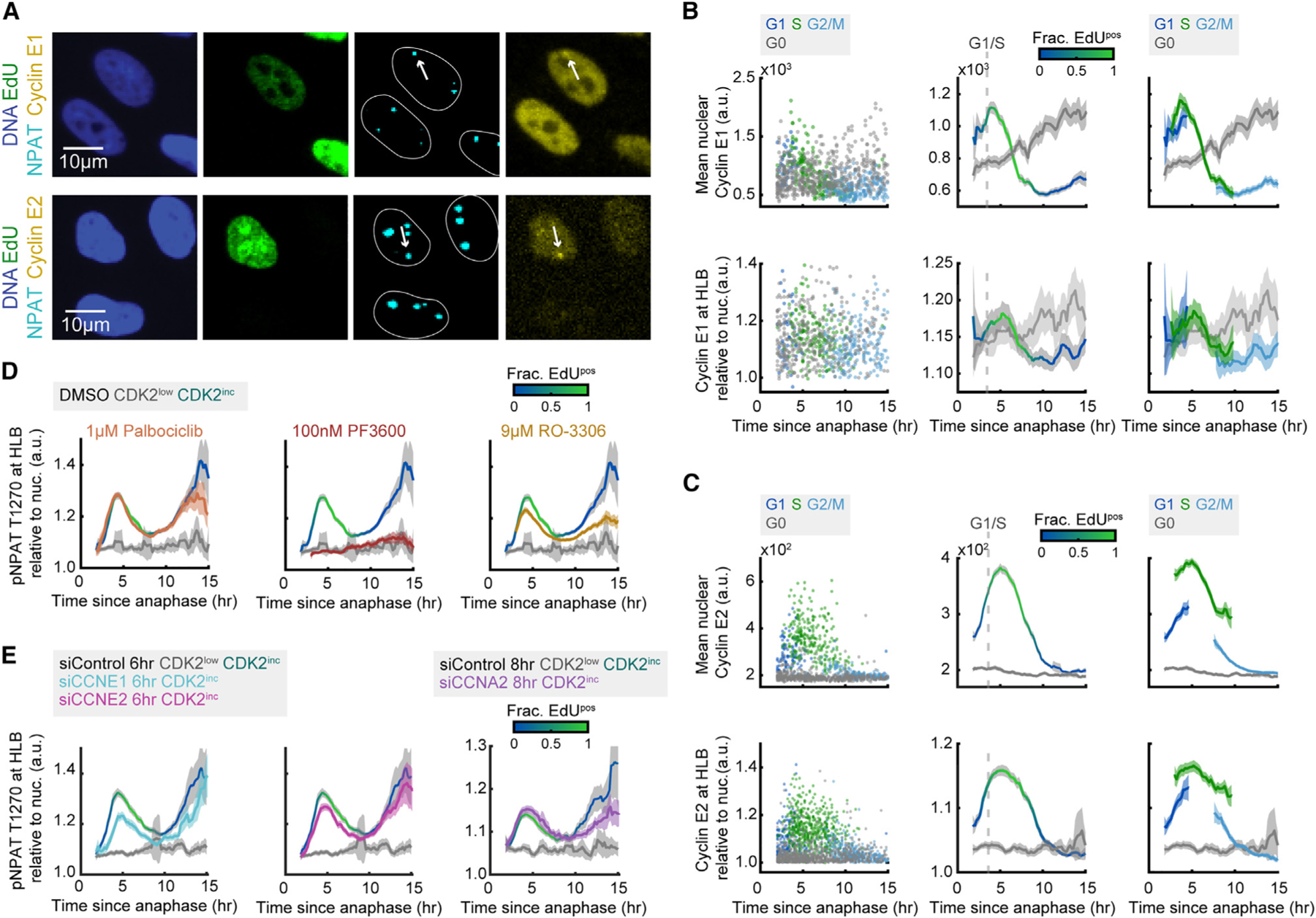
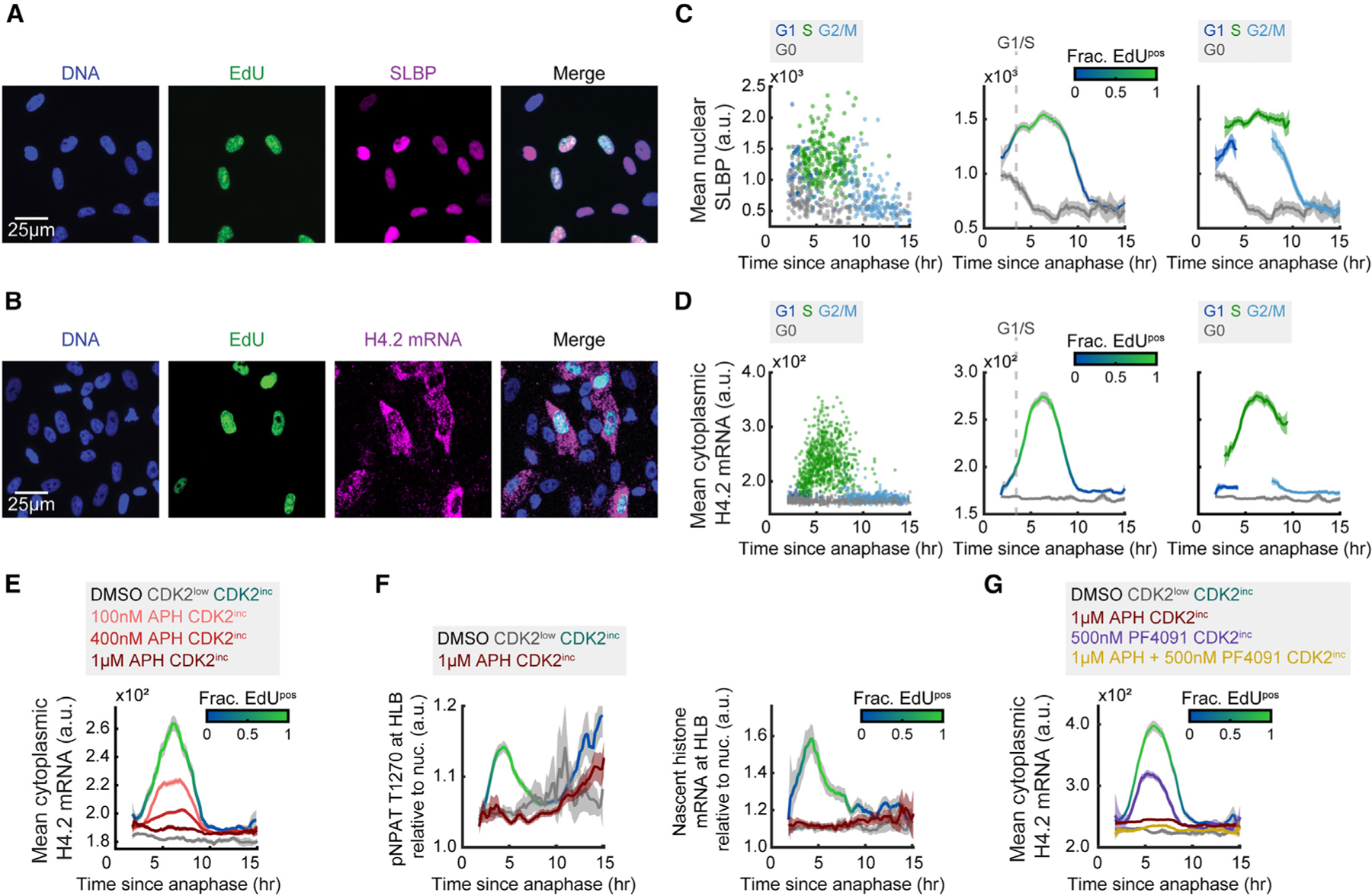
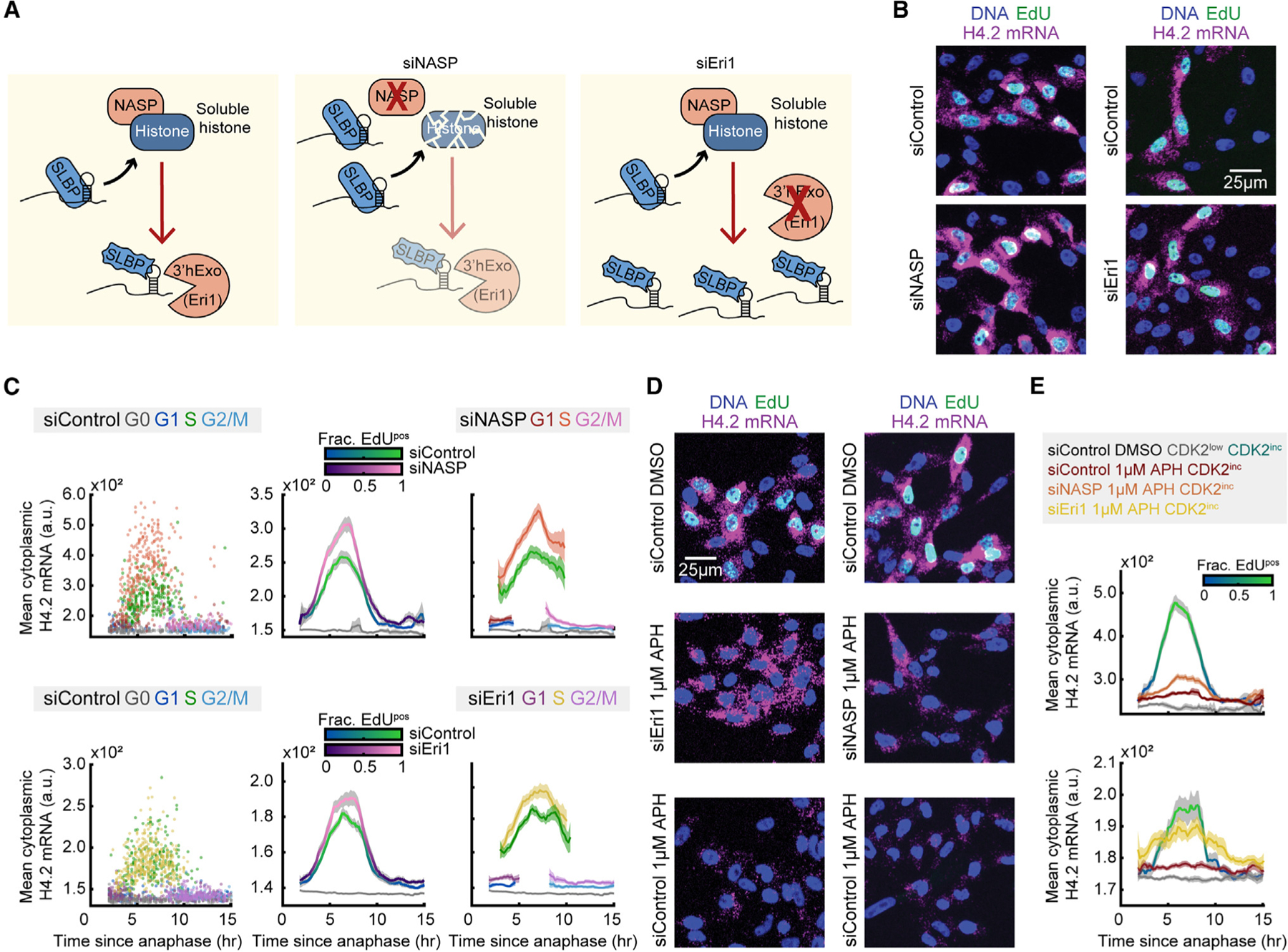
Faithful DNA replication requires that cells fine-tune their histone pool in coordination with cell-cycle progression. Replication-dependent histone biosynthesis is initiated at a low level upon cell-cycle commitment, followed by a burst at the G1/S transition, but it remains unclear how exactly the cell regulates this burst in histone biosynthesis as DNA replication begins. Here, we use single-cell time-lapse imaging to elucidate the mechanisms by which cells modulate histone production during different phases of the cell cycle. We find that CDK2-mediated phosphorylation of NPAT at the restriction point triggers histone transcription, which results in a burst of histone mRNA precisely at the G1/S phase boundary. Excess soluble histone protein further modulates histone abundance by promoting the degradation of histone mRNA for the duration of S phase. Thus, cells regulate their histone production in strict coordination with cell-cycle progression by two distinct mechanisms acting in concert.
忠实的 DNA 复制需要细胞在与细胞周期进程协调的情况下微调其组蛋白池。复制依赖性组蛋白生物合成在细胞周期承诺后以低水平开始,随后在 G1/S 转换时爆发,但仍不清楚细胞如何在 DNA 复制开始时精确调节组蛋白生物合成的爆发。在这里,我们使用单细胞延时成像来阐明细胞在细胞周期的不同阶段调节组蛋白产生的机制。我们发现,限制点处 CDK2 介导的 NPAT 磷酸化触发组蛋白转录,导致组蛋白 mRNA 在 G1/S 期边界处爆发。过量的可溶性组蛋白蛋白通过在 S 期的持续时间内促进组蛋白 mRNA 的降解进一步调节组蛋白丰度。因此,细胞通过两种协同作用的不同机制严格协调细胞周期进程来调节其组蛋白产生。