College of Information Science and Engineering, Shandong Agricultural University, Tai'an 271018, China.
Sensors (Basel). 2023 May 18;23(10):4880. doi: 10.3390/s23104880.
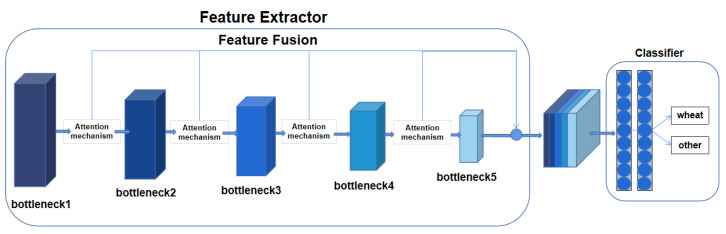
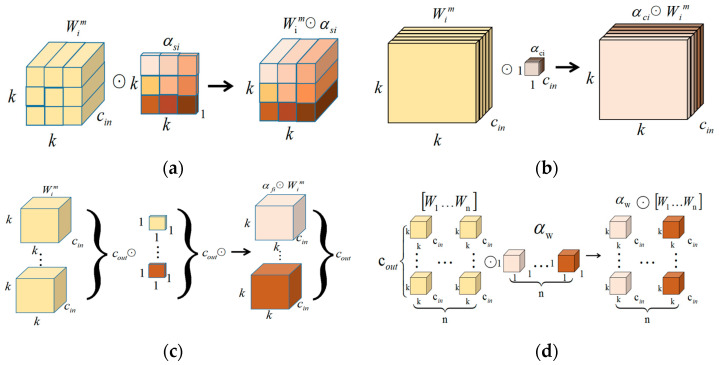
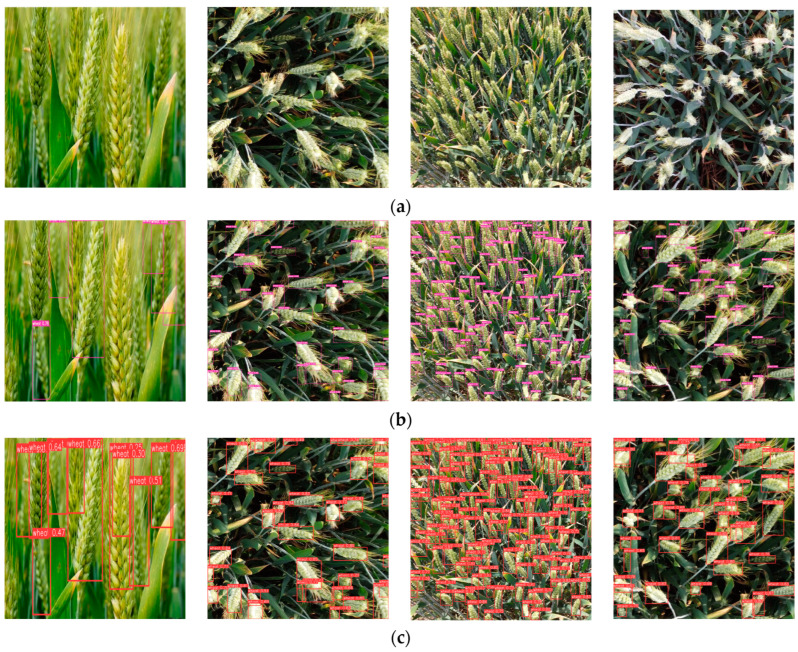
The number of wheat ears in a field is an important parameter for accurately estimating wheat yield. In a large field, however, it is hard to conduct an automated and accurate counting of wheat ears because of their density and mutual overlay. Unlike the majority of the studies conducted on deep learning-based methods that usually count wheat ears via a collection of static images, this paper proposes a counting method based directly on a UAV video multi-objective tracking method and better counting efficiency results. Firstly, we optimized the YOLOv7 model because the basis of the multi-target tracking algorithm is target detection. Simultaneously, the omni-dimensional dynamic convolution (ODConv) design was applied to the network structure to significantly improve the feature-extraction capability of the model, strengthen the interaction between dimensions, and improve the performance of the detection model. Furthermore, the global context network (GCNet) and coordinate attention (CA) mechanisms were adopted in the backbone network to implement the effective utilization of wheat features. Secondly, this study improved the DeepSort multi-objective tracking algorithm by replacing the DeepSort feature extractor with a modified ResNet network structure to achieve a better extraction of wheat-ear-feature information, and the constructed dataset was then trained for the re-identification of wheat ears. Finally, the improved DeepSort algorithm was used to calculate the number of different IDs that appear in the video, and an improved method based on YOLOv7 and DeepSort algorithms was then created to calculate the number of wheat ears in large fields. The results show that the mean average precision (mAP) of the improved YOLOv7 detection model is 2.5% higher than that of the original YOLOv7 model, reaching 96.2%. The multiple-object tracking accuracy (MOTA) of the improved YOLOv7-DeepSort model reached 75.4%. By verifying the number of wheat ears captured by the UAV method, it can be determined that the average value of an L1 loss is 4.2 and the accuracy rate is between 95 and 98%; thus, detection and tracking methods can be effectively performed, and the efficient counting of wheat ears can be achieved according to the ID value in the video.
田间小麦穗数是准确估算小麦产量的一个重要参数。然而,在大面积的麦田中,由于小麦穗的密度和相互重叠,很难进行自动化和精确的穗数计数。与大多数基于深度学习方法的研究不同,这些研究通常通过收集静态图像来计算小麦穗数,本文提出了一种直接基于无人机视频多目标跟踪方法的计数方法,取得了更好的计数效率。首先,我们优化了 YOLOv7 模型,因为多目标跟踪算法的基础是目标检测。同时,在网络结构中应用了全维动态卷积(ODConv)设计,显著提高了模型的特征提取能力,增强了维度之间的交互作用,提高了检测模型的性能。此外,在骨干网络中采用了全局上下文网络(GCNet)和坐标注意力(CA)机制,实现了小麦特征的有效利用。其次,本研究通过用改进的 ResNet 网络结构替换 DeepSort 特征提取器,对 DeepSort 多目标跟踪算法进行了改进,实现了对小麦穗特征信息的更好提取,并对构建的数据集进行了重新识别小麦穗的训练。最后,利用改进的 DeepSort 算法计算视频中不同 ID 出现的次数,并创建了一种基于 YOLOv7 和 DeepSort 算法的改进方法来计算大面积麦田中的小麦穗数。结果表明,改进后的 YOLOv7 检测模型的平均精度(mAP)比原始 YOLOv7 模型高 2.5%,达到 96.2%。改进后的 YOLOv7-DeepSort 模型的多目标跟踪精度(MOTA)达到 75.4%。通过验证无人机方法捕获的小麦穗数,可以确定 L1 损失的平均值为 4.2,准确率在 95%到 98%之间;因此,可以有效地进行检测和跟踪,根据视频中的 ID 值实现小麦穗的高效计数。