Laurén Eva, Sankkila Lotta, Pettilä Ville, Kerkelä Erja
Finnish Red Cross Blood Service, Helsinki, Finland.
Department of Intensive Care Medicine, Department of Anesthesiology, Intensive Care and Pain Medicine, University of Helsinki and Helsinki University Hospital, Helsinki, Finland.
Transfus Med Hemother. 2022 Nov 4;50(3):208-217. doi: 10.1159/000525706. eCollection 2023 Jun.
Red blood cell (RBC) transfusion may affect the recipient immune system. During RBC storage in an unphysiological environment, RBC quality and function are impaired, the cells bleb extracellular vesicles (EVs), and other bioactive substances accumulate in the storage medium. EVs can carry reactive biomolecules and mediate cell-cell interactions. Thus, EVs could explain RBC transfusion related immunomodulation, particularly after prolonged storage.
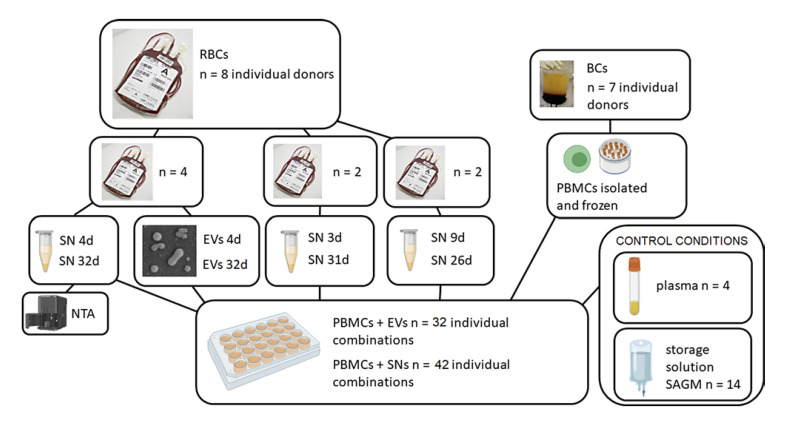
We exposed peripheral blood mononuclear cells (PBMCs) to allogeneic RBC supernatant (SN) and EVs from fresh and longer-stored RBC units, diluted plasma, and storage solution SAGM, and studied activation and proliferation of T-cells by flow cytometry, and cytokine secretion of LPS-stimulated PBMCs by enzyme-linked immunosorbent assay (ELISA).
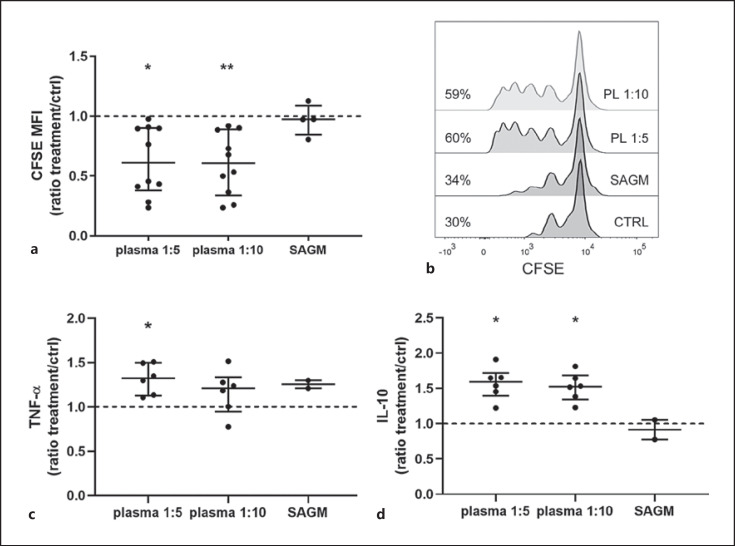
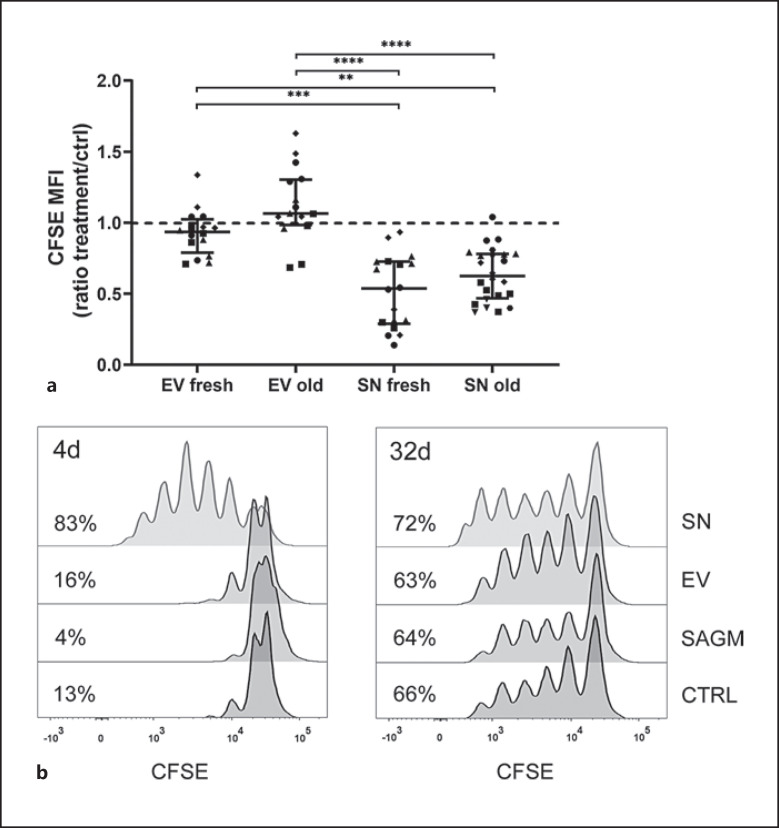
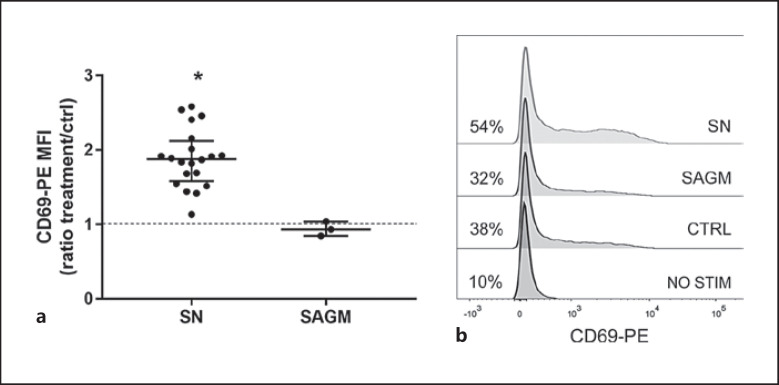
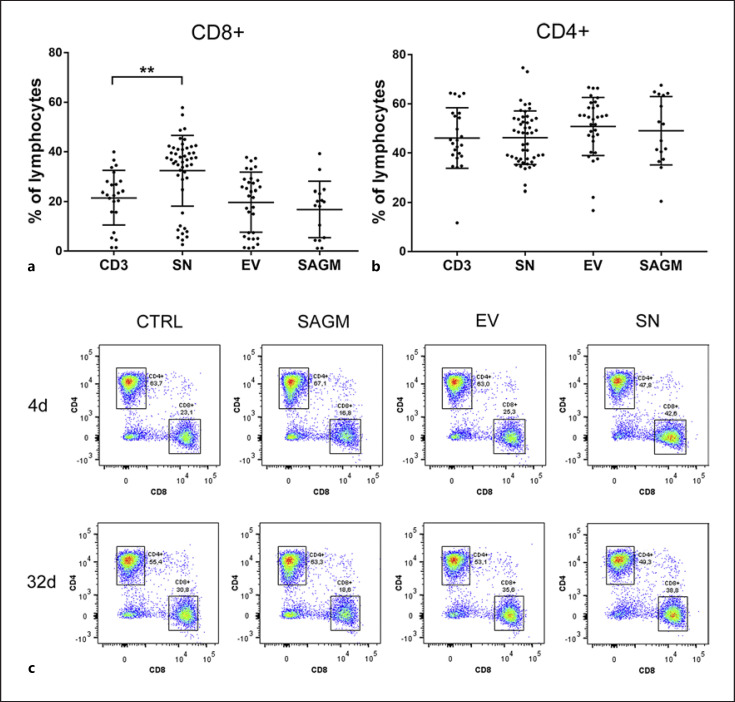
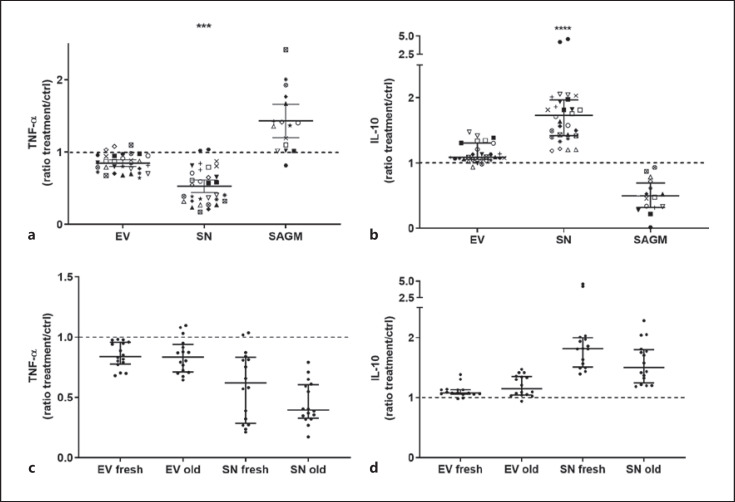
Both fresh and longer-stored RBC SN but not EVs induced immunomodulation in recipient cells. RBC SN and diluted plasma augmented the proliferation of particularly CD8 T-cells in a 4-day proliferation assay. T-cell activation by SN was evident already after 5 h as shown by upregulation of CD69. SN suppressed monocyte TNF-α and increased IL-10 secretion while diluted plasma increased secretion of both cytokines.
This in vitro study demonstrates that stored RBC SN will have mixed immunomodulatory effects depending on responder cells and conditions, independent of RBC storage age. Fresh RBCs containing relatively few EVs can induce immune responses. Residual plasma in the products may contribute to these effects.
红细胞(RBC)输血可能会影响受者的免疫系统。在非生理环境中储存红细胞期间,红细胞的质量和功能会受损,细胞会形成泡状细胞外囊泡(EVs),并且其他生物活性物质会在储存介质中积累。细胞外囊泡可以携带反应性生物分子并介导细胞间相互作用。因此,细胞外囊泡可以解释与红细胞输血相关的免疫调节,特别是在长期储存之后。
我们将外周血单个核细胞(PBMCs)暴露于来自新鲜和长期储存的红细胞单位、稀释血浆和储存溶液SAGM的同种异体红细胞上清液(SN)和细胞外囊泡中,并通过流式细胞术研究T细胞的活化和增殖,以及通过酶联免疫吸附测定(ELISA)研究脂多糖刺激的PBMCs的细胞因子分泌。
新鲜和长期储存的红细胞上清液均可诱导受者细胞的免疫调节,但细胞外囊泡则不能。在为期4天的增殖试验中,红细胞上清液和稀释血浆可增强尤其是CD8 T细胞的增殖。如CD69上调所示,上清液对T细胞的激活在5小时后就很明显。上清液抑制单核细胞TNF-α并增加IL-10分泌,而稀释血浆则增加两种细胞因子的分泌。
这项体外研究表明,储存的红细胞上清液将根据反应细胞和条件产生混合的免疫调节作用,与红细胞储存时间无关。含有相对较少细胞外囊泡的新鲜红细胞可诱导免疫反应。产品中的残留血浆可能会导致这些影响。