Department of Human Neuroscience, Sapienza University of Rome, Viale Università 30, 00185, Rome, Italy.
Department of Statistical Sciences, Sapienza University of Rome, Rome, Italy.
Neurol Sci. 2023 Dec;44(12):4465-4472. doi: 10.1007/s10072-023-06923-5. Epub 2023 Jul 12.
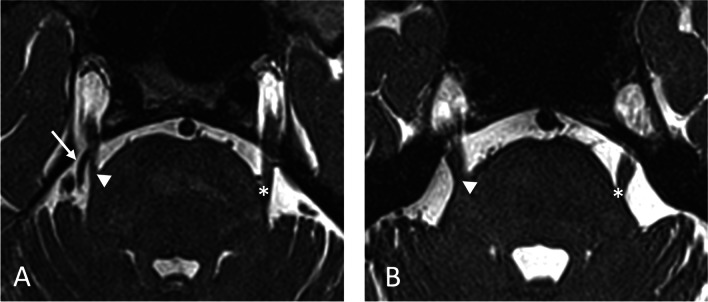
It is well established that trigeminal neuralgia is more prevalent in females than in males. Neurovascular compression with morphological changes of the trigeminal root represents the most recognized etiological factor. However, other factors may play a role in the framework of a multi-hit model. The primary aim of this study was to investigate sex differences in radiological and clinical characteristics of trigeminal neuralgia to better understand the multifactorial origin of this peculiar neuropathic pain condition.
In this cross-sectional study patients with a definite diagnosis of primary trigeminal neuralgia were consecutively enrolled. Each patient underwent 3T MRI with sequences dedicated to the study of neurovascular compression. Major morphological changes of the trigeminal root were quantitatively assessed. Clinical characteristics were systematically collected through a dedicated questionnaire. A logistic regression model was implemented to predict radiological and clinical characteristics based on sex.
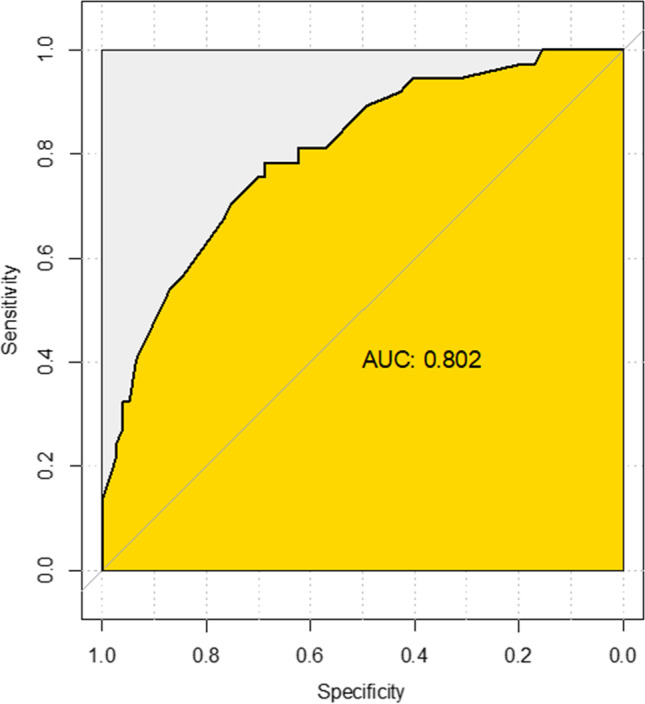
A total of 114 patients with classical (87) or idiopathic trigeminal neuralgia (27) were enrolled. Female sex was predictive for idiopathic trigeminal neuralgia. Male sex was predictive, among the comorbidities and clinical characteristics, for hypertension, the involvement of the left side and the second trigeminal division, alone or with the ophthalmic division.
The preponderance of TN in the female sex and the association between idiopathic TN and the female sex suggest the role of additional etiological factors in the framework of a multi-hit model. The identification of clinical variables predicted by sex suggests the possibility that distinct phenotypes, with peculiar pathophysiological and therapeutic aspects, may occur in females and males.
众所周知,三叉神经痛在女性中比在男性中更为普遍。三叉神经根的神经血管压迫伴形态学改变代表了最被认可的病因因素。然而,在多因素模型中,其他因素可能起作用。本研究的主要目的是研究三叉神经痛的影像学和临床特征中的性别差异,以便更好地理解这种特殊神经病理性疼痛疾病的多因素起源。
在这项横断面研究中,连续纳入了明确诊断为原发性三叉神经痛的患者。每位患者均接受了 3T MRI 检查,包括专门用于研究神经血管压迫的序列。定量评估三叉神经根的主要形态学改变。通过专门的问卷系统地收集临床特征。实施逻辑回归模型,根据性别预测影像学和临床特征。
共纳入了 114 例经典(87 例)或特发性三叉神经痛(27 例)患者。女性性别是特发性三叉神经痛的预测因素。男性性别是高血压、左侧受累以及第二三叉神经分支受累的预测因素,单独或与眼支受累有关。
三叉神经痛在女性中的优势以及特发性三叉神经痛与女性之间的关联表明,在多因素模型中存在其他病因因素。通过性别预测的临床变量的识别表明,女性和男性可能存在不同的表型,具有特殊的病理生理和治疗方面。