College of Animal Science and Technology, Yangzhou University, Yangzhou, Jiangsu, People's Republic of China.
State Key Laboratory of Sheep Genetic Improvement and Healthy Production, Xinjiang Academy of Agricultural Reclamation Sciences, Shihezi, Xinjiang, People's Republic of China.
Microbiol Spectr. 2023 Aug 17;11(4):e0534322. doi: 10.1128/spectrum.05343-22. Epub 2023 Jul 13.
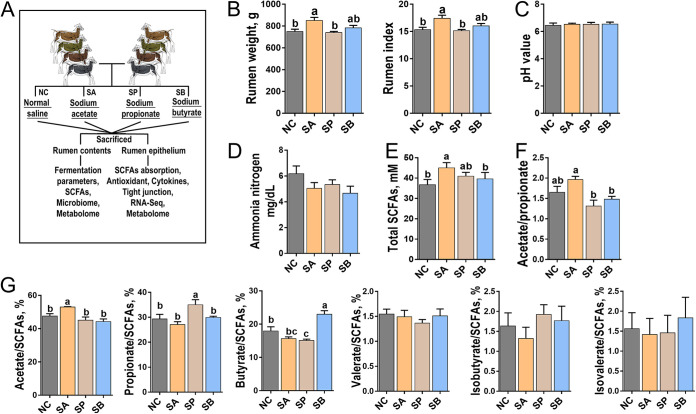
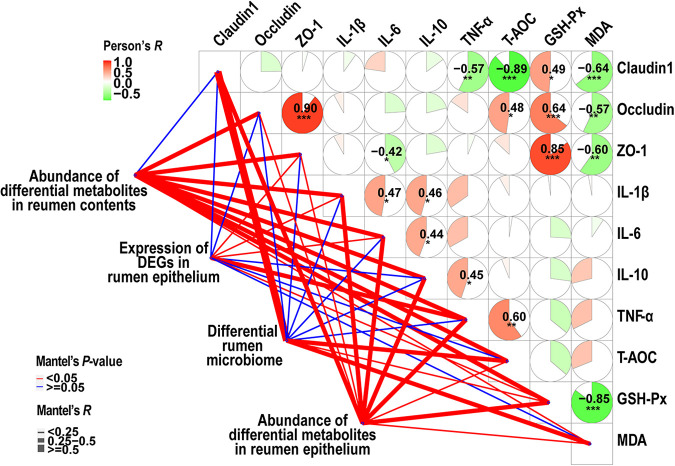
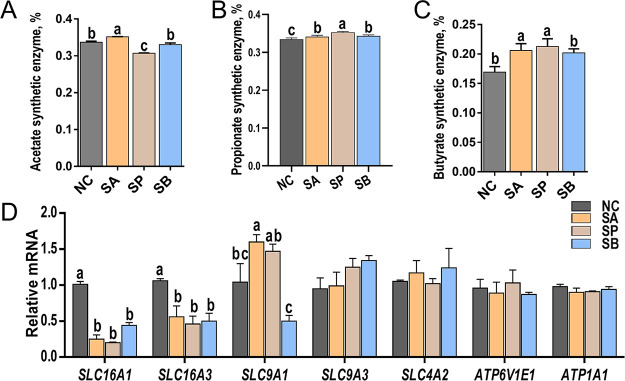
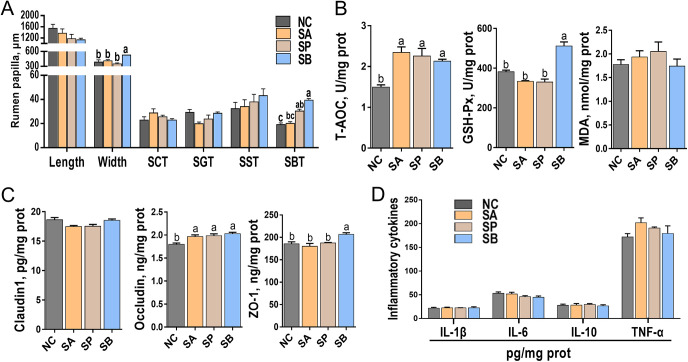
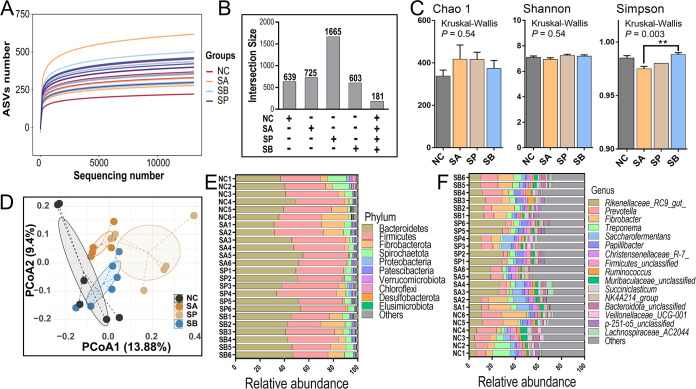
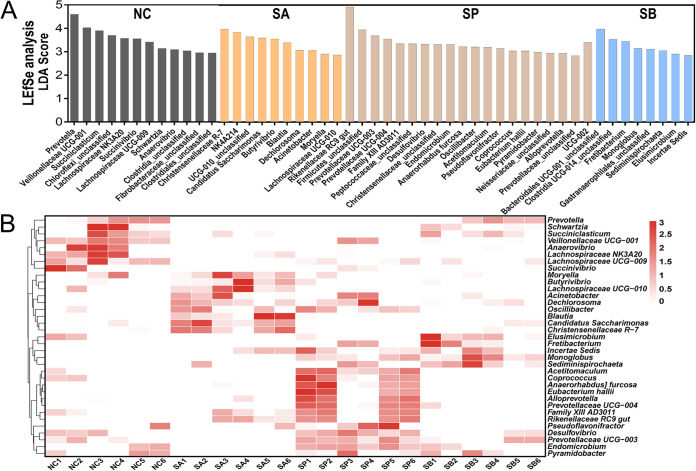
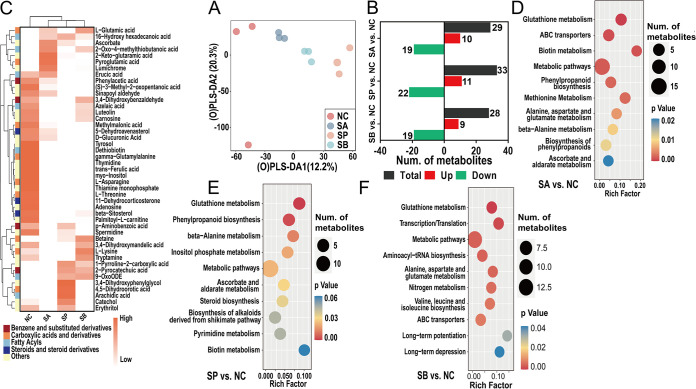
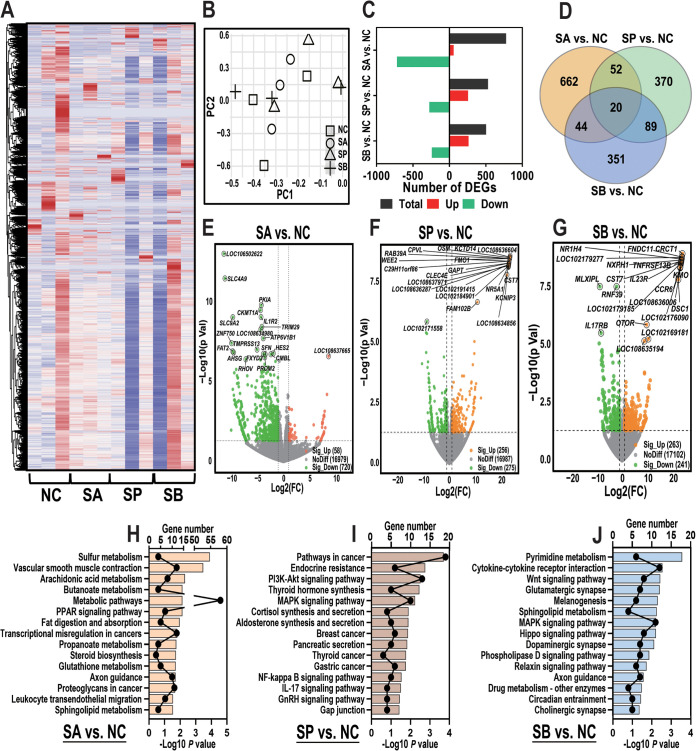
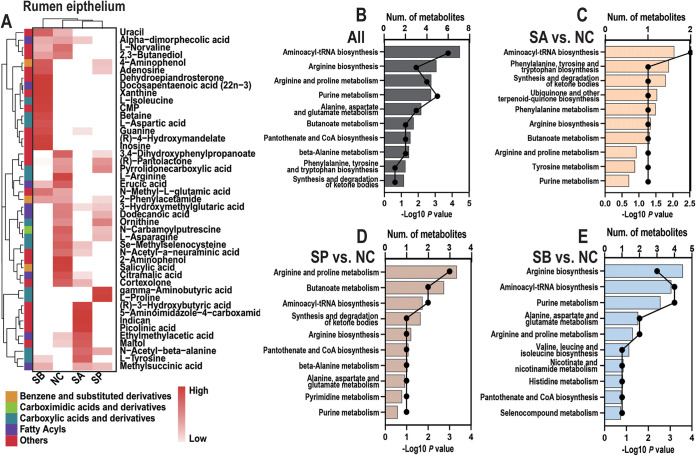
Emerging data have underscored the significance of exogenous supplementation of butyrate in the regulation of rumen development and homeostasis. However, the effects of other short-chain fatty acids (SCFAs), such as acetate or propionate, has received comparatively less attention, and the consequences of extensive exogenous SCFA infusion remain largely unknown. In our study, we conducted a comprehensive investigation by infusion of three SCFAs to examine their respective roles in regulating the rumen microbiome, metabolism, and epithelium homeostasis. Data demonstrated that the infusion of sodium acetate (SA) increased rumen index while also promoting SCFA production and absorption through the upregulation of SCFA synthetic enzymes and the mRNA expression of gene. Moreover, both SA and sodium propionate infusion resulted in an enhanced total antioxidant capacity, an increased concentration of occludin, and higher abundances of specific rumen bacteria, such as " Saccharimonas," R-7, , RC9 gut, and . In addition, sodium butyrate (SB) infusion exhibited positive effects by increasing the width of rumen papilla and the thickness of the stratum basale. SB infusion further enhanced antioxidant capacity and barrier function facilitated by cross talk with and . Furthermore, metabolome and transcriptome data revealed distinct metabolic patterns in rumen contents and epithelium, with a particular impact on amino acid and fatty acid metabolism processes. In conclusion, our data provided novel insights into the regulator effects of extensive infusion of the three major SCFAs on rumen fermentation patterns, antioxidant capacity, rumen barrier function, and rumen papilla development, all achieved without inducing rumen epithelial inflammation. The consequences of massive exogenous supplementation of SCFAs on rumen microbial fermentation and rumen epithelium health remain an area that requires further exploration. In our study, we sought to investigate the specific impact of administering high doses of exogenous acetate, propionate, and butyrate on rumen homeostasis, with a particular focus on understanding the interaction between the rumen microbiome and epithelium. Importantly, our findings indicated that the massive infusion of these SCFAs did not induce rumen inflammation. Instead, we observed enhancements in antioxidant capacity, strengthening of rumen barrier function, and promotion of rumen papilla development, which were facilitated through interactions with specific rumen bacteria. By addressing existing knowledge gaps and offering critical insights into the regulation of rumen health through SCFA supplementation, our study holds significant implications for enhancing the well-being and productivity of ruminant animals.
新兴数据强调了丁酸等外源性补充物在调节瘤胃发育和稳态中的重要性。然而,其他短链脂肪酸(SCFAs),如乙酸盐或丙酸盐的作用相对较少受到关注,广泛外源性 SCFA 输注的后果在很大程度上仍然未知。在我们的研究中,我们通过输注三种 SCFA 进行了全面调查,以研究它们各自在调节瘤胃微生物组、代谢和上皮稳态中的作用。数据表明,输注乙酸钠(SA)增加了瘤胃指数,同时通过上调 SCFA 合成酶和 基因的 mRNA 表达来促进 SCFA 的产生和吸收。此外,SA 和丙酸钠输注都导致总抗氧化能力增强,occludin 浓度增加,以及特定瘤胃细菌的丰度增加,如“Saccharimonas”、R-7、RC9 肠道和 。此外,丁酸钠(SB)输注通过增加瘤胃乳头的宽度和基底层的厚度来发挥积极作用。SB 输注进一步增强了抗氧化能力和屏障功能,这得益于与 和 的相互作用。此外,代谢组学和转录组学数据揭示了瘤胃内容物和上皮中不同的代谢模式,特别是对氨基酸和脂肪酸代谢过程有影响。总之,我们的数据为广泛输注三种主要 SCFA 对瘤胃发酵模式、抗氧化能力、瘤胃屏障功能和瘤胃乳头发育的调节作用提供了新的见解,所有这些作用都没有引起瘤胃上皮炎症。外源性大量补充 SCFA 对瘤胃微生物发酵和瘤胃上皮健康的影响仍然是一个需要进一步探索的领域。在我们的研究中,我们试图研究高剂量外源性乙酸盐、丙酸盐和丁酸盐对瘤胃内稳态的具体影响,特别关注瘤胃微生物组和上皮之间的相互作用。重要的是,我们的发现表明,大量输注这些 SCFA 不会引起瘤胃炎症。相反,我们观察到抗氧化能力增强,瘤胃屏障功能增强,瘤胃乳头发育促进,这是通过与特定瘤胃细菌的相互作用实现的。通过解决现有知识空白,并为通过 SCFA 补充调节瘤胃健康提供关键见解,我们的研究对提高反刍动物的福利和生产力具有重要意义。