Centro de Excelencia en Investigaciones Económicas y Sociales en Salud, Vicerrectorado de Investigación, Universidad San Ignacio de Loyola, Lima, Peru.
Universidad Científica del Sur, Lima, Peru.
Front Public Health. 2023 Jun 27;11:1170670. doi: 10.3389/fpubh.2023.1170670. eCollection 2023.
To determine the associated factors, decompose the socioeconomic inequalities, and analyze the spatial distribution of childhood diarrhea in Peru.
A cross-sectional analytical study was conducted using data from the National Demographic and Family Health Survey 2021. The dependent variable was the presence of diarrhea in the last two weeks. Three types of analysis were performed: (i) to evaluate the associated factors, generalized linear models of the Poisson family with logarithmic link were applied and prevalence ratios with their 95% confidence intervals were reported; (ii) for the analysis of inequalities, a decomposition of the Erreygers concentration index was performed using a generalized linear model; and (ii) a spatial autocorrelation analysis, hot spot analysis and cluster and outlier analysis were performed.
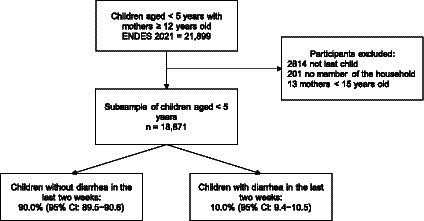
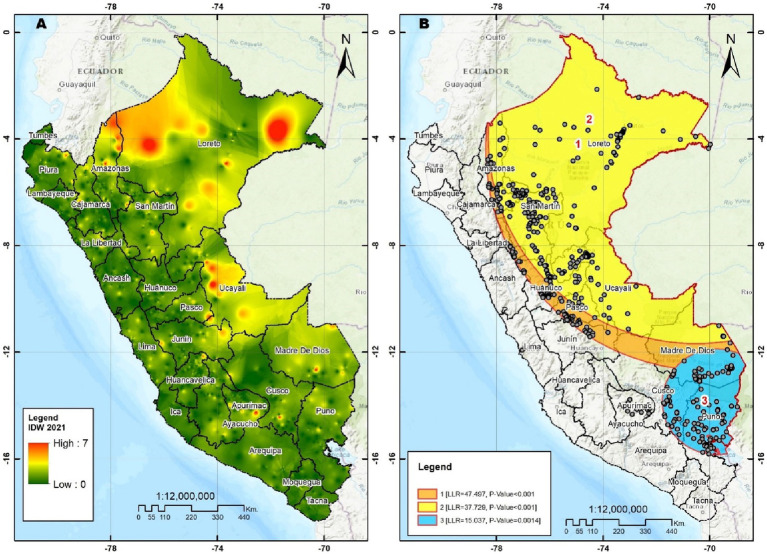
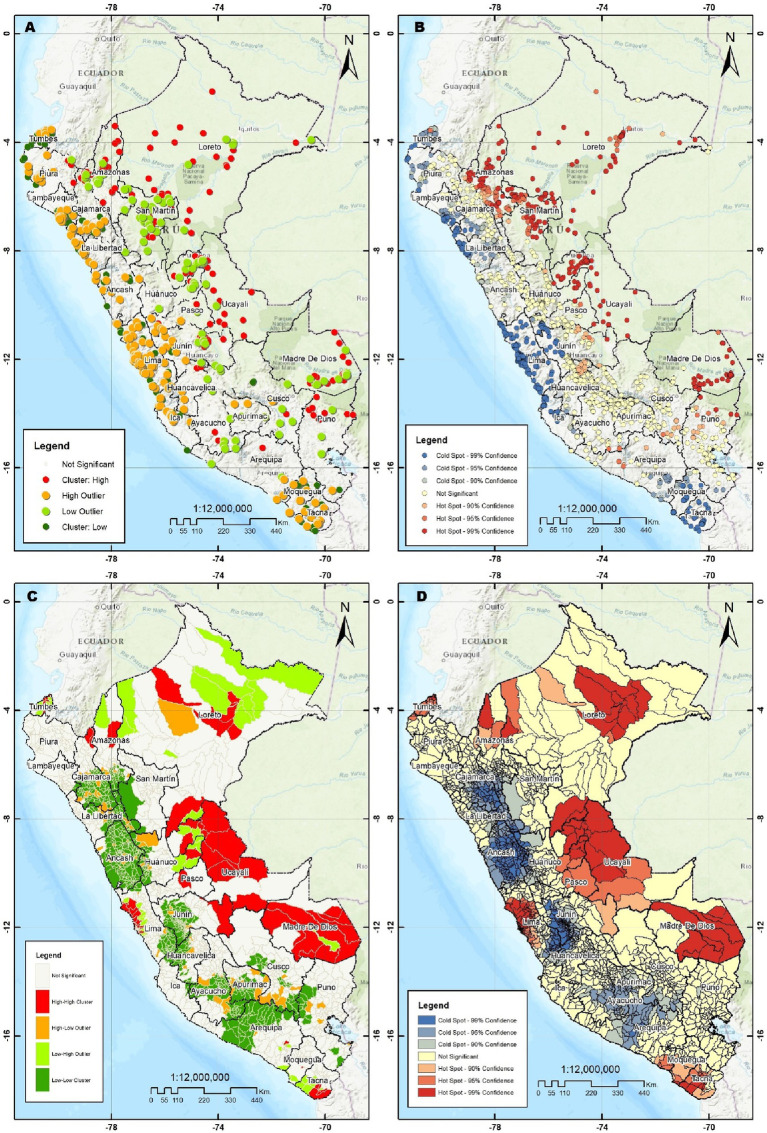
A total of 18,871 children under 5 years of age were included. The prevalence of diarrhea in this population was 10.0%. Determinants such as being aged 0-23 months, being male, belonging to the poorest, poorer and rich wealth index, and residing in the Highlands and Jungle increased the probability of presenting diarrhea. In the decomposition analysis, diarrhea had a pro-poor orientation, with the greatest contributors were age 0-23 months, belonging to the poorest and poorer wealth indexes, and residing in the Highlands and Jungle. Spatial analysis showed that the highest concentrations and occurrence of this event were observed in departments of the Highlands and Jungle.
Government institutions seeking to reduce the numbers and burden of childhood diarrhea should focus their strategies on promoting hygiene measures and improving access to water and sanitation services, especially in poor populations living in the Peruvian Highlands and Jungle.
确定秘鲁儿童腹泻的相关因素,分解社会经济不平等,并分析其空间分布。
本研究采用 2021 年全国人口和家庭健康调查的数据进行了一项横断面分析研究。因变量为过去两周内是否存在腹泻。进行了三种类型的分析:(i)评估相关因素,应用对数链接的泊松家族广义线性模型,并报告了患病率比及其 95%置信区间;(ii)为分析不平等,使用广义线性模型对 Erreygers 集中指数进行分解;(iii)进行空间自相关分析、热点分析、聚类和异常值分析。
共纳入 18871 名 5 岁以下儿童。该人群的腹泻患病率为 10.0%。0-23 月龄、男性、属于最贫困、较贫困和富裕财富指数以及居住在高地和丛林地区等因素增加了出现腹泻的概率。在分解分析中,腹泻具有亲贫倾向,最大的贡献者是 0-23 月龄、属于最贫困和较贫困财富指数以及居住在高地和丛林地区。空间分析表明,该事件的最高浓度和发生率出现在高地和丛林地区的部门。
政府机构若要减少儿童腹泻的数量和负担,应将其战略重点放在促进卫生措施和改善贫困人口获得水和卫生服务的机会上,特别是在秘鲁高地和丛林地区的贫困人口。