Luo Xiaoying, He Xin, Zhao Hui, Ma Jun, Tao Jie, Zhao Songjiao, Yan Yan, Li Yao, Zhu Shenmin
State Key Laboratory of Metal Matrix Composite, School of Materials Science and Engineering, Shanghai Jiao Tong University, Shanghai 200240, China.
National Clinical Research Center for Eye Diseases, Shanghai Key Laboratory of Ocular Fundus Diseases, Shanghai Engineering Center for Visual Science and Photomedicine, Shanghai Engineering Center for Precise Diagnosis and Treatment of Eye Diseases, Shanghai General Hospital (Shanghai First People's Hospital), Shanghai 200080, China.
Nanomaterials (Basel). 2023 Jun 29;13(13):1976. doi: 10.3390/nano13131976.
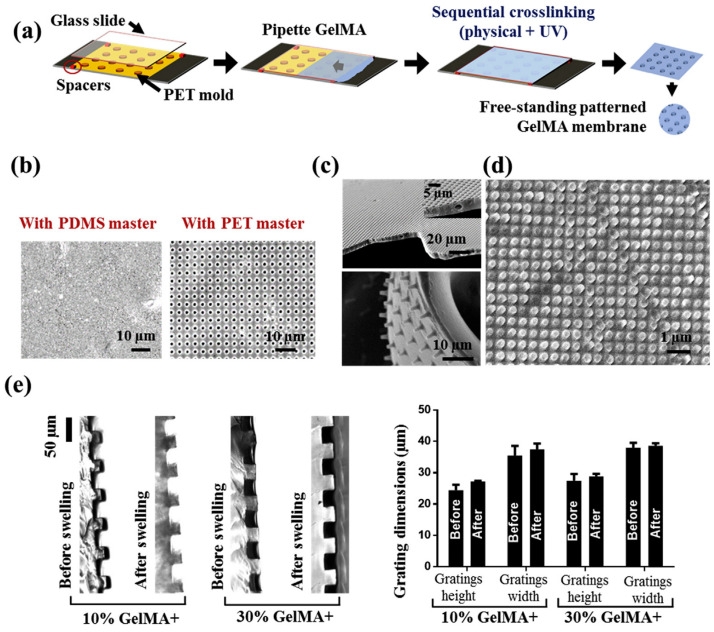
Nowadays, treating corneal diseases arising from injury to the corneal endothelium necessitates donor tissue, but these corneas are extremely scarce. As a result, researchers are dedicating significant efforts to exploring alternative approaches that do not rely on donor tissues. Among these, creating a tissue-engineered scaffold on which corneal endothelial cells can be transplanted holds particular fascination. Numerous functional materials, encompassing natural, semi-synthetic, and synthetic polymers, have already been studied in this regard. In this review, we present a comprehensive overview of recent advancements in using polymer biomaterials as scaffolds for corneal endothelium tissue engineering. Initially, we analyze and present the key properties necessary for an effective corneal endothelial implant utilizing polymer biomaterials. Subsequently, we focus on various emerging biomaterials as scaffolds for corneal endothelium tissue engineering. We discuss their modifications (including natural and synthetic composites) and analyze the effect of micro- and nano-topological morphology on corneal endothelial scaffolds. Lastly, we highlight the challenges and prospects of these materials in corneal endothelium tissue engineering.
如今,治疗因角膜内皮损伤引起的角膜疾病需要供体组织,但这些角膜极为稀缺。因此,研究人员正在投入大量精力探索不依赖供体组织的替代方法。其中,创建一种可移植角膜内皮细胞的组织工程支架尤其具有吸引力。在这方面,已经研究了许多功能性材料,包括天然、半合成和合成聚合物。在这篇综述中,我们全面概述了使用聚合物生物材料作为角膜内皮组织工程支架的最新进展。首先,我们分析并介绍了利用聚合物生物材料制备有效角膜内皮植入物所需的关键特性。随后,我们重点关注作为角膜内皮组织工程支架的各种新兴生物材料。我们讨论它们的改性(包括天然和合成复合材料),并分析微观和纳米拓扑形态对角膜内皮支架的影响。最后,我们强调这些材料在角膜内皮组织工程中的挑战和前景。