School of Biomedical and Pharmaceutical Sciences, Guangdong University of Technology, Guangzhou 511400, China.
R&D Centre, Infinitus (China) Company Ltd., Guangzhou 510520, China.
Molecules. 2023 Jun 21;28(13):4900. doi: 10.3390/molecules28134900.
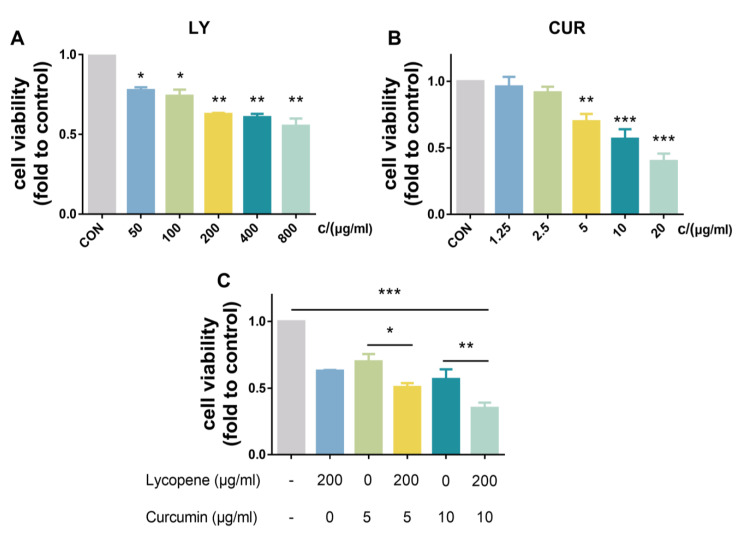
Benign prostatic hyperplasia (BPH) is a progressive urological disease occurring in middle-aged and elderly men, which can be characterized by the non-malignant overgrowth of stromal and epithelial cells in the transition zone of the prostate. Previous studies have demonstrated that lycopene can inhibit proliferation, while curcumin can strongly inhibit inflammation. This study aims to determine the inhibitory effect of the combination of lycopene and curcumin on BPH.
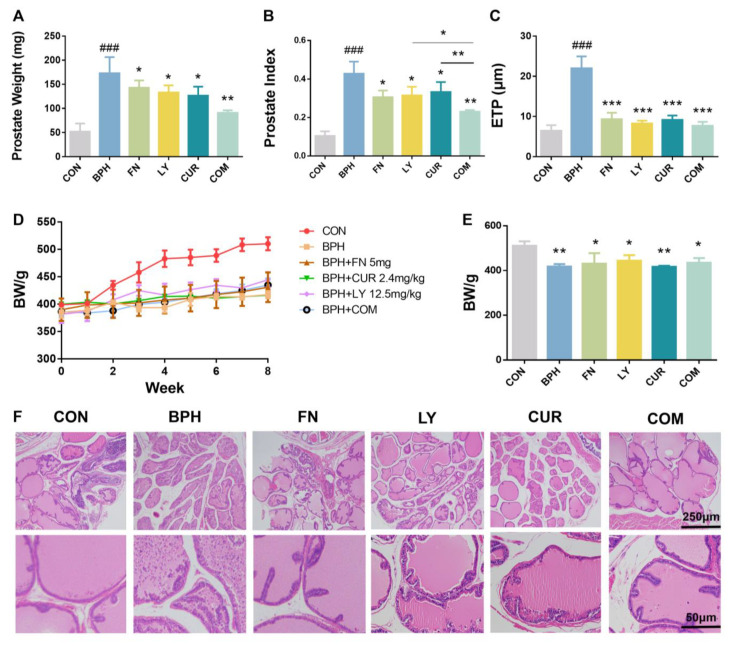
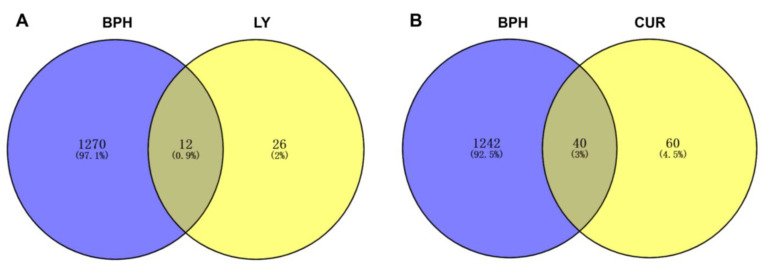
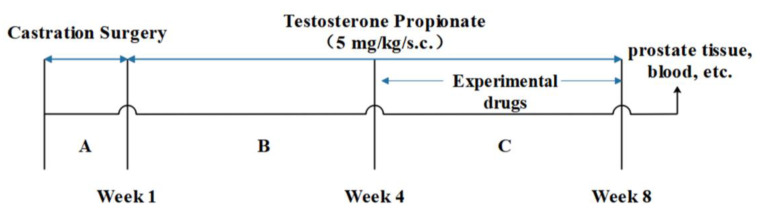
To induce BPH models in vitro and in vivo, the BPH-1 cell line and Sprague Dawley (SD) rats were used, respectively. Rats were divided into six groups and treated daily with a vehicle, lycopene (12.5 mg/kg), curcumin (2.4 mg/kg), a combination of lycopene and curcumin (12.5 mg/kg + 2.4 mg/kg) or finasteride (5 mg/kg). Histologic sections were examined via hematoxylin and eosin (H&E) staining and immunohistochemistry. Hormone and inflammatory indicators were detected via ELISA. Network pharmacology analysis was used to fully predict the therapeutic mechanism of the combination of lycopene and curcumin on BPH.
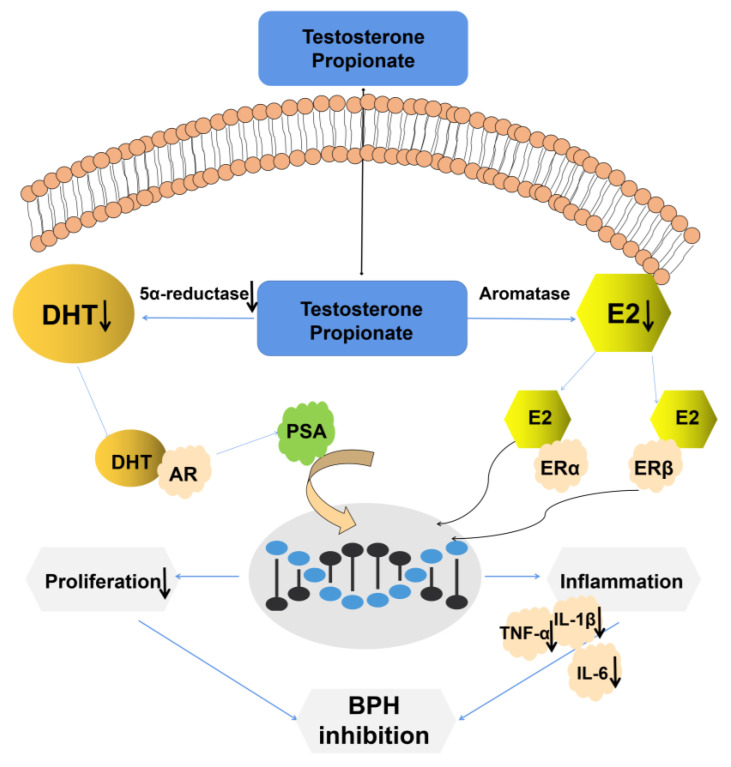
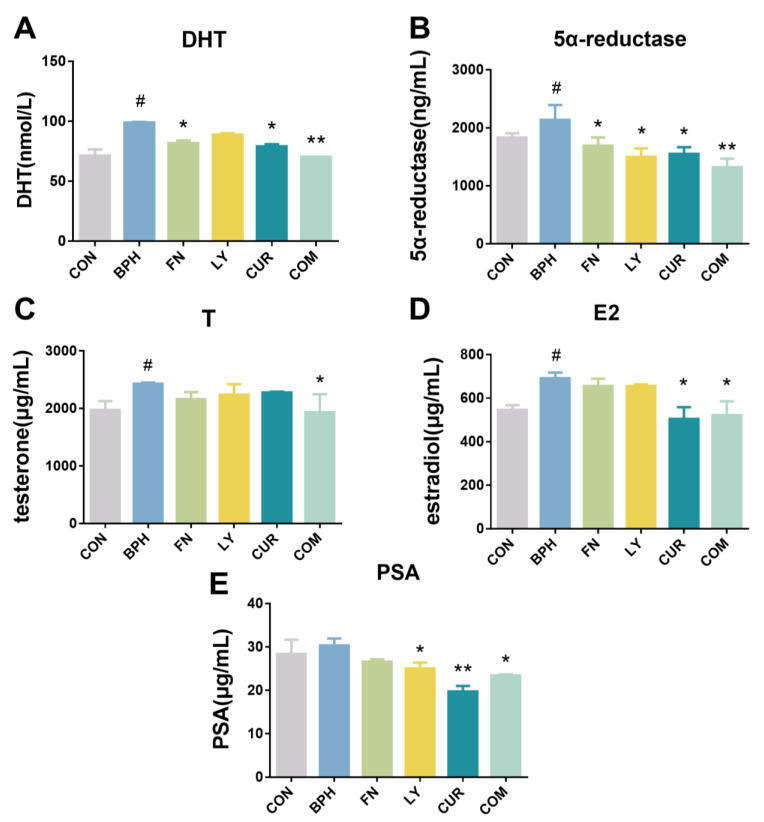
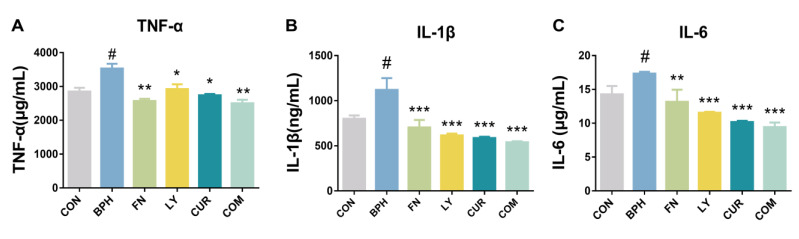
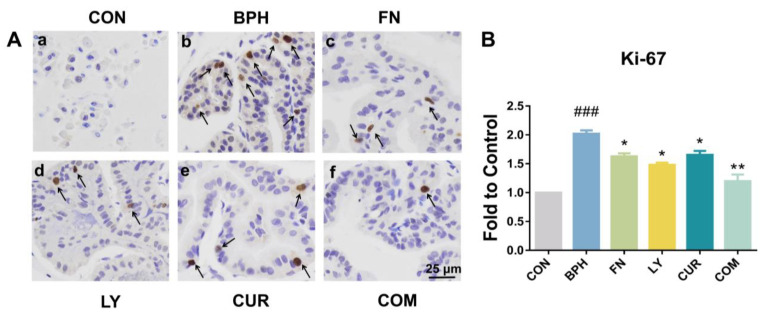
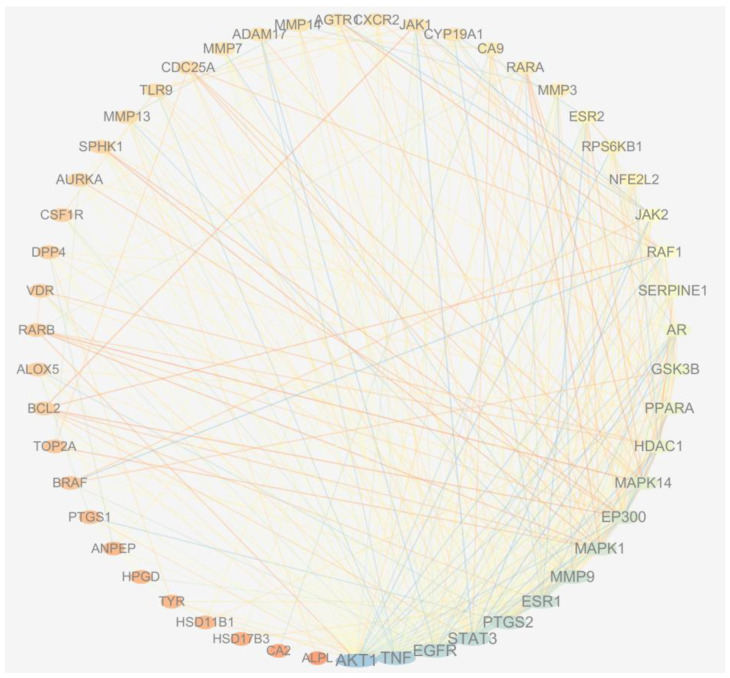
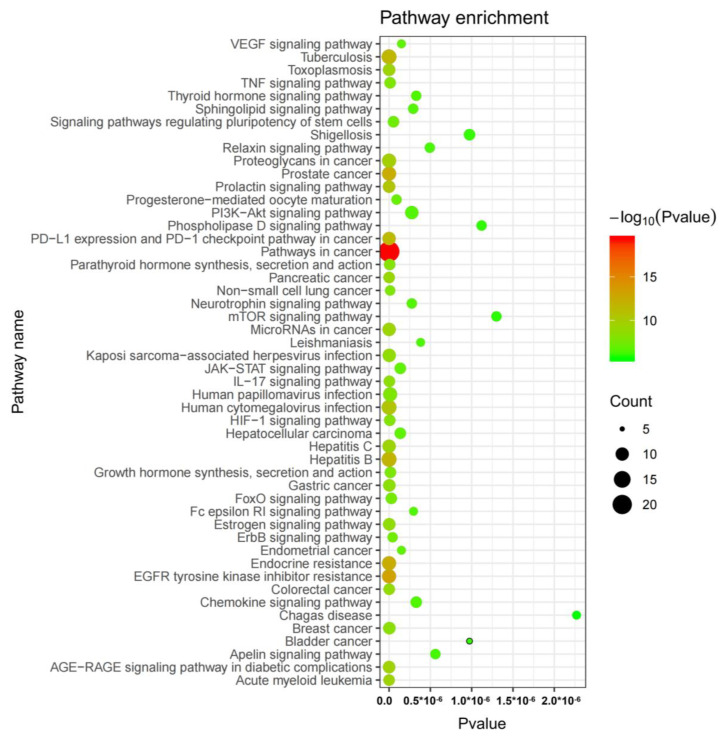
Combination treatment significantly attenuated prostate hyperplasia, alleviated BPH pathological features and decreased the expression of Ki-67 in rats. The upregulation of the expression of testosterone, dihydrotestosterone (DHT), 5α-reductase, estradiol (E2) and prostate-specific antigen (PSA) in BPH rats was significantly blocked by the combination treatment. The expression levels of inflammatory factors including interleukin (IL)-1β, IL-6 and tumor necrosis factor (TNF)-α were strongly inhibited by the combination treatment. From the network pharmacology analysis, it was found that the main targets for inhibiting BPH are AKT1, TNF, EGFR, STAT3 and PTGS2, which are enriched in pathways in cancer.
The lycopene and curcumin combination is a potential and more effective agent to prevent or treat BPH.
良性前列腺增生(BPH)是一种发生于中老年男性的进行性泌尿系统疾病,其特征为前列腺移行区的基质和上皮细胞的非恶性过度生长。先前的研究表明,番茄红素可以抑制增殖,而姜黄素可以强烈抑制炎症。本研究旨在确定番茄红素和姜黄素联合使用对 BPH 的抑制作用。
分别使用 BPH-1 细胞系和 Sprague Dawley(SD)大鼠建立体外和体内 BPH 模型。将大鼠分为六组,每天分别给予载体、番茄红素(12.5mg/kg)、姜黄素(2.4mg/kg)、番茄红素和姜黄素联合(12.5mg/kg+2.4mg/kg)或非那雄胺(5mg/kg)治疗。通过苏木精和伊红(H&E)染色和免疫组织化学检查组织学切片。通过 ELISA 检测激素和炎症指标。使用网络药理学分析全面预测番茄红素和姜黄素联合治疗 BPH 的治疗机制。
联合治疗显著减轻了前列腺增生,缓解了 BPH 的病理特征,并降低了大鼠中 Ki-67 的表达。联合治疗显著阻断了 BPH 大鼠中睾酮、二氢睾酮(DHT)、5α-还原酶、雌二醇(E2)和前列腺特异性抗原(PSA)表达的上调。联合治疗强烈抑制了包括白细胞介素(IL)-1β、IL-6 和肿瘤坏死因子(TNF)-α在内的炎症因子的表达水平。从网络药理学分析中发现,抑制 BPH 的主要靶点是 AKT1、TNF、EGFR、STAT3 和 PTGS2,它们富集在癌症相关通路中。
番茄红素和姜黄素联合是一种预防或治疗 BPH 的潜在且更有效的药物。