Ma Ming, Zhou Huchen, Gao Suhan, Li Nan, Guo Wenjuan, Dai Zhao
School of Life Sciences, Tiangong University, Tianjin 300387, China.
State Key Laboratory of Separation Membranes and Membrane Processes, Tiangong University, Tianjin 300387, China.
Polymers (Basel). 2023 Jun 25;15(13):2813. doi: 10.3390/polym15132813.
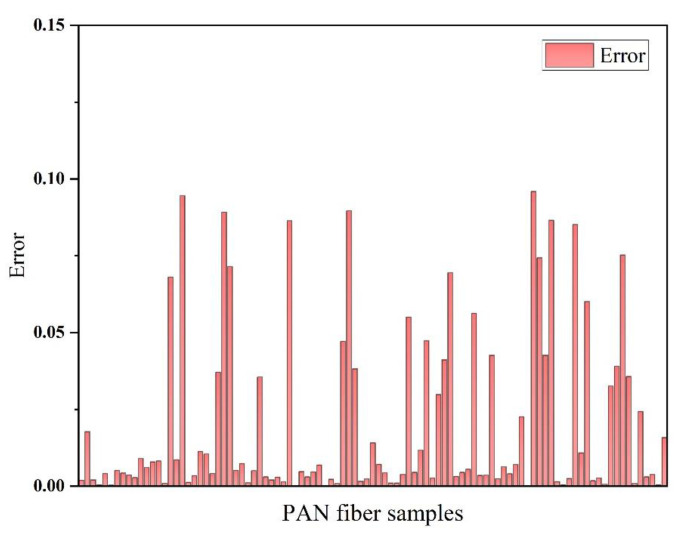
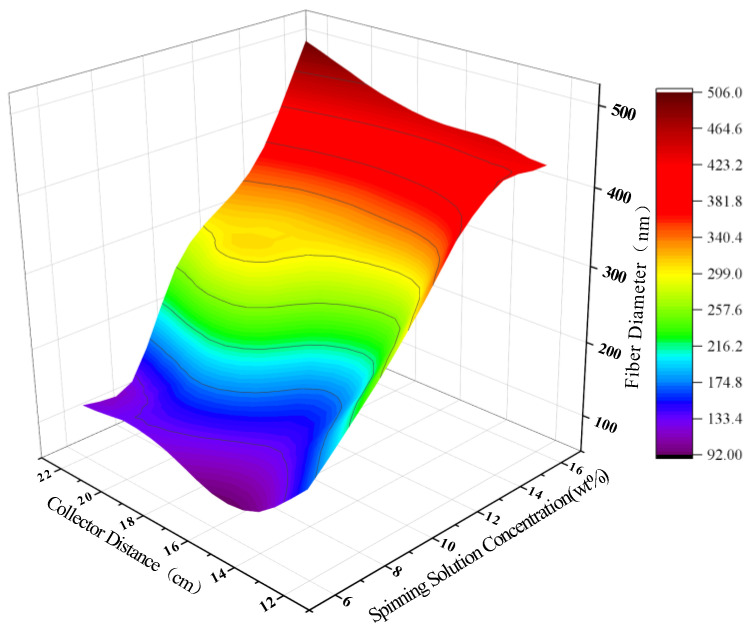
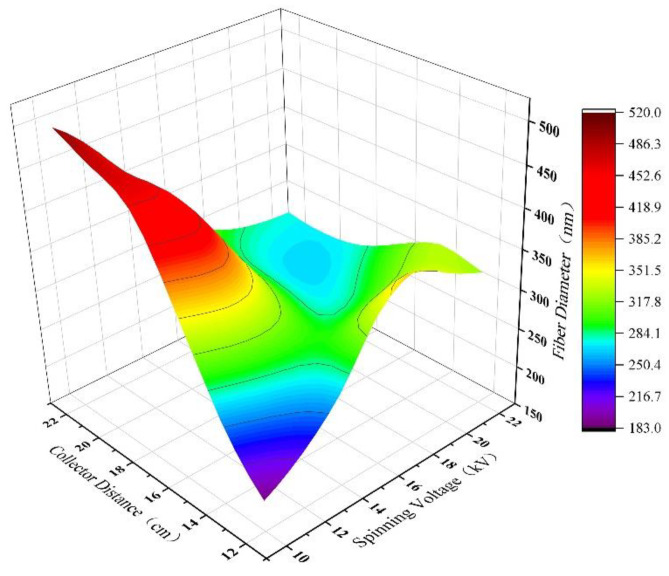
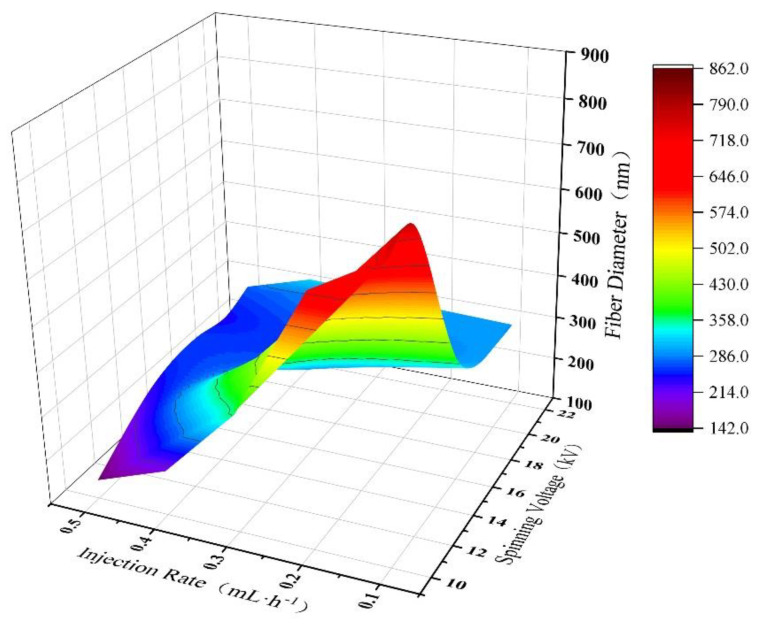
Electrospinning technology enables the fabrication of electrospun nanofibers with exceptional properties, which are highly influenced by their diameter. This work focuses on the electrospinning of polyacrylonitrile (PAN) to obtain PAN nanofibers under different processing conditions. The morphology and size of the resulting PAN nanofibers were characterized using scanning electron microscopy (SEM), and the corresponding diameter data were measured using Nano Measure 1.2 software. The processing conditions and corresponding nanofiber diameter data were then inputted into an artificial neural network (ANN) to establish the relationship between the electrospinning process parameters (polymer concentration, applied voltage, collecting distance, and solution flow rate), and the diameter of PAN nanofibers. The results indicate that the polymer concentration has the greatest influence on the diameter of PAN nanofibers. The developed neural network prediction model provides guidance for the preparation of PAN nanofibers with specific dimensions.
静电纺丝技术能够制造出具有卓越性能的静电纺纳米纤维,其性能受纤维直径的影响很大。这项工作聚焦于聚丙烯腈(PAN)的静电纺丝,以在不同加工条件下获得PAN纳米纤维。使用扫描电子显微镜(SEM)对所得PAN纳米纤维的形态和尺寸进行表征,并使用Nano Measure 1.2软件测量相应的直径数据。然后将加工条件和相应的纳米纤维直径数据输入人工神经网络(ANN),以建立静电纺丝工艺参数(聚合物浓度、施加电压、收集距离和溶液流速)与PAN纳米纤维直径之间的关系。结果表明,聚合物浓度对PAN纳米纤维的直径影响最大。所开发的神经网络预测模型为制备特定尺寸的PAN纳米纤维提供了指导。