Graduate School of Mechanical Engineering, University of Ulsan, Daehakro 93, Nam-gu, Ulsan 44610, Republic of Korea.
School of Mechanical Engineering, University of Ulsan, Daehakro 93, Nam-gu, Ulsan 44610, Republic of Korea.
Sensors (Basel). 2023 Jun 25;23(13):5888. doi: 10.3390/s23135888.
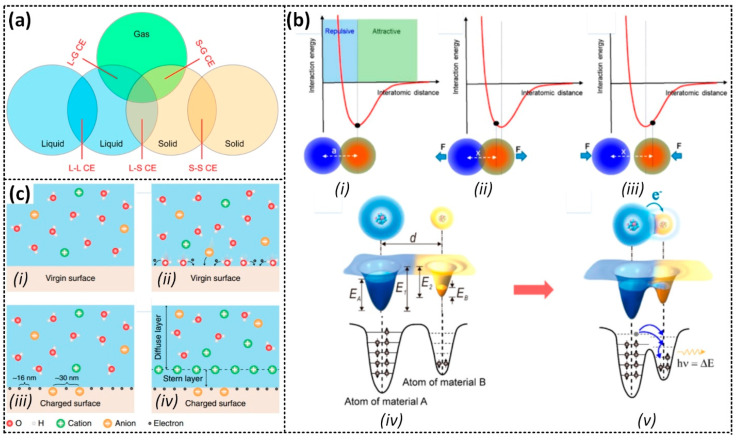
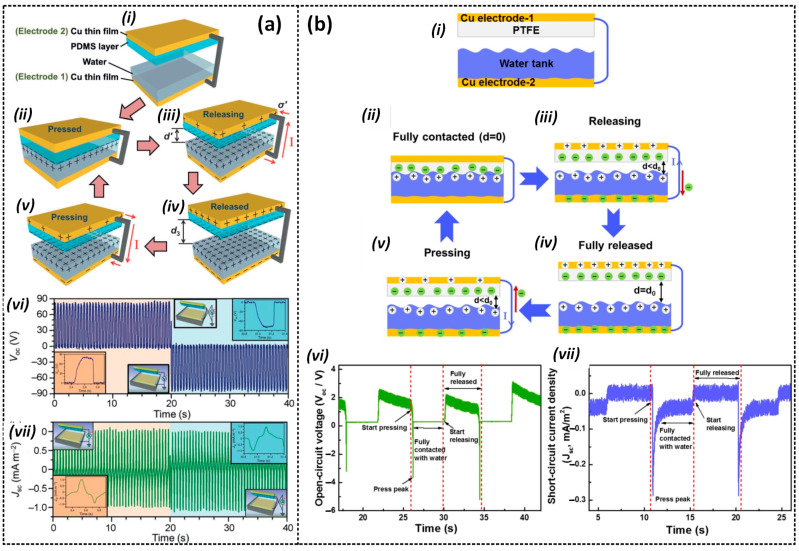
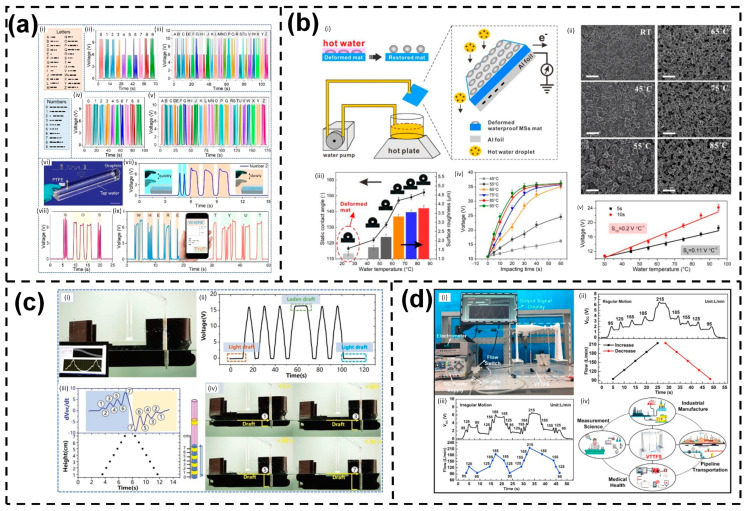
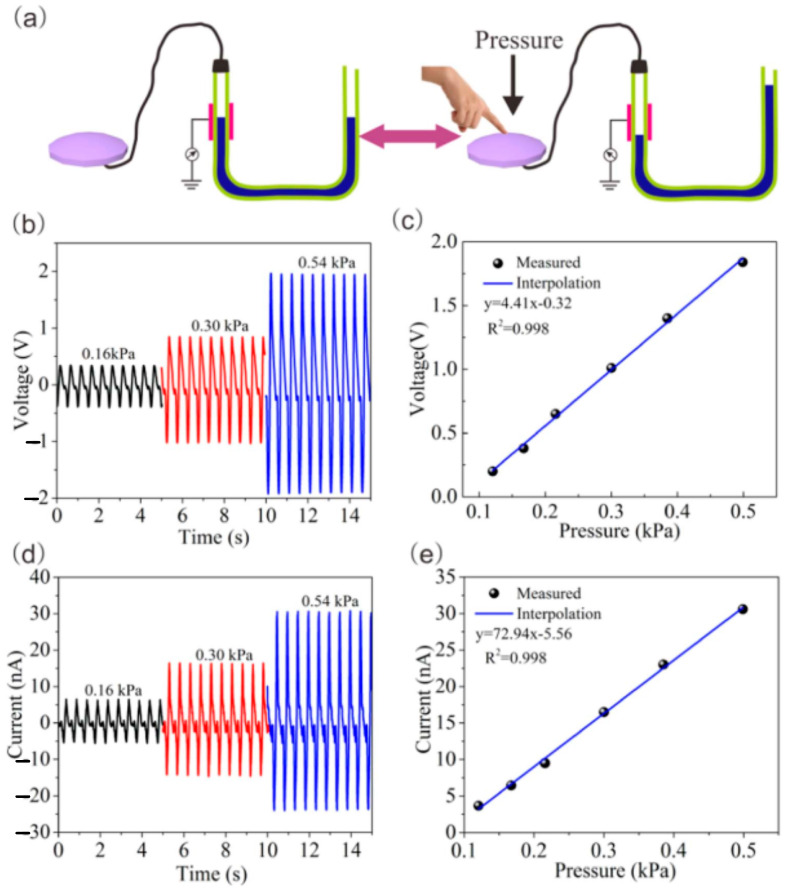
Recently, there has been a growing need for sensors that can operate autonomously without requiring an external power source. This is especially important in applications where conventional power sources, such as batteries, are impractical or difficult to replace. Self-powered sensors have emerged as a promising solution to this challenge, offering a range of benefits such as low cost, high stability, and environmental friendliness. One of the most promising self-powered sensor technologies is the L-S TENG, which stands for liquid-solid triboelectric nanogenerator. This technology works by harnessing the mechanical energy generated by external stimuli such as pressure, touch, or vibration, and converting it into electrical energy that can be used to power sensors and other electronic devices. Therefore, self-powered sensors based on L-S TENGs-which provide numerous benefits such as rapid responses, portability, cost-effectiveness, and miniaturization-are critical for increasing living standards and optimizing industrial processes. In this review paper, the working principle with three basic modes is first briefly introduced. After that, the parameters that affect L-S TENGs are reviewed based on the properties of the liquid and solid phases. With different working principles, L-S TENGs have been used to design many structures that function as self-powered sensors for pressure/force change, liquid flow motion, concentration, and chemical detection or biochemical sensing. Moreover, the continuous output signal of a TENG plays an important role in the functioning of real-time sensors that is vital for the growth of the Internet of Things.
最近,人们对能够自主运行而无需外部电源的传感器的需求日益增长。在传统电源(如电池)不切实际或难以更换的应用中,这一点尤为重要。自供电传感器作为应对这一挑战的一种有前途的解决方案而出现,具有低成本、高稳定性和环保等一系列优势。最有前途的自供电传感器技术之一是 L-S TENG,代表液体-固体摩擦纳米发电机。这项技术通过利用压力、触摸或振动等外部刺激产生的机械能,并将其转化为可用于为传感器和其他电子设备供电的电能。因此,基于 L-S TENG 的自供电传感器——提供快速响应、便携性、成本效益和小型化等诸多优势——对于提高生活水平和优化工业流程至关重要。在这篇综述论文中,首先简要介绍了具有三种基本模式的工作原理。然后,根据液体和固体相的性质,回顾了影响 L-S TENG 的参数。基于不同的工作原理,L-S TENG 已被用于设计许多结构,这些结构可用作自供电传感器,用于压力/力变化、液体流动运动、浓度以及化学检测或生化传感。此外,TENG 的连续输出信号在实时传感器的运行中起着重要作用,这对于物联网的发展至关重要。