Department of Electrical and Computer Engineering, University of Houston, Houston, TX 77004, USA.
Noninvasive Brain-Machine Interface Systems Laboratory, NSF Industry-University Cooperative Research Center for Building Reliable Advances and Innovations in Neurotechnology (IUCRC BRAIN) Center, University of Houston, Houston, TX 77004, USA.
Sensors (Basel). 2023 Jun 26;23(13):5930. doi: 10.3390/s23135930.
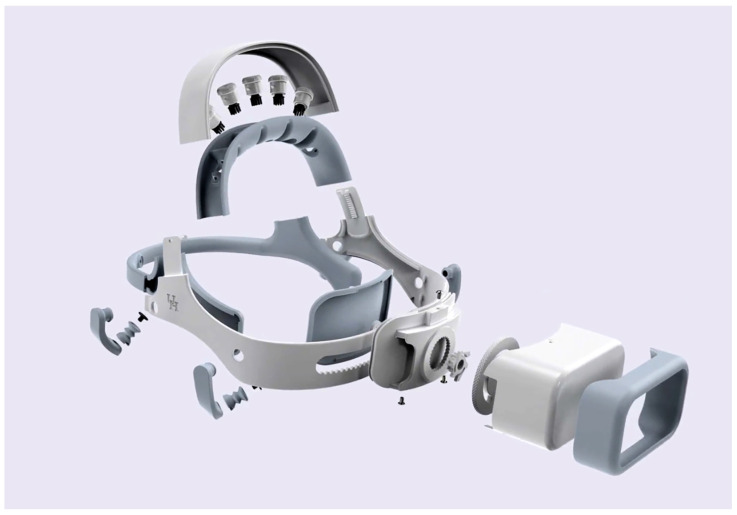
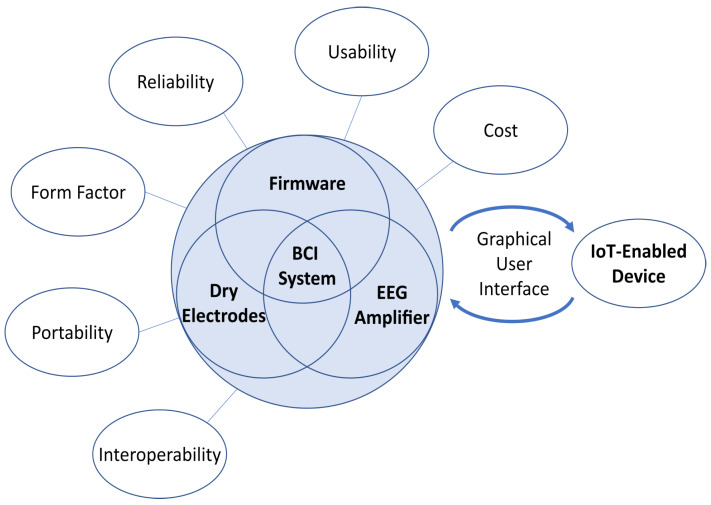
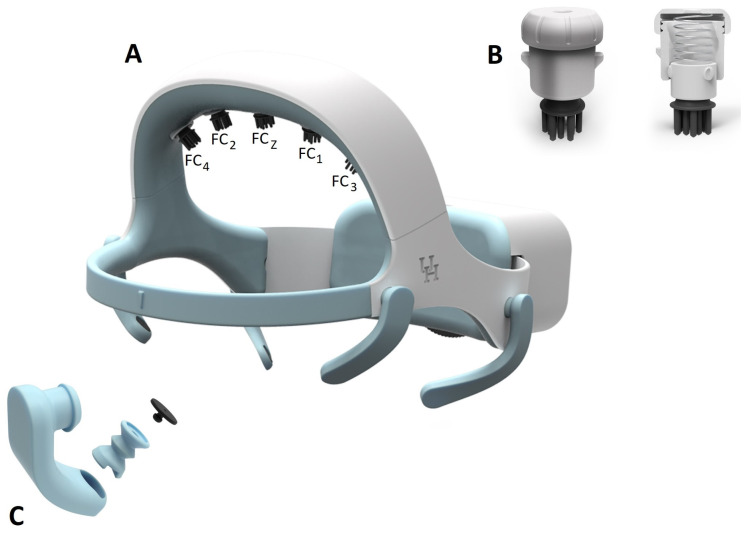
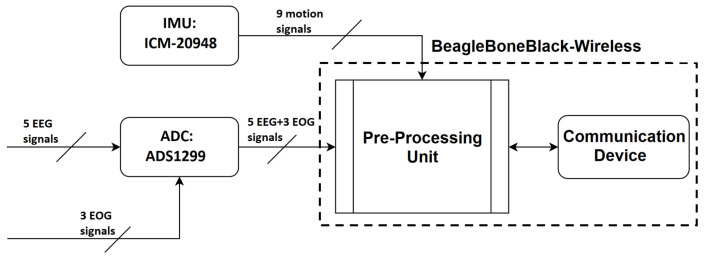
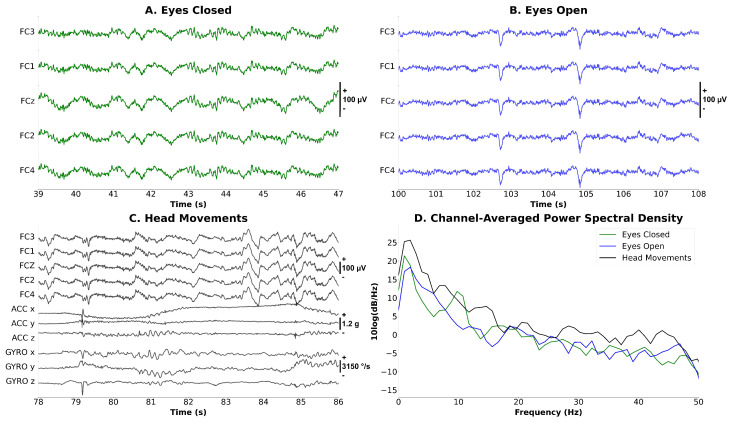
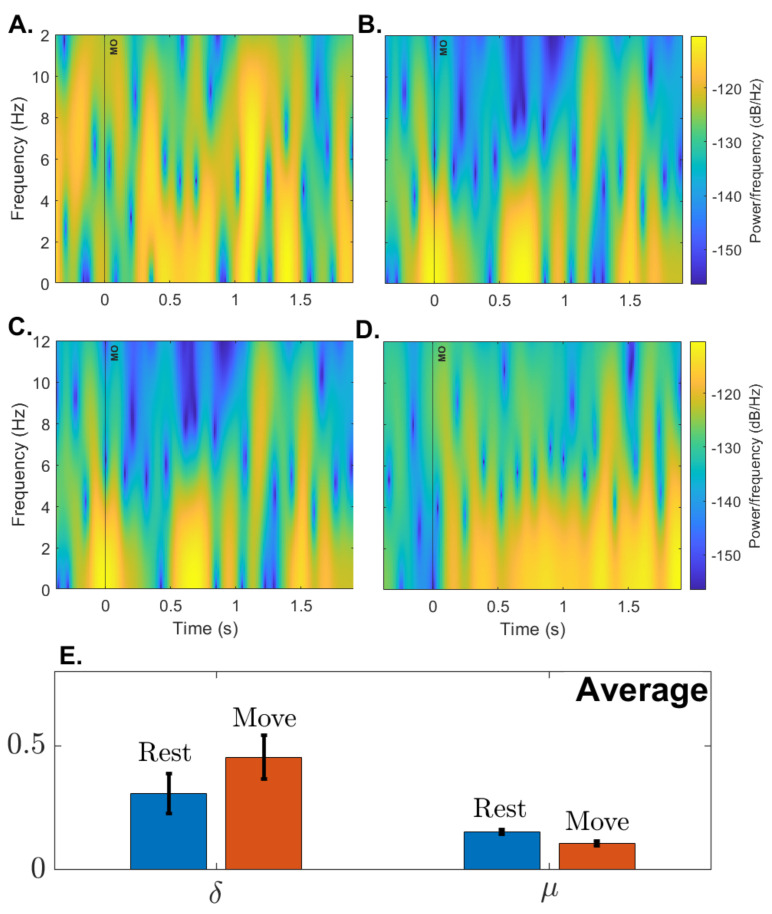
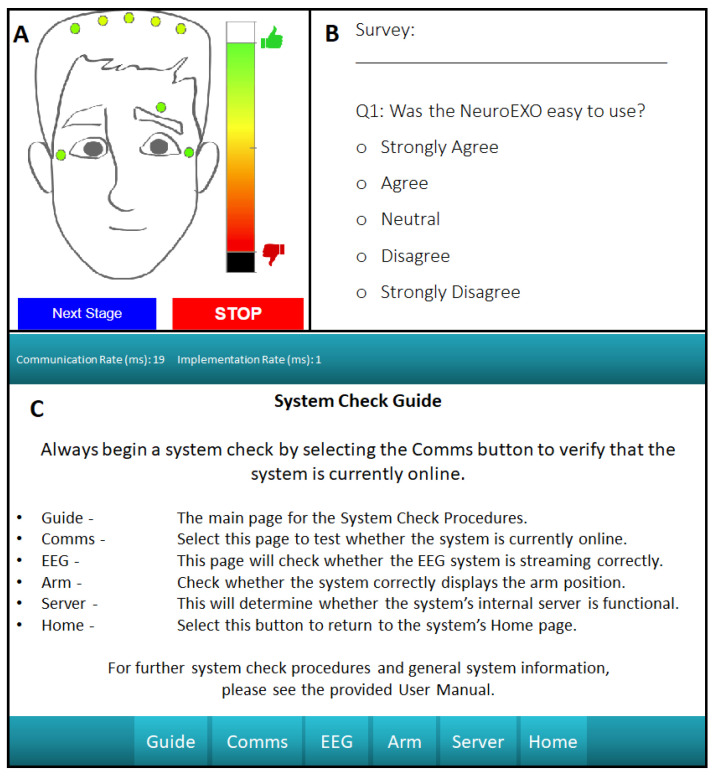
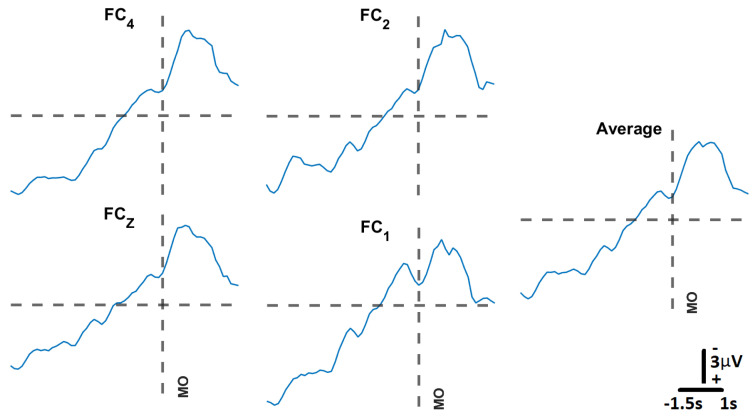
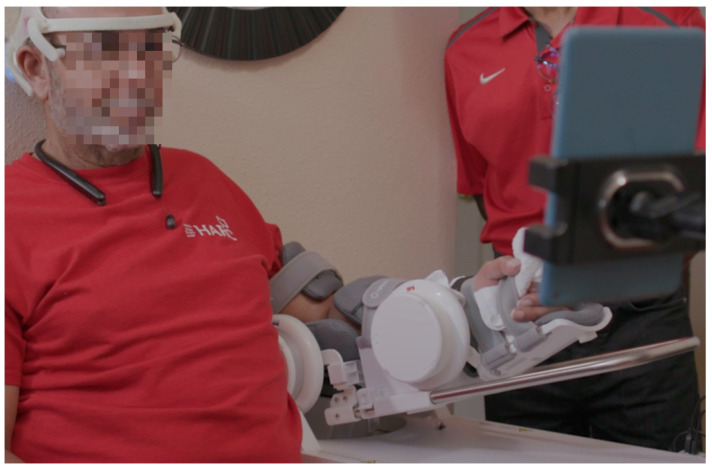
We designed and validated a wireless, low-cost, easy-to-use, mobile, dry-electrode headset for scalp electroencephalography (EEG) recordings for closed-loop brain-computer (BCI) interface and internet-of-things (IoT) applications. The EEG-based BCI headset was designed from commercial off-the-shelf (COTS) components using a multi-pronged approach that balanced interoperability, cost, portability, usability, form factor, reliability, and closed-loop operation. The adjustable headset was designed to accommodate 90% of the population. A patent-pending self-positioning dry electrode bracket allowed for vertical self-positioning while parting the user's hair to ensure contact of the electrode with the scalp. In the current prototype, five EEG electrodes were incorporated in the electrode bracket spanning the sensorimotor cortices bilaterally, and three skin sensors were included to measure eye movement and blinks. An inertial measurement unit (IMU) provides monitoring of head movements. The EEG amplifier operates with 24-bit resolution up to 500 Hz sampling frequency and can communicate with other devices using 802.11 b/g/n WiFi. It has high signal-to-noise ratio (SNR) and common-mode rejection ratio (CMRR) (121 dB and 110 dB, respectively) and low input noise. In closed-loop BCI mode, the system can operate at 40 Hz, including real-time adaptive noise cancellation and 512 MB of processor memory. It supports LabVIEW as a backend coding language and JavaScript (JS), Cascading Style Sheets (CSS), and HyperText Markup Language (HTML) as front-end coding languages and includes training and optimization of support vector machine (SVM) neural classifiers. Extensive bench testing supports the technical specifications and human-subject pilot testing of a closed-loop BCI application to support upper-limb rehabilitation and provides proof-of-concept validation for the device's use at both the clinic and at home. The usability, interoperability, portability, reliability, and programmability of the proposed wireless closed-loop BCI system provides a low-cost solution for BCI and neurorehabilitation research and IoT applications.
我们设计并验证了一种用于头皮脑电图 (EEG) 记录的无线、低成本、易于使用、移动、干电极耳机,用于闭环脑-机接口 (BCI) 和物联网 (IoT) 应用。这款基于 EEG 的 BCI 耳机是使用多管齐下的方法,从商业现货 (COTS) 组件设计而成的,该方法平衡了互操作性、成本、便携性、可用性、外形因素、可靠性和闭环操作。可调节的耳机设计适合 90%的人群。一项正在申请专利的自定位干电极支架允许垂直自定位,同时分开用户的头发,以确保电极与头皮接触。在当前原型中,五个 EEG 电极被整合到电极支架中,横跨双侧感觉运动皮质,并且包括三个皮肤传感器以测量眼动和眨眼。惯性测量单元 (IMU) 提供头部运动监测。EEG 放大器以 24 位分辨率运行,采样频率高达 500 Hz,并可以使用 802.11 b/g/n WiFi 与其他设备进行通信。它具有高信噪比 (SNR) 和共模抑制比 (CMRR)(分别为 121 dB 和 110 dB)和低输入噪声。在闭环 BCI 模式下,该系统可以以 40 Hz 的频率运行,包括实时自适应噪声消除和 512 MB 的处理器内存。它支持作为后端编码语言的 LabVIEW 以及 JavaScript(JS)、层叠样式表(CSS)和超文本标记语言(HTML)作为前端编码语言,并包括支持向量机 (SVM) 神经网络分类器的训练和优化。广泛的基准测试支持闭环 BCI 应用的技术规格和人体试验测试,以支持上肢康复,并为该设备在诊所和家庭中的使用提供概念验证。拟议的无线闭环 BCI 系统的可用性、互操作性、便携性、可靠性和可编程性为 BCI 和神经康复研究以及物联网应用提供了低成本解决方案。