Division of Interventional Radiology, Department of Radiological Sciences, University Politecnica Delle Marche, 60126, Ancona, Italy.
Department of Clinical, Special and Dental Sciences, University Politecnica Delle Marche, 60126, Ancona, Italy.
Radiol Med. 2023 Sep;128(9):1125-1137. doi: 10.1007/s11547-023-01678-7. Epub 2023 Jul 17.
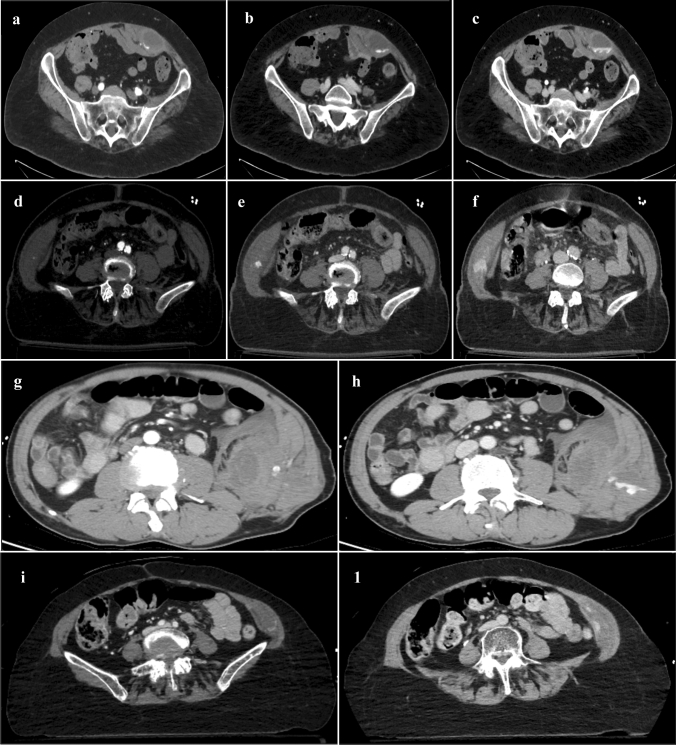
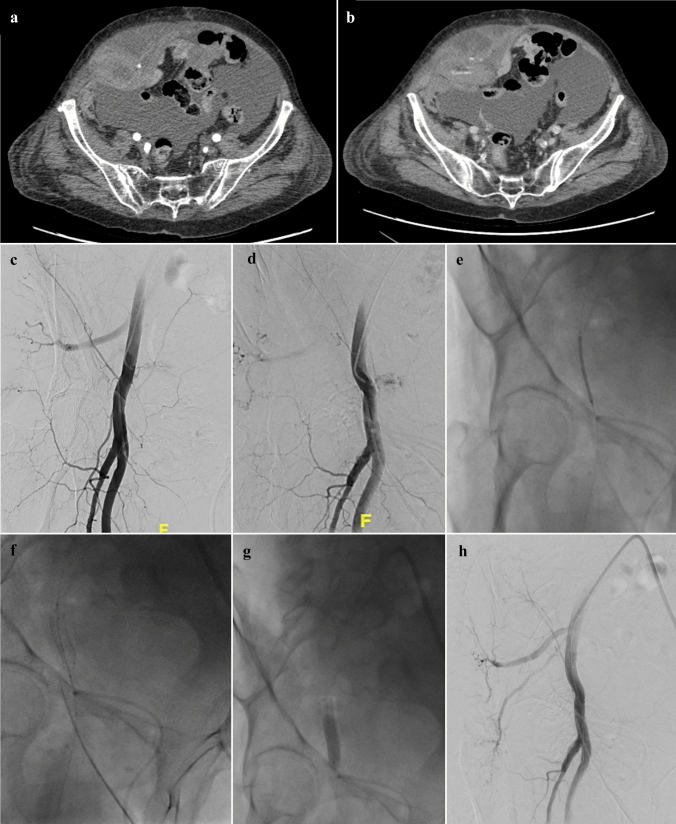
Percutaneous transarterial embolization (PTE) represents a fast, safe and effective option for life-threatening anterior abdominal wall hematomas (AWHs) and those unresponsive to conservative treatment. Our study aims to assess cumulative results of safety, technical and clinical success of PTE performed in three high-volume tertiary referral centers and to evaluate the efficacy of the different embolic materials employed.
A consecutive series of 124 patients (72.8 ± 14.4 years) with AWHs of different etiology submitted to PTE were retrospectively collected and analyzed. Clinical success, defined as absence of recurrent bleeding within 96 h from PTE, was considered as primary endpoint. The results of the comparison of three groups based on embolic agent employed were also analyzed.
Spontaneous AWHs accounted for 62.1%, iatrogenic for 21.8% and post-traumatic for 16.1% of cases. SARS-CoV-19 infection was present in 22.6% of patients. The most commonly embolized vessels were epigastric inferior artery (n = 127) and superior epigastric artery (n = 25). Technical and clinical success were 97.6 and 87.1%, respectively. Angiographic signs of active bleeding were detected in 85.5% of cases. Four (4%) major complications were reported. The comparison of the three groups of embolic agents (mechanical, particulate/fluid and combined) showed no statistically significant differences in terms of clinical success. SARS-CoV-2 infection was found to be an independent factor for recurrent bleeding and poor 30-day survival.
PTE performed with all the embolic agent employed in our centers is a safe and effective tool in the treatment of life-threatening anterior AWH of each origin.
经动脉穿刺栓塞术(PTE)是一种快速、安全、有效的治疗危及生命的前腹壁血肿(AWH)的方法,对于那些对保守治疗无反应的患者也同样适用。本研究旨在评估在三个高容量的三级转诊中心进行的 PTE 的安全性、技术和临床成功率的累积结果,并评估所使用的不同栓塞材料的疗效。
回顾性收集并分析了 124 例(72.8±14.4 岁)不同病因的 AWH 患者行 PTE 的连续系列病例。将 PTE 后 96 小时内无复发出血定义为临床成功,将其作为主要终点。还分析了基于栓塞剂使用的三组之间的结果比较。
自发性 AWH 占 62.1%,医源性 AWH 占 21.8%,外伤性 AWH 占 16.1%。22.6%的患者存在 SARS-CoV-19 感染。最常栓塞的血管是胃下动脉(n=127)和胃上动脉(n=25)。技术和临床成功率分别为 97.6%和 87.1%。85.5%的病例存在活动性出血的血管造影征象。报告了 4 例(4%)严重并发症。栓塞剂(机械、颗粒/液体和联合)三组之间的比较在临床成功率方面无统计学差异。SARS-CoV-2 感染是复发出血和 30 天生存率差的独立因素。
在我们中心,使用所有栓塞剂进行 PTE 是治疗各种来源危及生命的前腹壁血肿的一种安全有效的方法。