Memory and Aging Center, Department of Neurology, Weill Institute for Neurosciences, University of California, San Francisco, 1651 4th Street, San Francisco, CA, 94158, USA.
Pharmaceutical Sciences and Pharmacogenomics Graduate Program, University of California, San Francisco, CA, 94158, USA.
Genome Med. 2023 Jul 18;15(1):53. doi: 10.1186/s13073-023-01205-3.
Emerging evidence from mouse models is beginning to elucidate the brain's immune response to tau pathology, but little is known about the nature of this response in humans. In addition, it remains unclear to what extent tau pathology and the local inflammatory response within the brain influence the broader immune system.
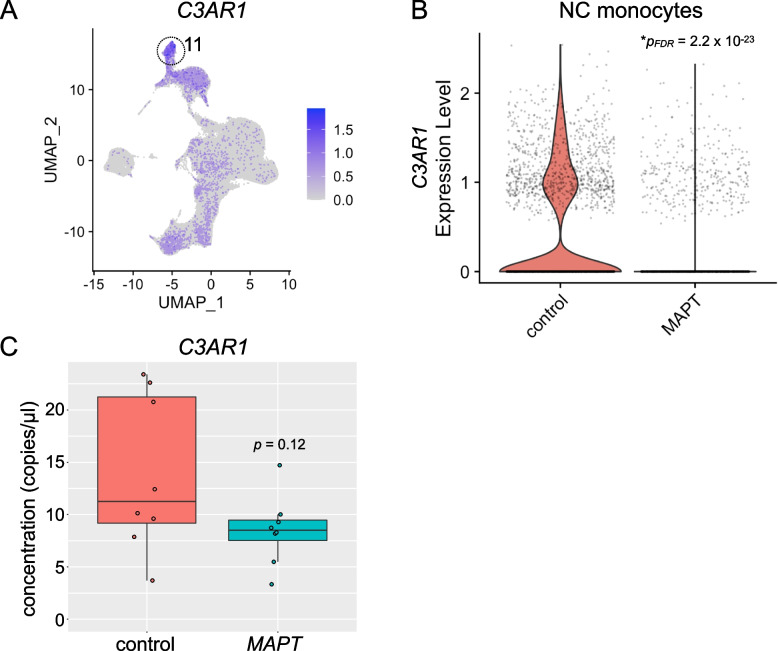
To address these questions, we performed single-cell RNA sequencing (scRNA-seq) of peripheral blood mononuclear cells (PBMCs) from carriers of pathogenic variants in MAPT, the gene encoding tau (n = 8), and healthy non-carrier controls (n = 8). Primary findings from our scRNA-seq analyses were confirmed and extended via flow cytometry, droplet digital (dd)PCR, and secondary analyses of publicly available transcriptomics datasets.
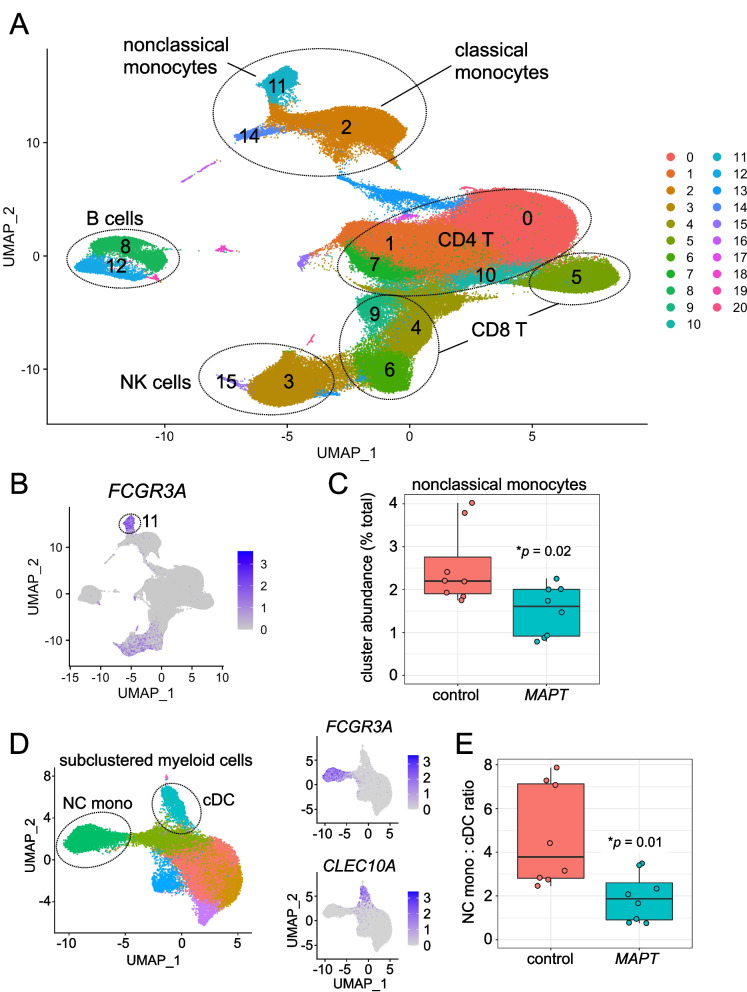
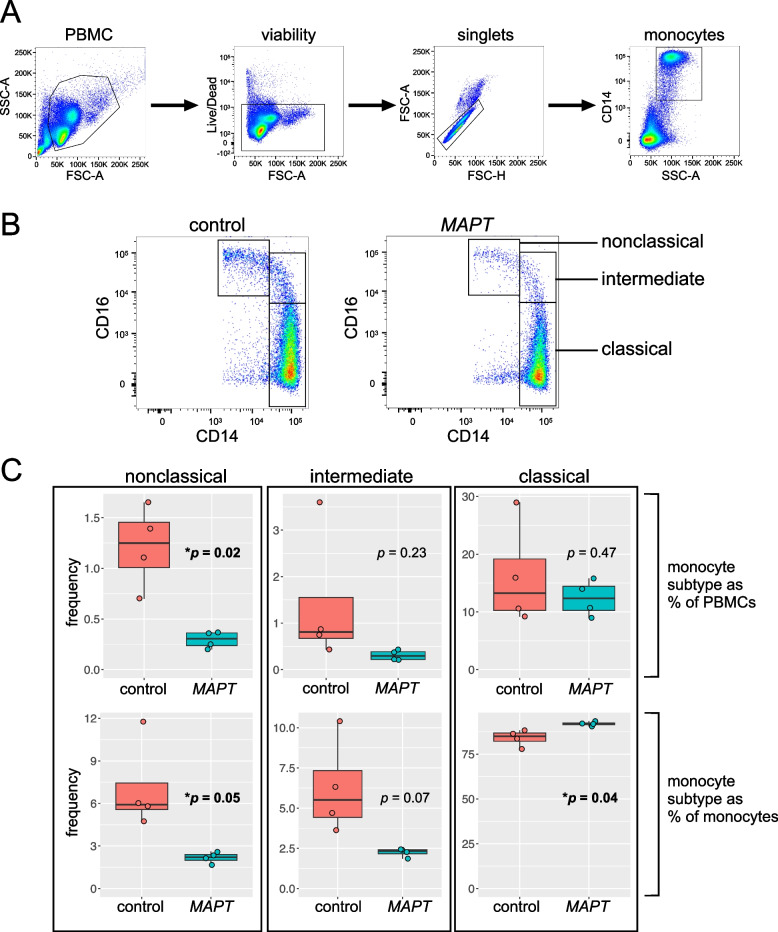
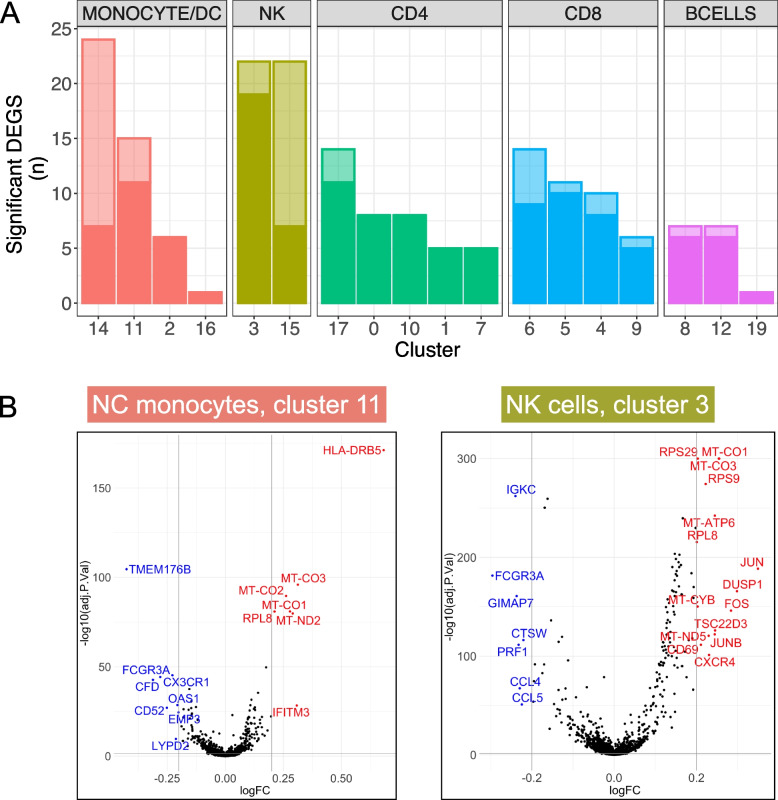
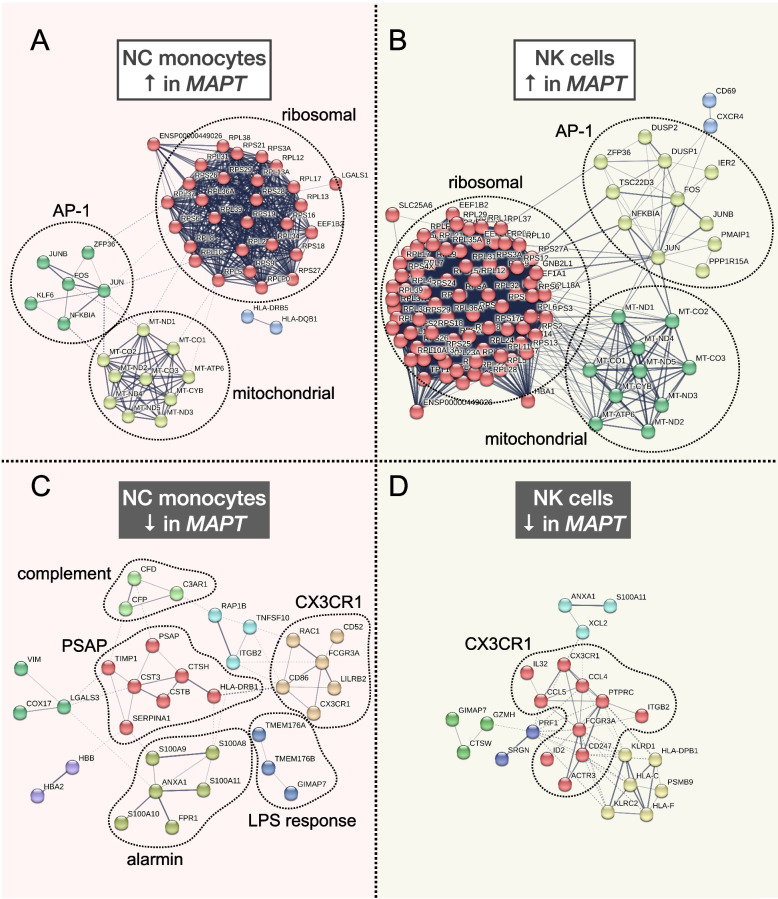
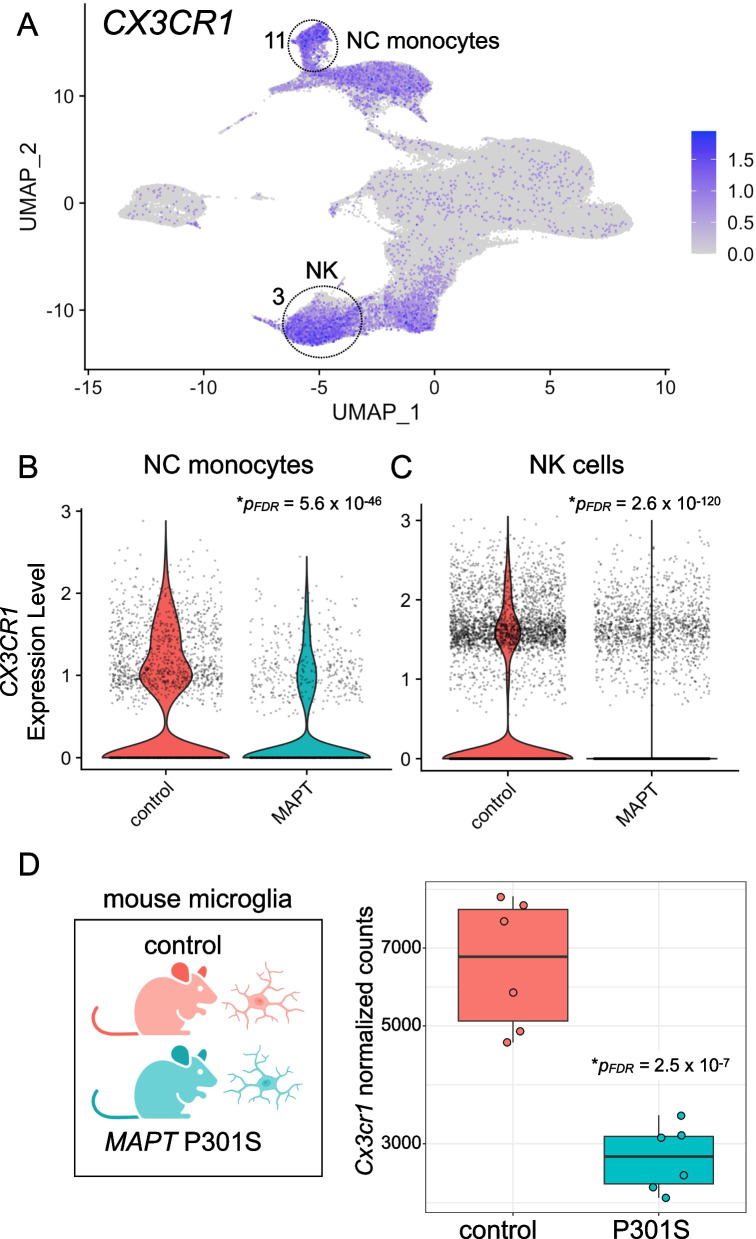
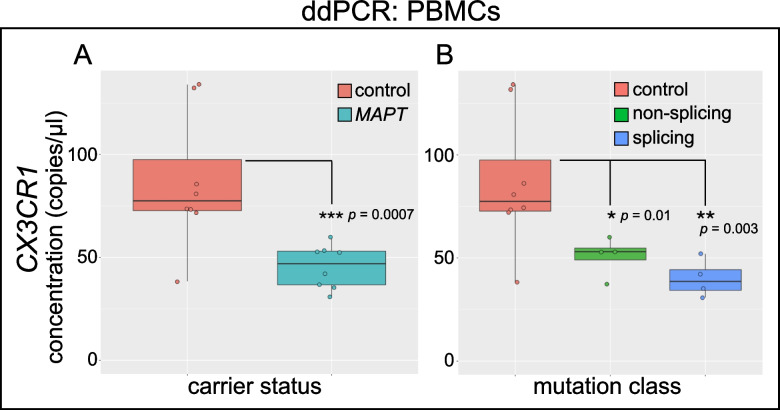
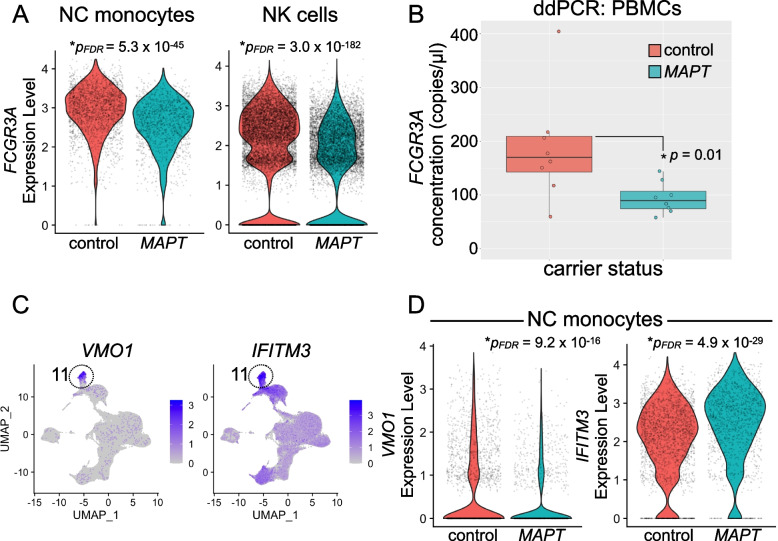
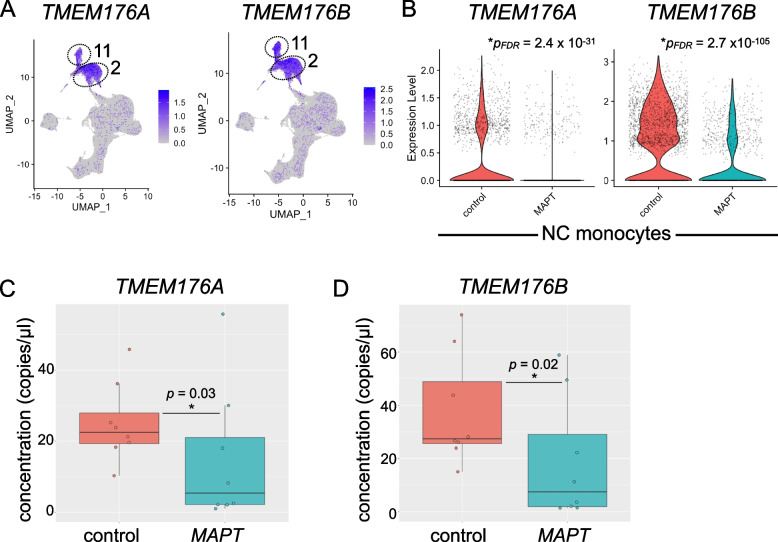
Analysis of ~ 181,000 individual PBMC transcriptomes demonstrated striking differential expression in monocytes and natural killer (NK) cells in MAPT pathogenic variant carriers. In particular, we observed a marked reduction in the expression of CX3CR1-the gene encoding the fractalkine receptor that is known to modulate tau pathology in mouse models-in monocytes and NK cells. We also observed a significant reduction in the abundance of nonclassical monocytes and dysregulated expression of nonclassical monocyte marker genes, including FCGR3A. Finally, we identified reductions in TMEM176A and TMEM176B, genes thought to be involved in the inflammatory response in human microglia but with unclear function in peripheral monocytes. We confirmed the reduction in nonclassical monocytes by flow cytometry and the differential expression of select biologically relevant genes dysregulated in our scRNA-seq data using ddPCR.
Our results suggest that human peripheral immune cell expression and abundance are modulated by tau-associated pathophysiologic changes. CX3CR1 and nonclassical monocytes in particular will be a focus of future work exploring the role of these peripheral signals in additional tau-associated neurodegenerative diseases.
来自小鼠模型的新证据开始阐明大脑对 tau 病理学的免疫反应,但人类对此反应的性质知之甚少。此外,tau 病理学和大脑内局部炎症反应在多大程度上影响更广泛的免疫系统仍不清楚。
为了解决这些问题,我们对携带 MAPT 致病变体的个体的外周血单核细胞 (PBMC) 进行了单细胞 RNA 测序 (scRNA-seq),MAPT 是编码 tau 的基因(n=8),并对健康的非携带者对照进行了 scRNA-seq 分析(n=8)。我们通过流式细胞术、液滴数字 (dd)PCR 和对公开可用的转录组数据集的二次分析,对 scRNA-seq 分析的主要发现进行了确认和扩展。
对约 181000 个个体 PBMC 转录组的分析表明,在 MAPT 致病变体携带者的单核细胞和自然杀伤 (NK) 细胞中存在明显的差异表达。特别是,我们观察到单核细胞和 NK 细胞中 CX3CR1(编码已知在小鼠模型中调节 tau 病理学的 fractalkine 受体的基因)的表达显著降低。我们还观察到非经典单核细胞的丰度显著降低,以及非经典单核细胞标记基因的失调表达,包括 FCGR3A。最后,我们鉴定到 TMEM176A 和 TMEM176B 的减少,这些基因被认为参与人类小胶质细胞的炎症反应,但在外周单核细胞中的功能尚不清楚。我们通过流式细胞术证实了非经典单核细胞的减少,并通过 ddPCR 证实了我们 scRNA-seq 数据中失调的选择具有生物学意义的基因的差异表达。
我们的结果表明,tau 相关病理变化调节人类外周免疫细胞的表达和丰度。特别是 CX3CR1 和非经典单核细胞将成为未来探索这些外周信号在其他 tau 相关神经退行性疾病中作用的重点。