• 文献检索
  • 文档翻译
  • 深度研究
  • 学术资讯
  • Suppr Zotero 插件Zotero 插件
  • 邀请有礼
  • 套餐&价格
  • 历史记录
应用&插件
Suppr Zotero 插件Zotero 插件浏览器插件Mac 客户端Windows 客户端微信小程序
定价
高级版会员购买积分包购买API积分包
服务
文献检索文档翻译深度研究API 文档MCP 服务
关于我们
关于 Suppr公司介绍联系我们用户协议隐私条款
关注我们

Suppr 超能文献

核心技术专利:CN118964589B侵权必究
粤ICP备2023148730 号-1Suppr @ 2026

文献检索

告别复杂PubMed语法,用中文像聊天一样搜索,搜遍4000万医学文献。AI智能推荐,让科研检索更轻松。

立即免费搜索

文件翻译

保留排版,准确专业,支持PDF/Word/PPT等文件格式,支持 12+语言互译。

免费翻译文档

深度研究

AI帮你快速写综述,25分钟生成高质量综述,智能提取关键信息,辅助科研写作。

立即免费体验

弥漫性肺泡出血所致咯血

Hemoptysis Due to Diffuse Alveolar Hemorrhage.

作者信息

Buchwald Zoltan, Vempati Amrita

机构信息

Creighton University School of Medicine Phoenix Program, Maricopa Medical Center, Department of Emergency Medicine, Phoenix, AZ.

出版信息

J Educ Teach Emerg Med. 2020 Jul 15;5(3):S1-S27. doi: 10.21980/J8ZP86. eCollection 2020 Jul.

DOI:10.21980/J8ZP86
PMID:37465227
原文链接:https://pmc.ncbi.nlm.nih.gov/articles/PMC10332551/
Abstract

AUDIENCE

This scenario was developed to educate junior and senior emergency medicine (EM) residents.

INTRODUCTION

EM Model of Practice recommends that the residents are able to manage patients in a critical condition from massive hemoptysis. Mild to moderate hemoptysis can be self-limiting and often can be managed with conservative measures; however, massive hemoptysis is a life-threatening emergency that needs to be managed promptly. Mortality from massive hemoptysis is about 13%-18%.1 There are several causes for hemoptysis ranging from pulmonary to vascular causes. Diffuse alveolar hemorrhage (DAH) causes hemoptysis only 0.2% which makes it a very rare but devastating disease.2 Hemoptysis from DAH can present a significant challenge to an EM physician since it can present in various ways including chest pain, shortness of breath or hemoptysis. Up to 40% of the patients can present without hemoptysis which makes it a diagnostic dilemma.3 Patients presenting with massive hemoptysis from DAH require management for hypovolemic shock, hypoxic respiratory arrest and potential cardiac arrest. The physicians also need to perform adequate ventilator management to help with alveolar recruitment. This simulation case can help discuss some of the nuances of the management of hemoptysis and DAH.

OBJECTIVES

By the end of this simulation session, learners will be able to: (1) recognize worsening respiratory status of a patient with hemoptysis and intervene appropriately, (2) manage a patient with severe hemoptysis and perform appropriate ventilator management, (3) manage sinus tachycardia with QT prolongation on the ECG caused by cocaine and hypomagnesemia, (4) address various etiologies of hemoptysis, (5) discuss the causes of massive hemoptysis and management options, and (6) review ventilation strategies in an intubated hypoxic patient.

EDUCATIONAL METHODS

This session was conducted using high-fidelity simulation, which was immediately followed by an in-depth debriefing session. Each session had 3 EM residents from various levels of training on the team and 7 observers. There was 1 simulation instructor running the session and 1 simulation technician who acted as a nurse.

RESEARCH METHODS

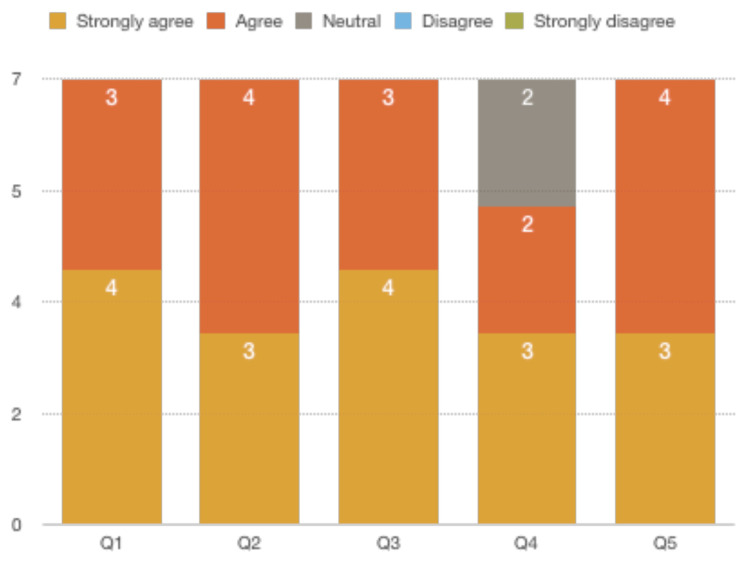
After the simulation and debriefing session was complete, an online survey was sent via surveymonkey.com to all the participants. The survey collected responses to the following questions: (1) the case was believable, (2) the case had right amount of complexity, (3) the case helped in improving medical knowledge and patient care, (4) the simulation environment gave me a real-life experience and, (5) the debriefing session after simulation helped improve my knowledge. A Likert scale was used to collect the responses.

RESULTS

Seven learners responded to the survey. One hundred percent of them either agreed or strongly agreed that the case was beneficial in learning and improving patient care. They also agreed that it helped in improving medical knowledge. The post-session debrief was found to be very helpful by all the learners.

DISCUSSION

High-fidelity simulation was a cost-effective yet realistic way to manage severe hemoptysis, PEA (pulseless electrical activity), and persistent hypoxia in patients with diffuse alveolar hemorrhage. Starting the case with severe hypoxia that quickly progresses to PEA helps the learner to manage the patient quickly and effectively. Overall, learners enjoyed managing the patient, followed by discussing the various management strategies.

TOPICS

Hemoptysis, diffuse alveolar hemorrhage, medical simulation, respiratory.
https://cdn.ncbi.nlm.nih.gov/pmc/blobs/65f5/10332551/4446fa9205e4/jetem-5-2-s1f6.jpg
https://cdn.ncbi.nlm.nih.gov/pmc/blobs/65f5/10332551/4fb591d950c8/jetem-5-2-s1f1.jpg
https://cdn.ncbi.nlm.nih.gov/pmc/blobs/65f5/10332551/89ba04825bf1/jetem-5-2-s1f2.jpg
https://cdn.ncbi.nlm.nih.gov/pmc/blobs/65f5/10332551/f5aa5926012e/jetem-5-2-s1f3.jpg
https://cdn.ncbi.nlm.nih.gov/pmc/blobs/65f5/10332551/506c180bf127/jetem-5-2-s1f4.jpg
https://cdn.ncbi.nlm.nih.gov/pmc/blobs/65f5/10332551/a8a70a61289f/jetem-5-2-s1f5.jpg
https://cdn.ncbi.nlm.nih.gov/pmc/blobs/65f5/10332551/4446fa9205e4/jetem-5-2-s1f6.jpg
https://cdn.ncbi.nlm.nih.gov/pmc/blobs/65f5/10332551/4fb591d950c8/jetem-5-2-s1f1.jpg
https://cdn.ncbi.nlm.nih.gov/pmc/blobs/65f5/10332551/89ba04825bf1/jetem-5-2-s1f2.jpg
https://cdn.ncbi.nlm.nih.gov/pmc/blobs/65f5/10332551/f5aa5926012e/jetem-5-2-s1f3.jpg
https://cdn.ncbi.nlm.nih.gov/pmc/blobs/65f5/10332551/506c180bf127/jetem-5-2-s1f4.jpg
https://cdn.ncbi.nlm.nih.gov/pmc/blobs/65f5/10332551/a8a70a61289f/jetem-5-2-s1f5.jpg
https://cdn.ncbi.nlm.nih.gov/pmc/blobs/65f5/10332551/4446fa9205e4/jetem-5-2-s1f6.jpg
摘要

受众

本病例场景旨在培训急诊医学(EM)专业的低年资和高年资住院医师。

引言

急诊医学实践模式建议住院医师能够处理大量咯血导致的危急情况。轻度至中度咯血通常可自行缓解,往往可采用保守措施处理;然而,大量咯血是危及生命的紧急情况,需要迅速处理。大量咯血的死亡率约为13% - 18%。咯血的病因有多种,从肺部到血管性病因都有。弥漫性肺泡出血(DAH)导致咯血的情况仅占0.2%,这使其成为一种非常罕见但极具破坏性的疾病。DAH引起的咯血对急诊医师来说是一项重大挑战,因为其表现形式多样,包括胸痛、呼吸急促或咯血。高达40%的患者可能无咯血表现,这使其诊断成为难题。因DAH出现大量咯血的患者需要处理低血容量性休克、低氧性呼吸骤停以及潜在的心搏骤停。医师还需要进行适当的通气管理以促进肺泡复张。本模拟病例有助于探讨咯血和DAH处理中的一些细微差别。

目标

在本次模拟课程结束时,学习者应能够:(1)识别咯血患者不断恶化的呼吸状况并进行适当干预;(2)处理严重咯血患者并进行适当的通气管理;(3)处理由可卡因和低镁血症导致心电图QT间期延长的窦性心动过速;(4)应对咯血的各种病因;(5)讨论大量咯血的病因及处理方法;(六)复习插管低氧患者的通气策略。

教育方法

本次课程采用高保真模拟,随后立即进行深入的总结汇报。每次课程团队中有3名处于不同培训阶段的急诊医学住院医师和7名观察员。有1名模拟教员主持课程,1名模拟技术员扮演护士。

研究方法

模拟和总结汇报课程结束后,通过surveymonkey.com向所有参与者发送在线调查问卷。该调查收集对以下问题的回答:(1)病例是否可信;(2)病例的复杂程度是否合适;(3)病例是否有助于提高医学知识和患者护理水平;(4)模拟环境是否给人真实的体验;(5)模拟后的总结汇报课程是否有助于提高知识水平。采用李克特量表收集回答。

结果

7名学习者回复了调查问卷。他们百分之百地同意或强烈同意该病例对学习和改善患者护理有益。他们还同意该病例有助于提高医学知识。所有学习者都认为课后的总结汇报非常有帮助。

讨论

高保真模拟是处理弥漫性肺泡出血患者严重咯血、心脏停搏(无脉电活动)和持续性低氧的一种经济有效且逼真的方法。以迅速进展为心脏停搏(无脉电活动)的严重低氧开始病例,有助于学习者快速有效地处理患者。总体而言,学习者喜欢处理该病例,随后讨论各种处理策略。

主题

咯血、弥漫性肺泡出血、医学模拟、呼吸

相似文献

1
Hemoptysis Due to Diffuse Alveolar Hemorrhage.弥漫性肺泡出血所致咯血
J Educ Teach Emerg Med. 2020 Jul 15;5(3):S1-S27. doi: 10.21980/J8ZP86. eCollection 2020 Jul.
2
Meningococcal Meningitis with Waterhouse-Friderichsen Syndrome.伴有华-佛综合征的脑膜炎球菌性脑膜炎
J Educ Teach Emerg Med. 2021 Jul 15;6(3):S1-S32. doi: 10.21980/J8TH1K. eCollection 2021 Jul.
3
Torsade de Pointes Due to Hypokalemia and Hypomagnesemia.低钾血症和低镁血症所致尖端扭转型室性心动过速
J Educ Teach Emerg Med. 2022 Oct 15;7(4):S27-S51. doi: 10.21980/J8JP8G. eCollection 2022 Oct.
4
Alcohol Withdrawal with Delirium Tremens.伴有震颤谵妄的酒精戒断
J Educ Teach Emerg Med. 2023 Jul 31;8(3):S1-S33. doi: 10.21980/J8S35N. eCollection 2023 Jul.
5
Electrical Storm/Refractory Ventricular Tachycardia.电风暴/难治性室性心动过速
J Educ Teach Emerg Med. 2024 Apr 30;9(2):S27-S54. doi: 10.21980/J8TS80. eCollection 2024 Apr.
6
Acute Exacerbation of COPD.慢性阻塞性肺疾病急性加重
J Educ Teach Emerg Med. 2023 Apr 30;8(2):S35-S61. doi: 10.21980/J8V070. eCollection 2023 Apr.
7
An Innovative Inexpensive Portable Pulmonary Edema Intubation Simulator.一种创新的低成本便携式肺水肿插管模拟器。
J Educ Teach Emerg Med. 2020 Apr 15;5(2):I9-I20. doi: 10.21980/J8MM1R. eCollection 2020 Apr.
8
Little Patients, Big Tasks - A Pediatric Emergency Medicine Escape Room.小患者,大任务——一场儿科急诊医学密室逃脱游戏
J Educ Teach Emerg Med. 2023 Oct 31;8(4):SG1-SG19. doi: 10.21980/J89W70. eCollection 2023 Oct.
9
Extracorporeal Membrane Oxygenation (ECMO) for Refractory Cardiac Arrest.体外膜肺氧合(ECMO)用于难治性心脏骤停。
J Educ Teach Emerg Med. 2020 Oct 15;5(4):S28-S58. doi: 10.21980/J88W69. eCollection 2020 Oct.
10
Acute Chest Syndrome.急性胸综合征
J Educ Teach Emerg Med. 2023 Jan 31;8(1):O1-O23. doi: 10.21980/J80S8J. eCollection 2023 Jan.

本文引用的文献

1
Managing Massive Hemoptysis.大咯血的处理
Chest. 2020 Jan;157(1):77-88. doi: 10.1016/j.chest.2019.07.012. Epub 2019 Jul 30.
2
Severe Progressive Diffuse Alveolar Hemorrhage in a Patient with Systemic Lupus Erythematosus.一名系统性红斑狼疮患者的严重进行性弥漫性肺泡出血
Case Rep Crit Care. 2018 Jun 7;2018:9790459. doi: 10.1155/2018/9790459. eCollection 2018.
3
A systematic approach to the management of massive hemoptysis.一种处理大量咯血的系统方法。
J Thorac Dis. 2017 Sep;9(Suppl 10):S1069-S1086. doi: 10.21037/jtd.2017.06.41.
4
The Diagnosis and Treatment of Hemoptysis.咯血的诊断与治疗。
Dtsch Arztebl Int. 2017 Jun 5;114(21):371-381. doi: 10.3238/arztebl.2017.0371.
5
Lung-protective ventilation strategies and adjunctive treatments for the emergency medicine patient with acute respiratory failure.针对急性呼吸衰竭急诊患者的肺保护性通气策略及辅助治疗
Emerg Med Clin North Am. 2014 Nov;32(4):871-87. doi: 10.1016/j.emc.2014.07.012. Epub 2014 Sep 18.
6
Diagnosis and management of hemoptysis.咯血的诊断与处理
Diagn Interv Radiol. 2014 Jul-Aug;20(4):299-309. doi: 10.5152/dir.2014.13426.
7
Diffuse alveolar hemorrhage.弥漫性肺泡出血
Tuberc Respir Dis (Seoul). 2013 Apr;74(4):151-62. doi: 10.4046/trd.2013.74.4.151. Epub 2013 Apr 30.
8
Diffuse alveolar hemorrhage in immunocompetent patients: etiologies and prognosis revisited.免疫功能正常患者的弥漫性肺泡出血:病因和预后再探讨。
Respir Med. 2012 Jul;106(7):1021-32. doi: 10.1016/j.rmed.2012.03.015. Epub 2012 Apr 25.