Turner Anisha, Tichter Aleksandr M, Pillow M Tyson
Baylor College of Medicine, Department of Emergency Medicine, Houston, Tx.
J Educ Teach Emerg Med. 2021 Apr 19;6(2):SG46-SG56. doi: 10.21980/J8CH2X. eCollection 2021 Apr.
The virtual escape room is a didactic activity for emergency medicine residents (interns, junior residents, senior residents).
Residency programs are employing a wide variety of active learning techniques to engage their learners, including large-group discussion, small-group activities, team-based learning, gamification, problem-based learning, role-playing and case studies. In recent years, educators have drawn their attention to educational escape rooms, a new type of learning activity that utilizes collaborative learning activities to foster creating thinking, communication, teamwork and leadership.1-3 There have been a number of cases in medicine, 4,5 but there have been limited works published on the use of virtual educational escape rooms in residency education.Unfortunately, the COVID pandemic has made participation in an escape room more difficult. In lieu of social distancing during the COVID pandemic, participation in a virtual escape room is an effective and flexible learning modality for resident didactics that appears to promote participant satisfaction, competency, learning, and engagement.
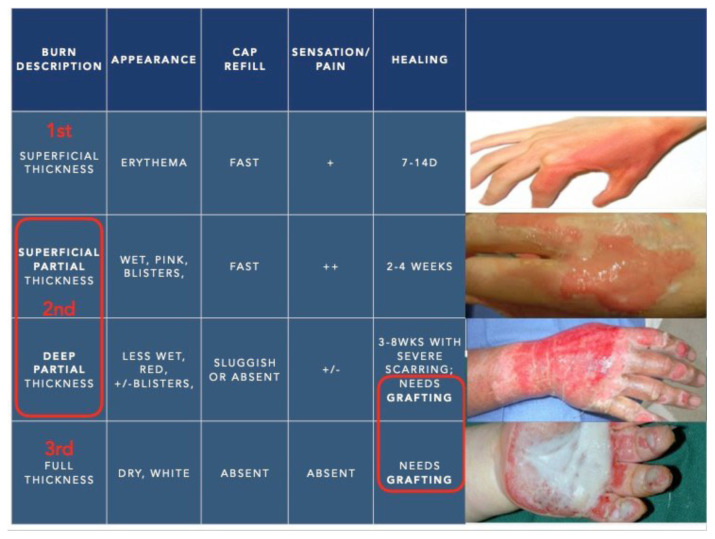
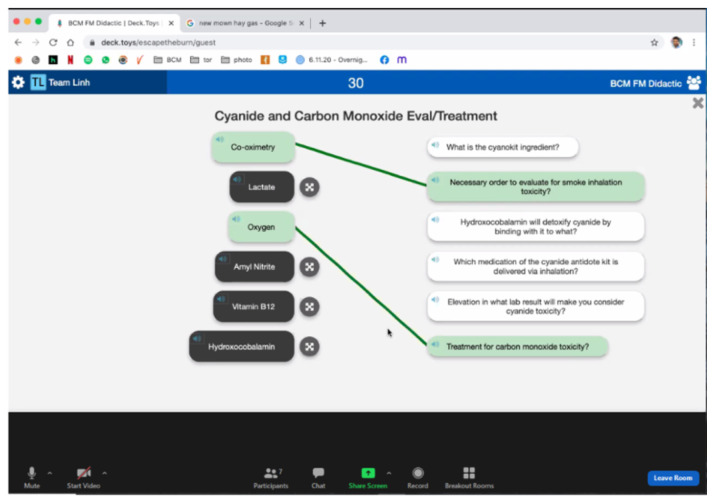
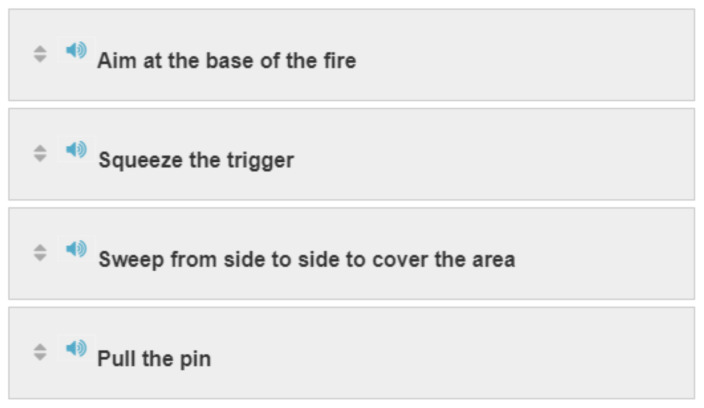
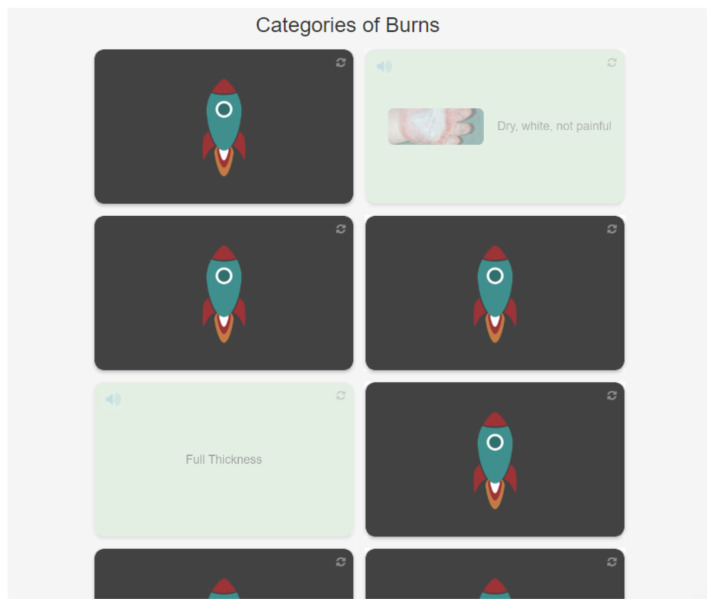
By the end of the activity, learners should be able to:Identify the hazardous chemicals associated with house firesClassify burn injury according to depth, extent and severity based on established standardsRecall the actions to take in response to fire emergencies (R.A.C.E. and P.A.S.S. acronyms)Recall key laboratory features of cyanide and carbon monoxide poisoningsIdentify appropriate management strategies for smoke inhalation injuriesRecite the treatment for cyanide and carbon monoxide poisoningsDescribe the management of the burn injuriesCommunicate and collaborate as a team to arrive at solutions of problemsDisplay task-switching and leadership skills during exerciseEvaluate virtual escape room experience.
Emergent care of burns, a popular and shared topic in both Emergency Medicine and Family Medicine literature, was chosen and educational objectives were developed. The website Deck.Toys was utilized to formulate the escape room along with puzzles around the educational objectives. Students congregated remotely on Zoom, and after instructions, were separated into teams to solve content-specific puzzles in order to escape the room. Teams which solve all the puzzles in the allotted time were considered to have successfully escaped the room. After the allotted time, the faculty led debriefing, and topic discussion occurred.
Sixty-three participants composed of residents (24 emergency [EM], 29 family medicine [FM], 4 combined emergency and family medicine [EM/FM]), advanced practice practitioner trainees (2 EM), and faculty member participants (4 FMP) partook in the virtual escape room experience. At the end of the activity, a 17-item survey using Likert-scale questions was embedded in order to obtain feedback regarding satisfaction, engagement, learning, and medical competency in communication, collaboration, task-switching, and leadership skills.
Eighteen out of 63 participants filled out the survey. This was the first virtual escape room experience for 94% of the respondents. A majority (88.9%) of respondents enjoyed the virtual escape room, finding it fun, interesting, engaging, and interactive. None of the respondents preferred traditional didactics over the virtual escape room activity, and 72% were either just as or equally as satisfied with virtual compared to in-person escape rooms. Nearly all respondents agreed that the activity encouraged collaboration, communication skills, task-switching, and leadership skills (94.4%, 88.9%, 72.2%, 72.2%, respectively).
Participation in a virtual escape room is an effective and flexible learning modality for resident didactics that appears to promote learner satisfaction and engagement. The escape room also promoted important competencies encouraged during residency, such as interpersonal and communication skills and practice-based learning and improvement, and is an effective addition to virtual learning tools.
Small group activity, team-building exercise, remote learning, virtual learning, educational games, gamification, medical education, escape room, millennials, student engagement, adult learning theory, emergency medicine residents, family medicine residents, chemicals in house fires, smoke inhalation injuries, burn classification, burn injury management, carbon monoxide poisoning, cyanide poisoning, R.A.C.E. acronym, P.A.S.S. acronym, fluid resuscitation in burn patients, burn referrals.
虚拟密室逃脱是一项针对急诊医学住院医师(实习生、初级住院医师、高级住院医师)的教学活动。
住院医师培训项目正在采用各种各样的主动学习技术来吸引学习者,包括小组讨论、小组活动、基于团队的学习、游戏化、基于问题的学习、角色扮演和案例研究。近年来,教育工作者将注意力转向了教育密室逃脱,这是一种新型的学习活动,利用协作学习活动来培养创造性思维、沟通、团队合作和领导力。1-3医学领域已经有不少相关案例,4,5但关于在住院医师培训教育中使用虚拟教育密室逃脱的文献报道有限。不幸的是,新冠疫情使得参与实体密室逃脱变得更加困难。作为新冠疫情期间社交距离措施的替代方案,参与虚拟密室逃脱是一种有效且灵活的住院医师教学学习方式,似乎能提高参与者的满意度、能力、学习效果以及参与度。
活动结束时,学习者应能够:识别与家庭火灾相关的危险化学品;根据既定标准按深度、范围和严重程度对烧伤进行分类;回忆应对火灾紧急情况时应采取的行动(R.A.C.E. 和P.A.S.S. 首字母缩写);回忆氰化物和一氧化碳中毒的关键实验室特征;确定烟雾吸入伤的适当管理策略;背诵氰化物和一氧化碳中毒的治疗方法;描述烧伤的管理;作为团队进行沟通与协作以找到问题解决方案;在练习过程中展示任务切换和领导技能;评估虚拟密室逃脱体验。
选择了急诊医学和家庭医学文献中一个热门且共同的主题——烧伤的紧急护理,并制定了教育目标。利用Deck.Toys网站围绕教育目标设计谜题并构建密室逃脱场景。学生们通过Zoom远程聚集,在收到指示后,分成小组解决特定内容的谜题以逃出密室。在规定时间内解决所有谜题的小组被视为成功逃出密室。规定时间结束后,教员进行总结汇报,并展开主题讨论。
63名参与者包括住院医师(24名急诊医学[EM]、29名家庭医学[FM]、4名急诊与家庭医学联合[EM/FM])、高级实践从业者学员(2名EM)以及教员参与者(4名FMP)参与了虚拟密室逃脱体验。活动结束时,嵌入了一项使用李克特量表问题的17项调查,以获取关于满意度、参与度、学习效果以及沟通、协作、任务切换和领导技能方面的医学能力的反馈。
63名参与者中有18人填写了调查问卷。94%的受访者表示这是他们第一次体验虚拟密室逃脱。大多数(88.9%)受访者喜欢虚拟密室逃脱,觉得它有趣、吸引人且互动性强。没有受访者更喜欢传统教学方式而非虚拟密室逃脱活动,72%的受访者对虚拟密室逃脱与实体密室逃脱的满意度相同或更高。几乎所有受访者都认为该活动促进了协作、沟通技能、任务切换和领导技能(分别为94.4%、88.9%、72.2%、72.2%)。
参与虚拟密室逃脱是一种有效且灵活的住院医师教学学习方式,似乎能提高学习者的满意度和参与度一。密室逃脱还促进了住院医师培训期间所鼓励的重要能力,如人际和沟通技能以及基于实践的学习与改进,是虚拟学习工具的有效补充。
小组活动、团队建设练习、远程学习、虚拟学习、教育游戏、游戏化、医学教育、密室逃脱千禧一代、学生参与度、成人学习理论、急诊医学住院医师、家庭医学住院医师、家庭火灾中的化学品、烟雾吸入伤、烧伤分类、烧伤管理、一氧化碳中毒、氰化物中毒、R.A.C.E. 首字母缩写、P.A.S.S. 首字母缩写、烧伤患者的液体复苏、烧伤转诊