School of Pharmaceutical Sciences, Guangdong Provincial Key Laboratory of Chiral Molecule and Drug Discovery, National and Local Joint Engineering Laboratory of Druggability and New Drugs Evaluation, Sun Yat-Sen University, Guangzhou, Guangdong, China.
School of Pharmaceutical Sciences, Jinan University, Guangzhou, Guangdong, China.
Autophagy. 2023 Dec;19(12):3096-3112. doi: 10.1080/15548627.2023.2237794. Epub 2023 Jul 25.
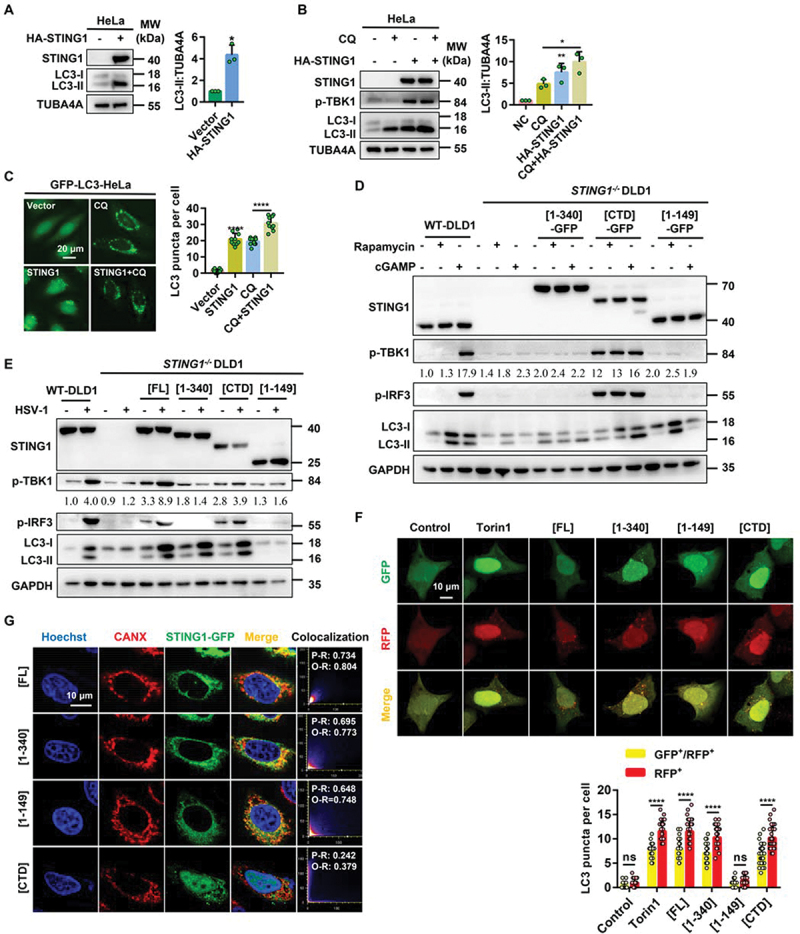
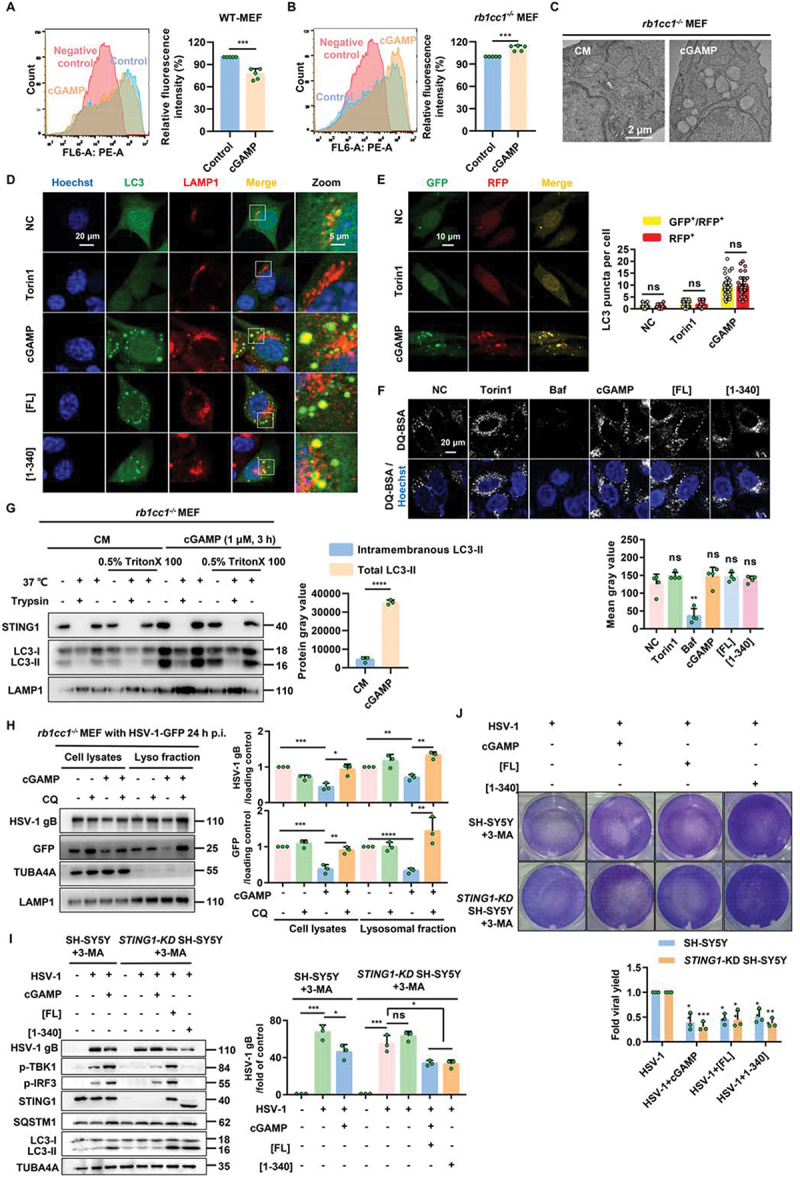
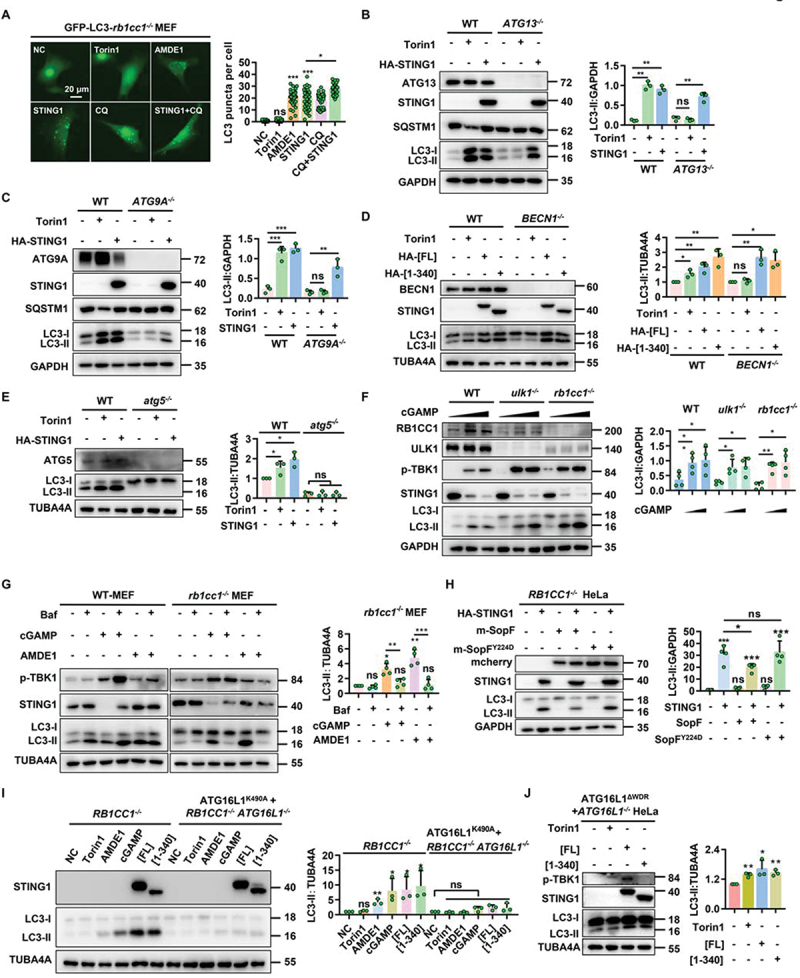
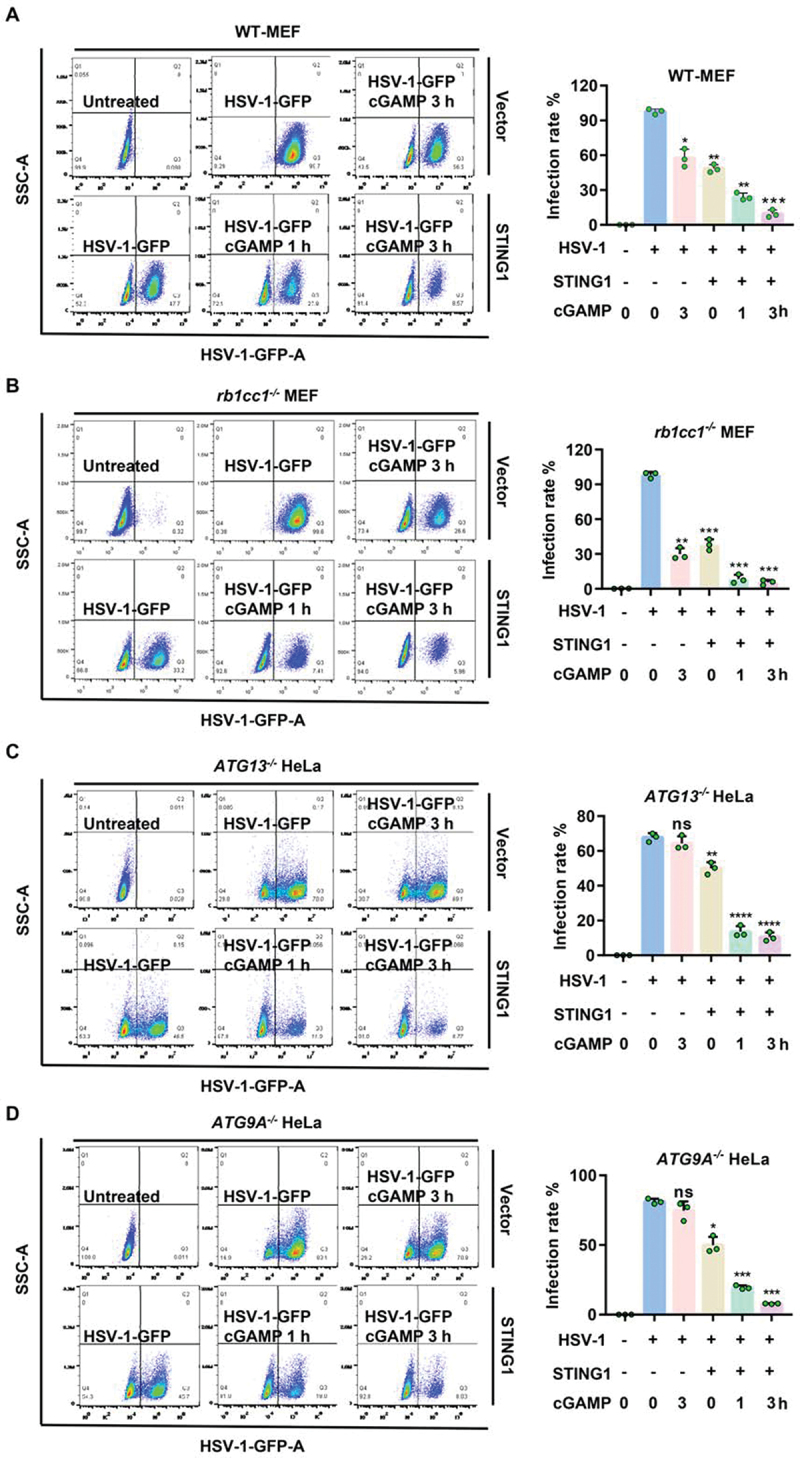
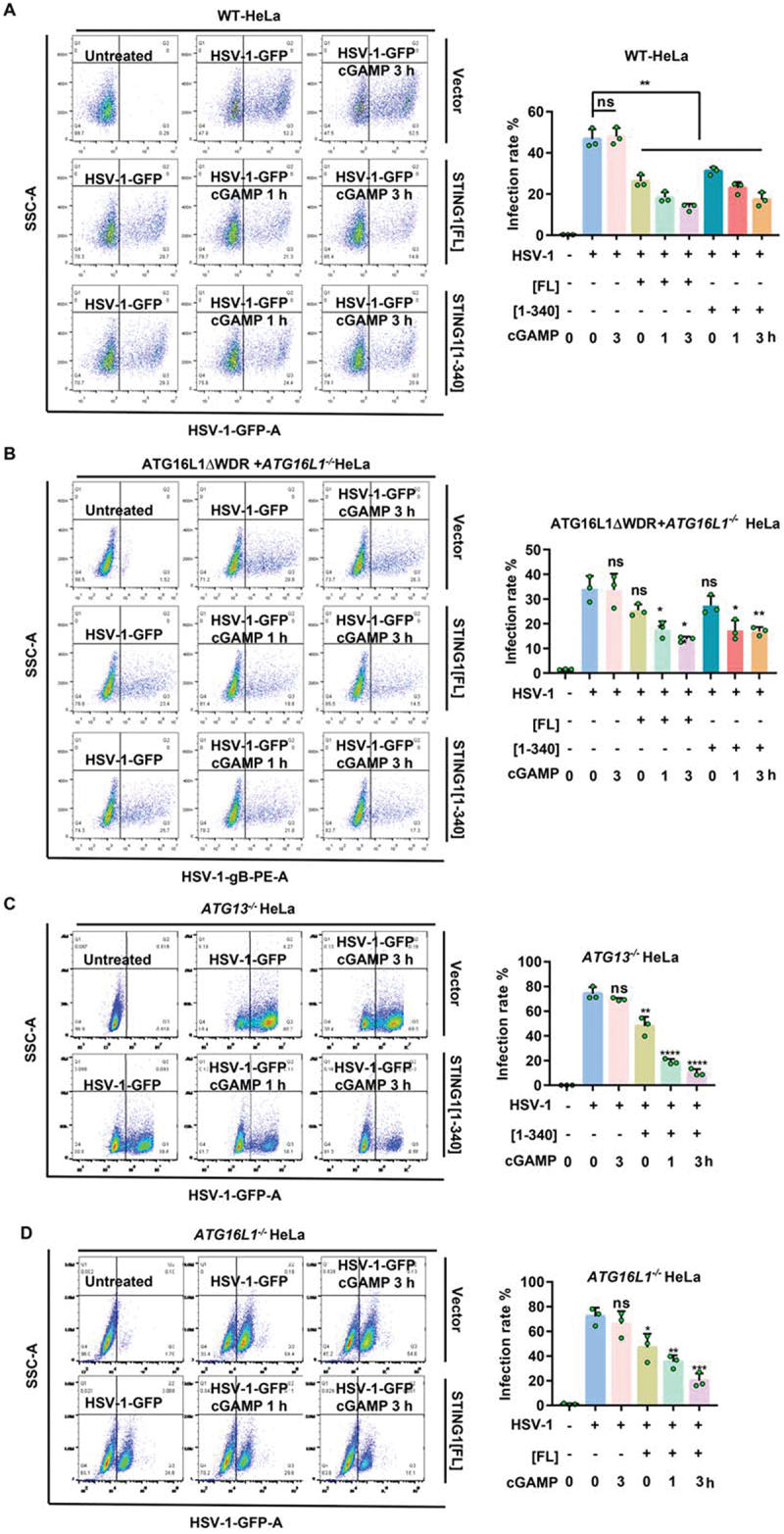
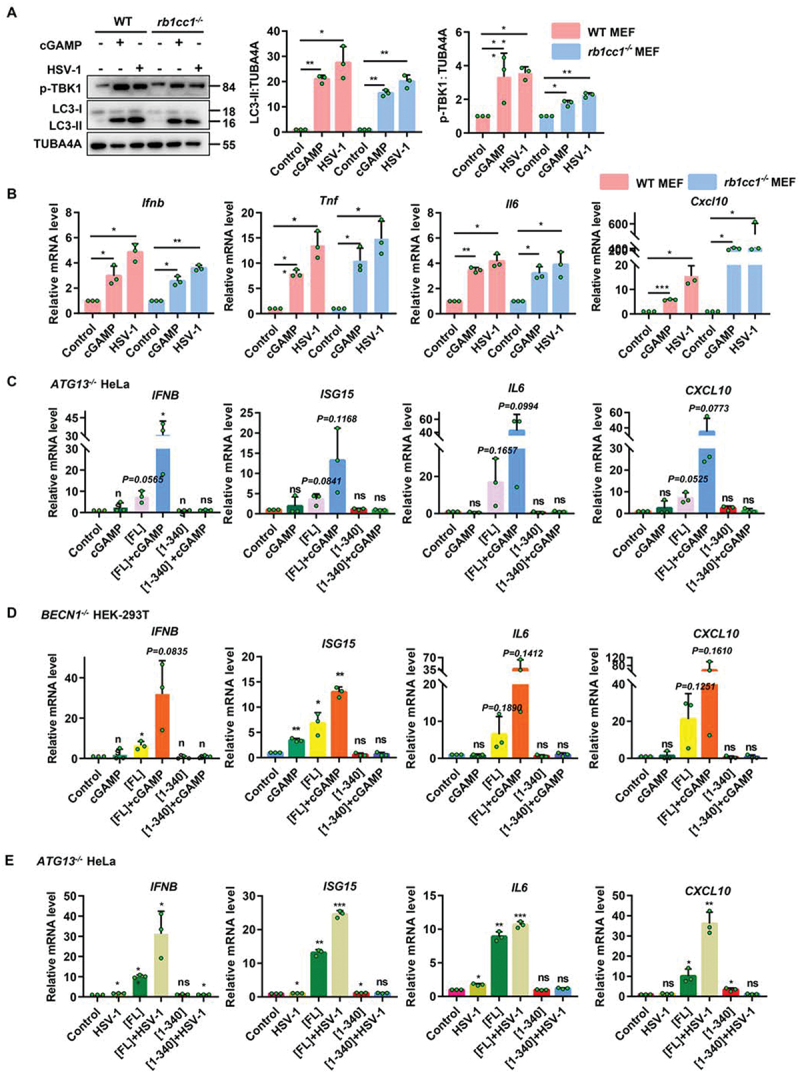
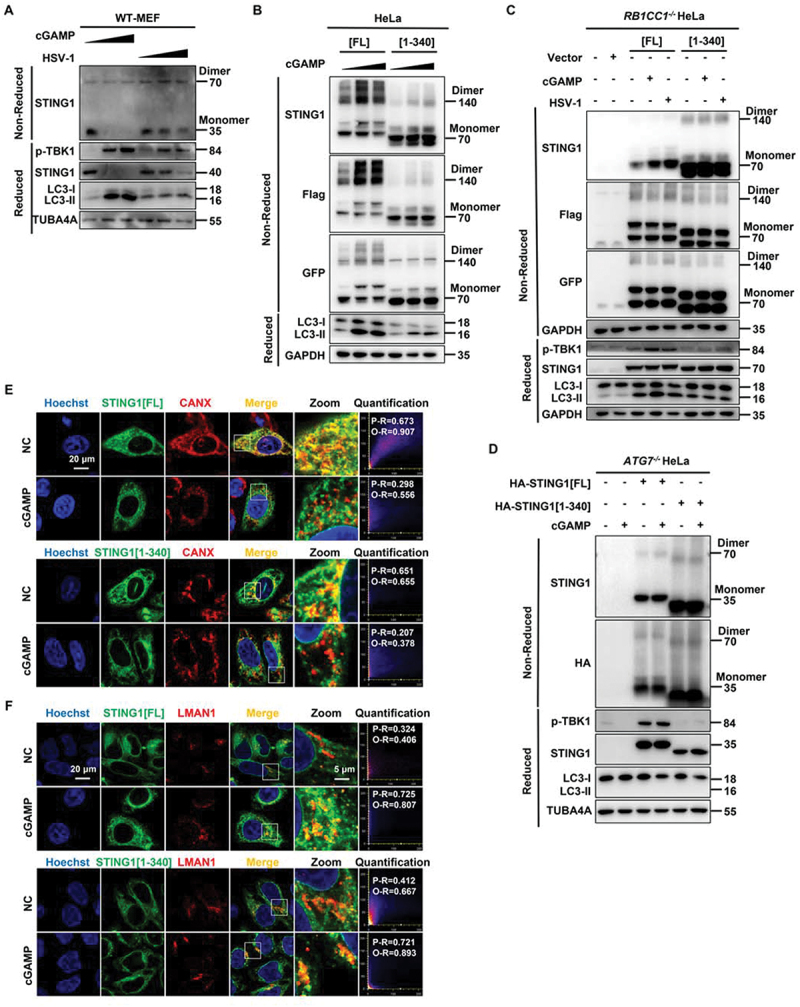
STING1 (stimulator of interferon response cGAMP interactor 1) plays an essential role in immune responses for virus inhibition via inducing the production of type I interferon, inflammatory factors and macroautophagy/autophagy. In this study, we found that STING1 activation could induce not only canonical autophagy but also non-canonical autophagy (NCA) which is independent of the ULK1 or BECN1 complexes to form MAP1LC3/LC3-positive structures. Whether STING1-induced NCA has similar characters and physiological functions to canonical autophagy is totally unknown. Different from canonical autophagy, NCA could increase single-membrane structures and failed to degrade long-lived proteins, and could be strongly suppressed by interrupting vacuolar-type H-translocating ATPase (V-ATPase) activity. Importantly, STING1-induced NCA could effectively inhibit DNA virus HSV-1 in cell model. Moreover, STING1 [1-340], a STING1 mutant lacking immunity and inflammatory response due to deletion of the tail end of STING1, could degrade virus through NCA alone, suggesting that the antiviral effect of activated STING1 could be separately mediated by inherent immunity, canonical autophagy, and NCA. In addition, the translocation and dimerization of STING1 do not rely on its immunity function and autophagy pathway. Similar to canonical autophagy, LC3-positive structures of NCA induced by STING1 could finally fuse with lysosomes, and the degradation of HSV-1 could be reverted by inhibition of lysosome function, suggesting that the elimination of DNA virus via NCA still requires the lysosome pathway. Collectively, we proved that besides its classical immunity function and canonical autophagy pathway, STING1-induced NCA is also an efficient antiviral pathway for the host cell. ATG: autophagy related; Baf: bafilomycin A; CASM: conjugation of LC3 to a single membrane; CGAS: cyclic GMP-AMP synthase; cGAMP: cyclic GMP-AMP; CQ: chloroquine; CTD: C-terminal domain; CTT: C-terminal tail; ER: endoplasmic reticulum; ERGIC: ER-Golgi intermediate compartment; HSV-1: herpes simplex virus 1; IRF3: interferon regulatory factor 3; IFNs: interferons; LAMP1: lysosomal associated membrane protein 1; LAP: LC3-associated phagocytosis; MAP1LC3/LC3: microtubule associated protein 1 light chain 3; MOI: multiplicity of infection; RB1CC1/FIP200: RB1 inducible coiled-coil 1; STING1: stimulator of interferon response cGAMP interactor 1; TBK1: TANK binding kinase 1; TGOLN2/TGN46: trans-golgi network protein 2; ULK1: unc-51 like autophagy activating kinase 1; V-ATPase: vacuolar-type H-translocating ATPase; VSV: vesicular stomatitis virus.
STING1(干扰素反应 cGAMP 相互作用因子 1 的刺激物)在通过诱导 I 型干扰素、炎症因子和巨自噬/自噬来抑制病毒方面发挥着重要作用。在这项研究中,我们发现 STING1 的激活不仅可以诱导经典自噬,还可以诱导非经典自噬(NCA),这种自噬独立于 ULK1 或 BECN1 复合物形成 MAP1LC3/LC3 阳性结构。STING1 诱导的 NCA 是否具有与经典自噬相似的特征和生理功能尚完全未知。与经典自噬不同,NCA 可增加单膜结构,不能降解长寿蛋白,并且可以通过中断液泡型 H-转运 ATP 酶(V-ATPase)活性而被强烈抑制。重要的是,STING1 诱导的 NCA 可在细胞模型中有效抑制 DNA 病毒 HSV-1。此外,由于 STING1 的尾部缺失而缺乏免疫和炎症反应的 STING1 [1-340]突变体,仅通过 NCA 即可降解病毒,表明激活的 STING1 的抗病毒作用可分别由固有免疫、经典自噬和 NCA 介导。此外,STING1 的易位和二聚化不依赖于其免疫功能和自噬途径。与经典自噬一样,STING1 诱导的 NCA 的 LC3 阳性结构最终可与溶酶体融合,并且通过抑制溶酶体功能可逆转 HSV-1 的降解,表明通过 NCA 消除 DNA 病毒仍需要溶酶体途径。总之,我们证明了除了其经典的免疫功能和经典的自噬途径外,STING1 诱导的 NCA 也是宿主细胞的一种有效的抗病毒途径。ATG:自噬相关;Baf:巴弗霉素 A;CASM:LC3 与单膜的结合;CGAS:环鸟苷酸-AMP 合酶;cGAMP:环鸟苷酸-AMP;CQ:氯喹;CTD:C 端结构域;CTT:C 端尾部;ER:内质网;ERGIC:内质网-高尔基体中间区室;HSV-1:单纯疱疹病毒 1;IRF3:干扰素调节因子 3;IFNs:干扰素;LAMP1:溶酶体相关膜蛋白 1;LAP:LC3 相关吞噬作用;MAP1LC3/LC3:微管相关蛋白 1 轻链 3;MOI:感染复数;RB1CC1/FIP200:RB1 诱导卷曲螺旋 1;STING1:干扰素反应 cGAMP 相互作用因子 1 的刺激物;TBK1:TANK 结合激酶 1;TGOLN2/TGN46:高尔基网络蛋白 2;ULK1:非典型卷曲相关激酶 1;V-ATPase:液泡型 H-转运 ATP 酶;VSV:水疱性口炎病毒。