Infection Immunology Research Group, Helmholtz Centre for Infection Research, 38124, Braunschweig, Germany.
Cell Mol Life Sci. 2023 Jul 22;80(8):221. doi: 10.1007/s00018-023-04875-9.
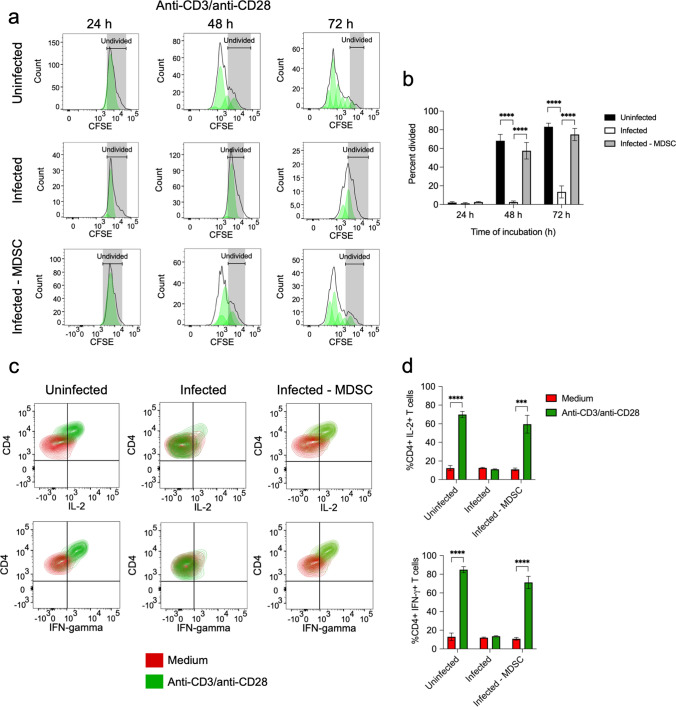
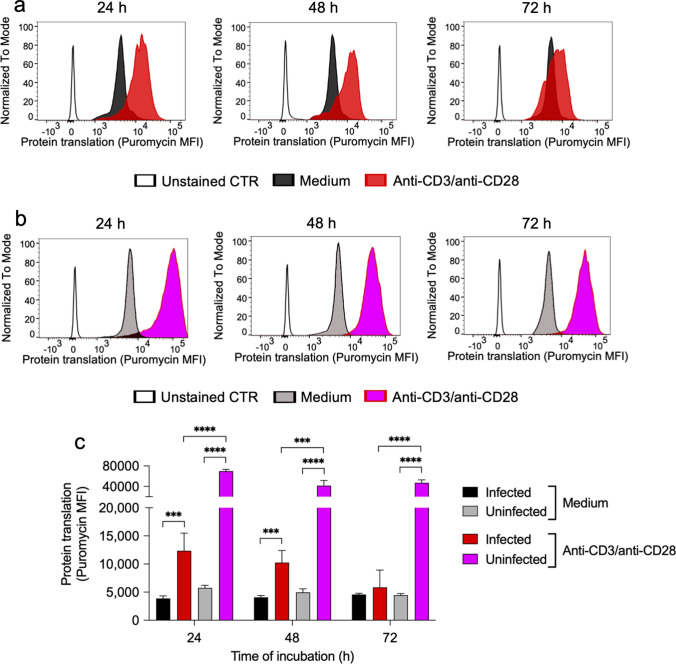
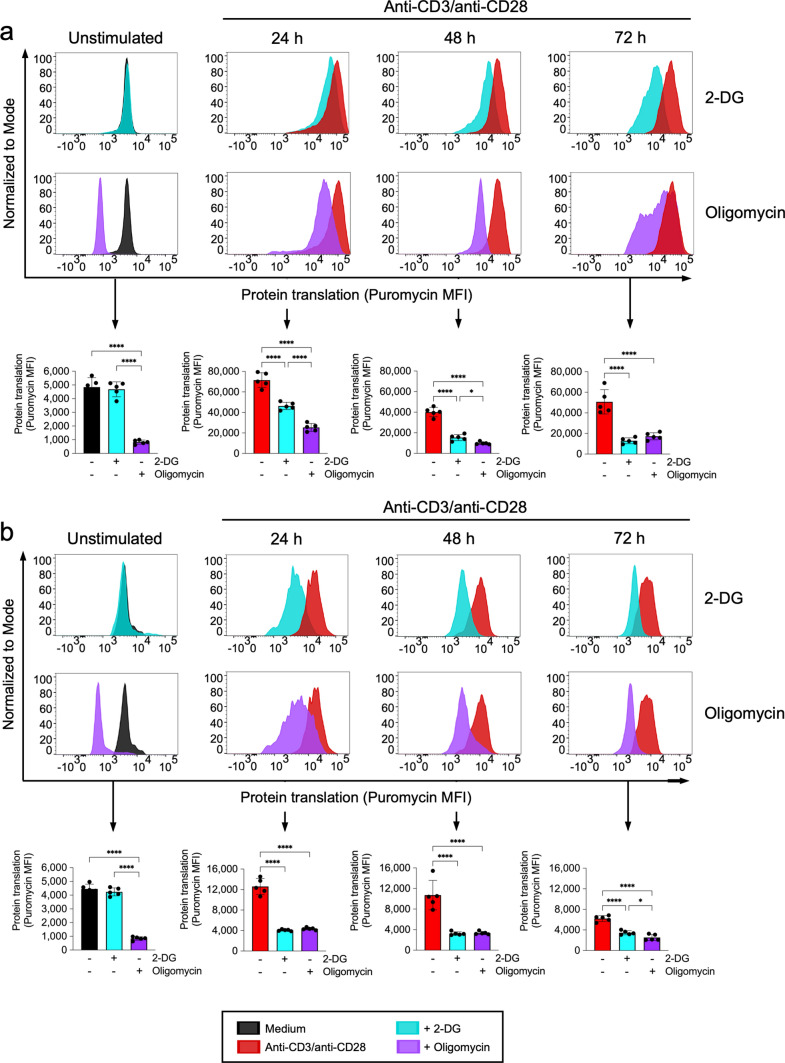
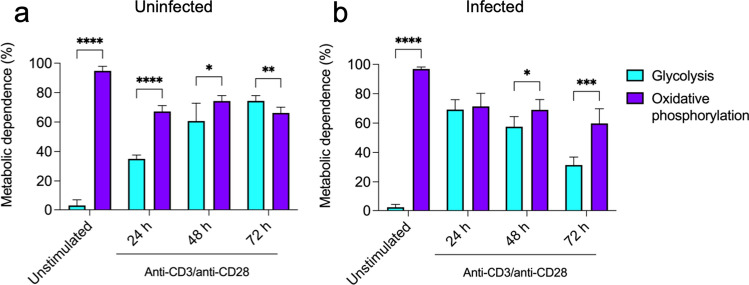
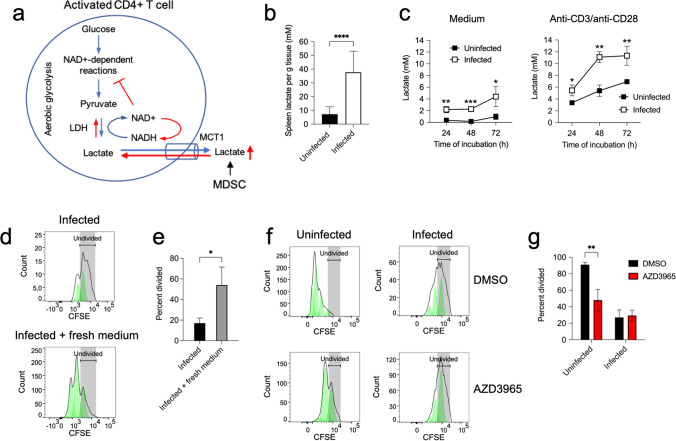
Staphylococcus aureus is an important cause of chronic infections resulting from the failure of the host to eliminate the pathogen. Effective S. aureus clearance requires CD4+ T cell-mediated immunity. We previously showed that myeloid-derived suppressor cells (MDSC) expand during staphylococcal infections and support infection chronicity by inhibiting CD4+ T cell responses. The aim of this study was to elucidate the mechanisms underlying the suppressive effect exerted by MDSC on CD4+ T cells during chronic S. aureus infection. It is well known that activated CD4+ T cells undergo metabolic reprogramming from oxidative metabolism to aerobic glycolysis to meet their increased bioenergetic requirements. In this process, pyruvate is largely transformed into lactate by lactate dehydrogenase with the concomitant regeneration of NAD+, which is necessary for continued glycolysis. The by-product lactate needs to be excreted to maintain the glycolytic flux. Using SCENITH (single-cell energetic metabolism by profiling translation inhibition), we demonstrated here that MDSC inhibit CD4+ T cell responses by interfering with their metabolic activity. MDSC are highly glycolytic and excrete large amount of lactate in the local environment that alters the transmembrane concentration gradient and prevent removal of lactate by activated CD4+ T. Accumulation of endogenous lactate impedes the regeneration of NAD+, inhibit NAD-dependent glycolytic enzymes and stop glycolysis. Together, the results of this study have uncovered a role for metabolism on MDSC suppression of CD4+ T cell responses. Thus, reestablishment of their metabolic activity may represent a mean to improve the functionality of CD4+ T cells during chronic S. aureus infection.
金黄色葡萄球菌是导致宿主无法消除病原体而导致慢性感染的重要原因。有效的金黄色葡萄球菌清除需要 CD4+T 细胞介导的免疫。我们之前曾表明,髓系来源的抑制细胞(MDSC)在金黄色葡萄球菌感染期间扩张,并通过抑制 CD4+T 细胞反应来支持感染的慢性化。本研究的目的是阐明 MDSC 在慢性金黄色葡萄球菌感染期间对 CD4+T 细胞的抑制作用的机制。众所周知,激活的 CD4+T 细胞经历代谢重编程,从氧化代谢转变为有氧糖酵解,以满足其增加的生物能量需求。在此过程中,丙酮酸大部分被乳酸脱氢酶转化为乳酸,同时再生 NAD+,这是继续糖酵解所必需的。副产物乳酸需要被排出以维持糖酵解通量。使用 SCENITH(通过抑制翻译来进行单细胞能量代谢分析),我们在此证明 MDSC 通过干扰其代谢活性来抑制 CD4+T 细胞反应。MDSC 具有高度的糖酵解活性,并在局部环境中排出大量乳酸,改变跨膜浓度梯度,并阻止激活的 CD4+T 细胞去除乳酸。内源性乳酸的积累阻碍了 NAD+的再生,抑制了 NAD 依赖性糖酵解酶并停止了糖酵解。总之,这项研究的结果揭示了代谢在 MDSC 抑制 CD4+T 细胞反应中的作用。因此,恢复其代谢活性可能代表一种改善慢性金黄色葡萄球菌感染期间 CD4+T 细胞功能的方法。