Department of Radiology and Biomedical Imaging, Yale School of Medicine, New Haven, Connecticut, USA.
Social Neuroscience Lab, Department of Psychiatry and Psychotherapy, Lübeck University, Lübeck, Germany.
J Neuroimaging. 2023 Nov-Dec;33(6):991-1002. doi: 10.1111/jon.13145. Epub 2023 Jul 22.
Very preterm infants (VPIs, <32 weeks gestational age at birth) are prone to long-term neurological deficits. While the effects of birth weight and postnatal growth on VPIs' neurological outcome are well established, the neurobiological mechanism behind these associations remains elusive. In this study, we utilized diffusion tensor imaging (DTI) to characterize how birth weight and postnatal weight gain influence VPIs' white matter (WM) maturation.
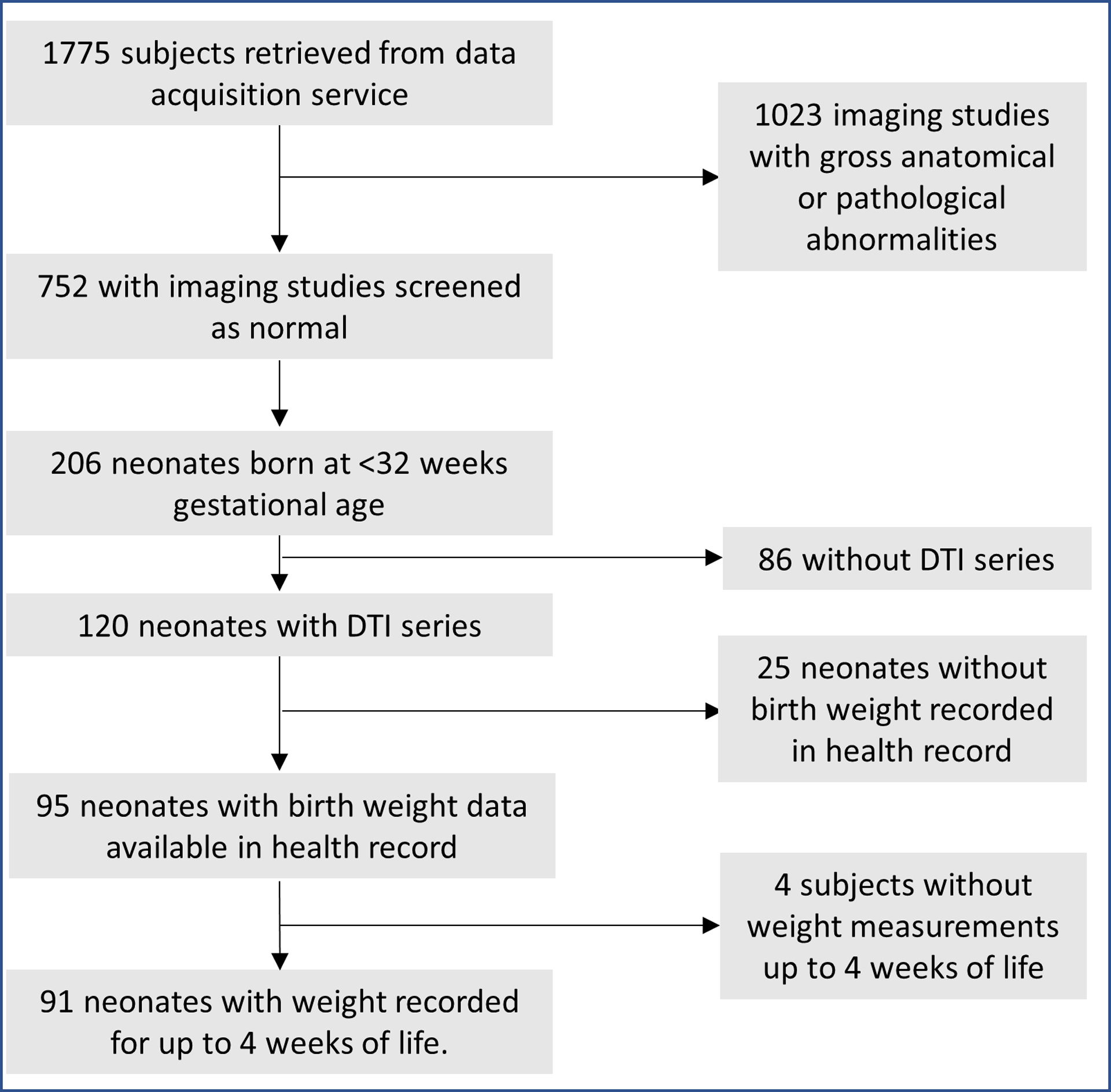
We included VPIs with complete birth and postnatal weight data in their health record, and DTI scan as part of their predischarge Magnetic Resonance Imaging (MRI). We conducted voxel-wise general linear model and tract-based regression analyses to explore the impact of birth weight and postnatal weight gain on WM maturation.
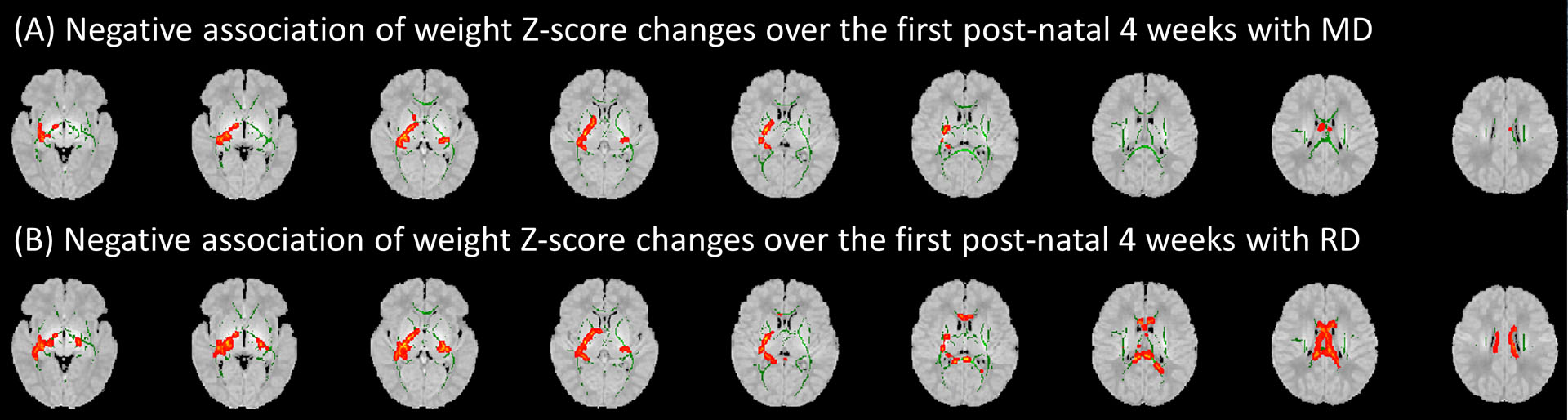
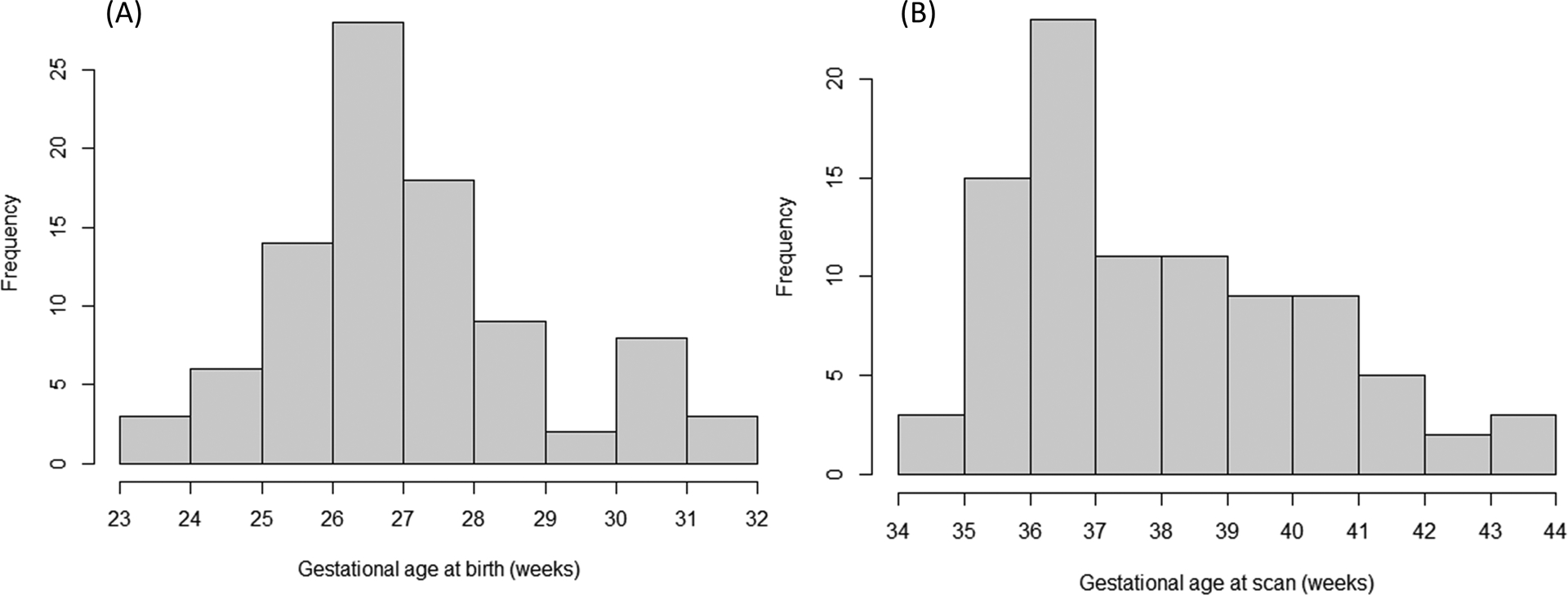
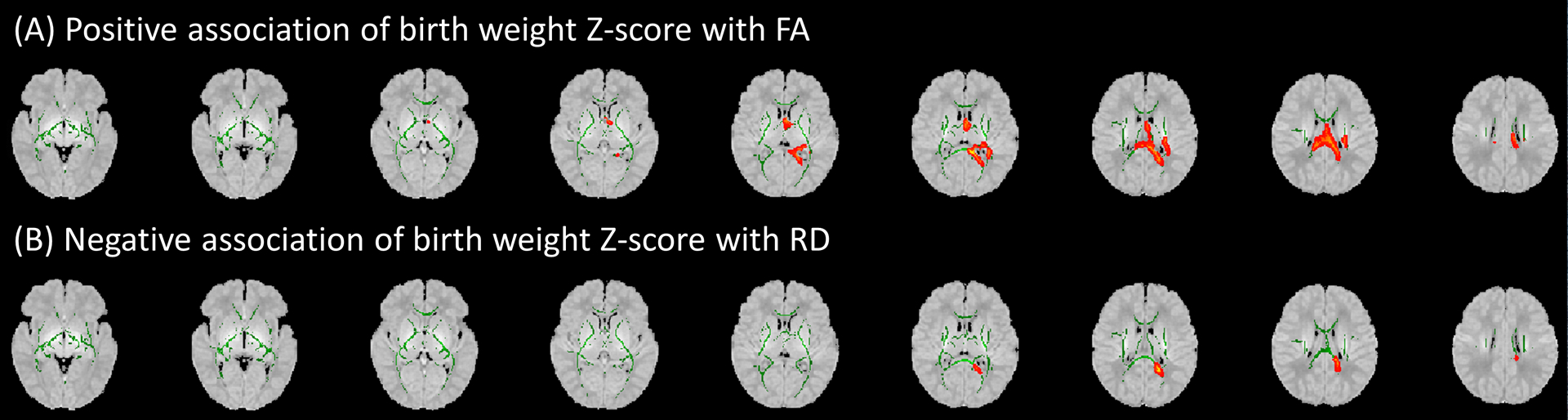
We included 91 VPIs in our analysis. After controlling for gestational age at birth and time between birth and scan, higher birth weight Z-scores were associated with DTI markers of more mature WM tracts, most prominently in the corpus callosum and sagittal striatum. The postnatal weight Z-score changes over the first 4 weeks of life were also associated with increased maturity in these WM tracts, when controlling for gestational age at birth, birth weight Z-score, and time between birth and scan.
In VPIs, birth weight and post-natal weight gain are associated with markers of brain WM maturation, particularly in the corpus callosum, which can be captured on discharge MRI. These neuroimaging metrics can serve as potential biomarkers for the early effects of nutritional interventions on VPIs' brain development.
极早产儿(VPIs,出生时胎龄<32 周)易发生长期神经功能缺陷。虽然出生体重和出生后生长对 VPIs 神经结局的影响已得到充分证实,但这些关联背后的神经生物学机制仍难以捉摸。在本研究中,我们利用弥散张量成像(DTI)来描述出生体重和出生后体重增加如何影响 VPIs 的白质(WM)成熟。
我们纳入了健康记录中有完整出生体重和出生后体重数据且在出院前磁共振成像(MRI)中进行 DTI 扫描的 VPIs。我们进行了体素水平的一般线性模型和基于束的回归分析,以探讨出生体重和出生后体重增加对 WM 成熟的影响。
我们的分析纳入了 91 名 VPIs。在校正出生时胎龄和出生与扫描之间的时间后,较高的出生体重 Z 分数与 WM 束更成熟的 DTI 标志物相关,在胼胝体和矢状纹状体中最为明显。出生后前 4 周体重 Z 分数的变化也与这些 WM 束的成熟度增加相关,在校正出生时胎龄、出生体重 Z 分数和出生与扫描之间的时间后。
在 VPIs 中,出生体重和出生后体重增加与脑 WM 成熟的标志物相关,特别是在胼胝体中,这些标志物可以在出院 MRI 上捕捉到。这些神经影像学指标可以作为营养干预对 VPIs 大脑发育早期影响的潜在生物标志物。