Bouhouita-Guermech Sarah, Gogognon Patrick, Bélisle-Pipon Jean-Christophe
School of Public Health, Université de Montréal, Montréal, QC, Canada.
Centre de recherche, CHU Sainte-Justine, Montréal, QC, Canada.
Front Artif Intell. 2023 Jul 6;6:1149082. doi: 10.3389/frai.2023.1149082. eCollection 2023.
The twenty first century is often defined as the era of Artificial Intelligence (AI), which raises many questions regarding its impact on society. It is already significantly changing many practices in different fields. Research ethics (RE) is no exception. Many challenges, including responsibility, privacy, and transparency, are encountered. Research ethics boards (REB) have been established to ensure that ethical practices are adequately followed during research projects. This scoping review aims to bring out the challenges of AI in research ethics and to investigate if REBs are equipped to evaluate them.
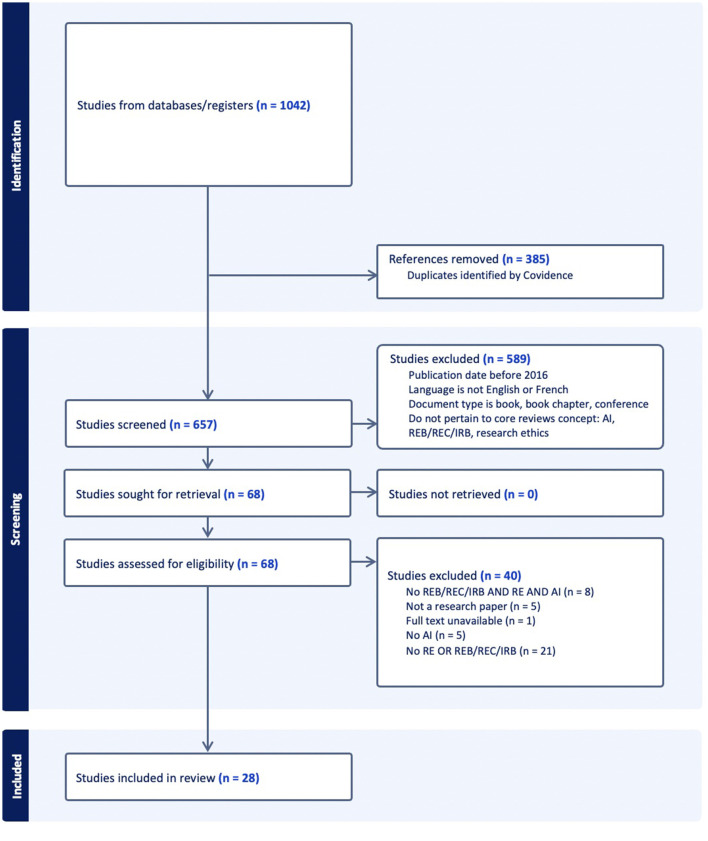
Three electronic databases were selected to collect peer-reviewed articles that fit the inclusion criteria (English or French, published between 2016 and 2021, containing AI, RE, and REB). Two instigators independently reviewed each piece by screening with Covidence and then coding with NVivo.
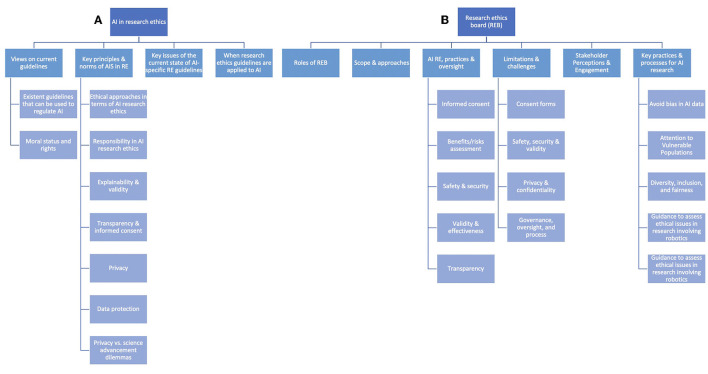
From having a total of 657 articles to review, we were left with a final sample of 28 relevant papers for our scoping review. The selected literature described AI in research ethics (i.e., views on current guidelines, key ethical concept and approaches, key issues of the current state of AI-specific RE guidelines) and REBs regarding AI (i.e., their roles, scope and approaches, key practices and processes, limitations and challenges, stakeholder perceptions). However, the literature often described REBs ethical assessment practices of projects in AI research as lacking knowledge and tools.
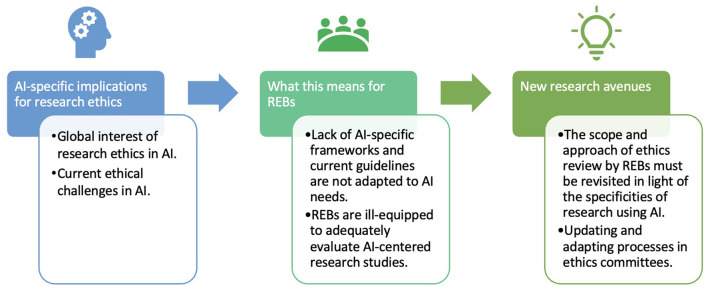
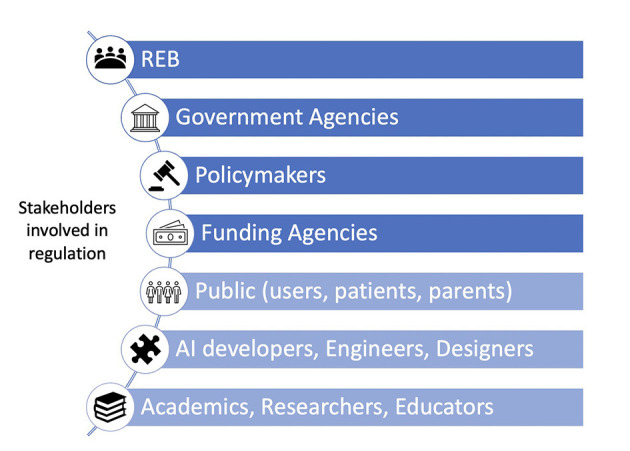
Ethical reflections are taking a step forward while normative guidelines adaptation to AI's reality is still dawdling. This impacts REBs and most stakeholders involved with AI. Indeed, REBs are not equipped enough to adequately evaluate AI research ethics and require standard guidelines to help them do so.
21世纪常被定义为人工智能(AI)时代,这引发了许多关于其对社会影响的问题。它已经在显著改变不同领域的许多实践。研究伦理(RE)也不例外。人们遇到了许多挑战,包括责任、隐私和透明度等。已经设立了研究伦理委员会(REB),以确保在研究项目中充分遵循伦理实践。本范围综述旨在揭示人工智能在研究伦理方面的挑战,并调查研究伦理委员会是否有能力评估这些挑战。
选择三个电子数据库来收集符合纳入标准的同行评审文章(英文或法文,2016年至2021年发表,包含人工智能、研究伦理和研究伦理委员会)。两名研究人员通过Covidence进行筛选,然后用NVivo进行编码,独立评审每一篇文章。
在总共657篇待评审的文章中,我们最终筛选出28篇相关论文作为范围综述的样本。所选文献描述了研究伦理中的人工智能(即对当前指南的看法、关键伦理概念和方法、特定人工智能研究伦理指南现状的关键问题)以及研究伦理委员会对人工智能的看法(即其作用、范围和方法、关键实践和流程、局限性和挑战、利益相关者的看法)。然而,文献经常描述研究伦理委员会对人工智能研究项目的伦理评估实践缺乏知识和工具。
伦理思考正在向前迈进,而规范指南对人工智能现实的适应仍在滞后。这影响了研究伦理委员会以及大多数与人工智能相关的利益相关者。事实上,研究伦理委员会没有足够的能力充分评估人工智能研究伦理,需要标准指南来帮助他们做到这一点。