Celiker Canan, Weissova Kamila, Cerna Katerina Amruz, Oppelt Jan, Dorgau Birthe, Gambin Francisco Molina, Sebestikova Jana, Lako Majlinda, Sernagor Evelyne, Liskova Petra, Barta Tomas
Department of Histology and Embryology, Faculty of Medicine, Masaryk University, Brno, Czech Republic.
Institute of Animal Physiology and Genetics, The Czech Academy of Sciences, Brno, Czech Republic.
iScience. 2023 Jun 28;26(7):107237. doi: 10.1016/j.isci.2023.107237. eCollection 2023 Jul 21.
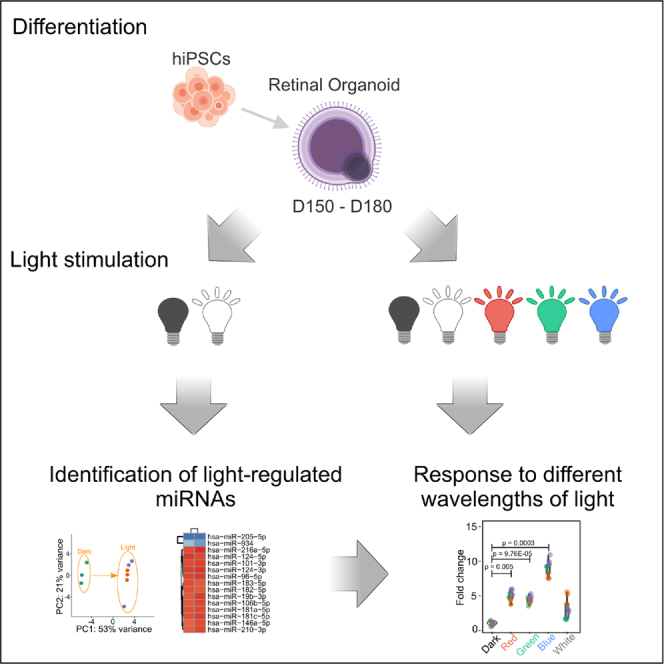
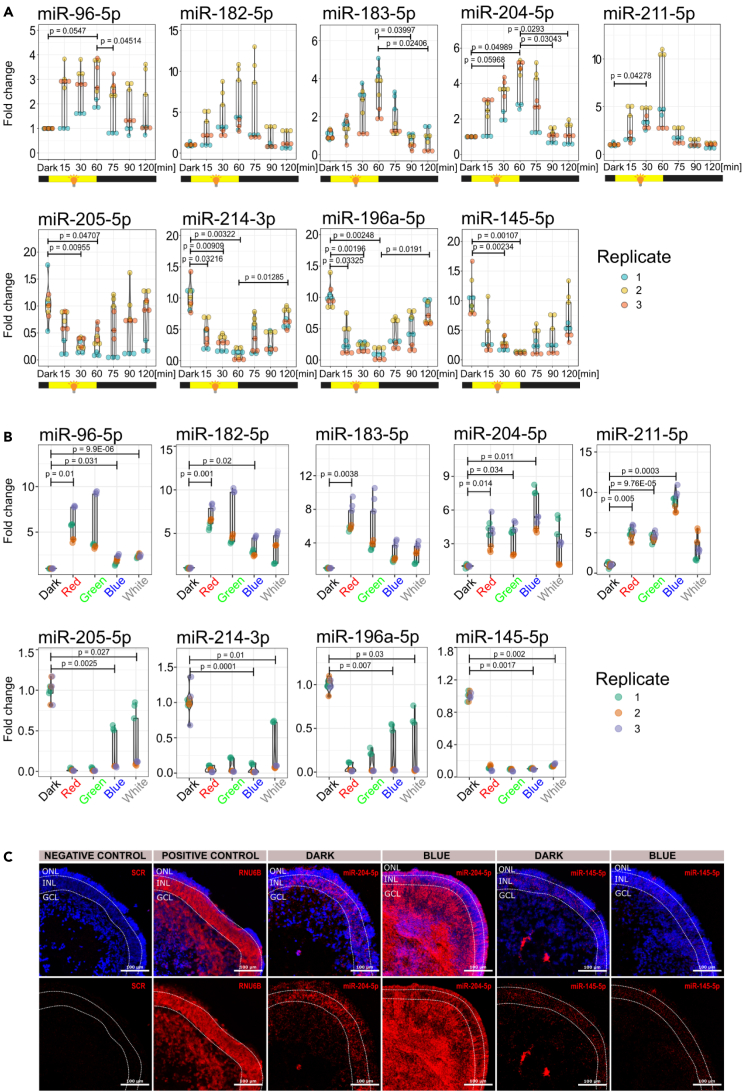
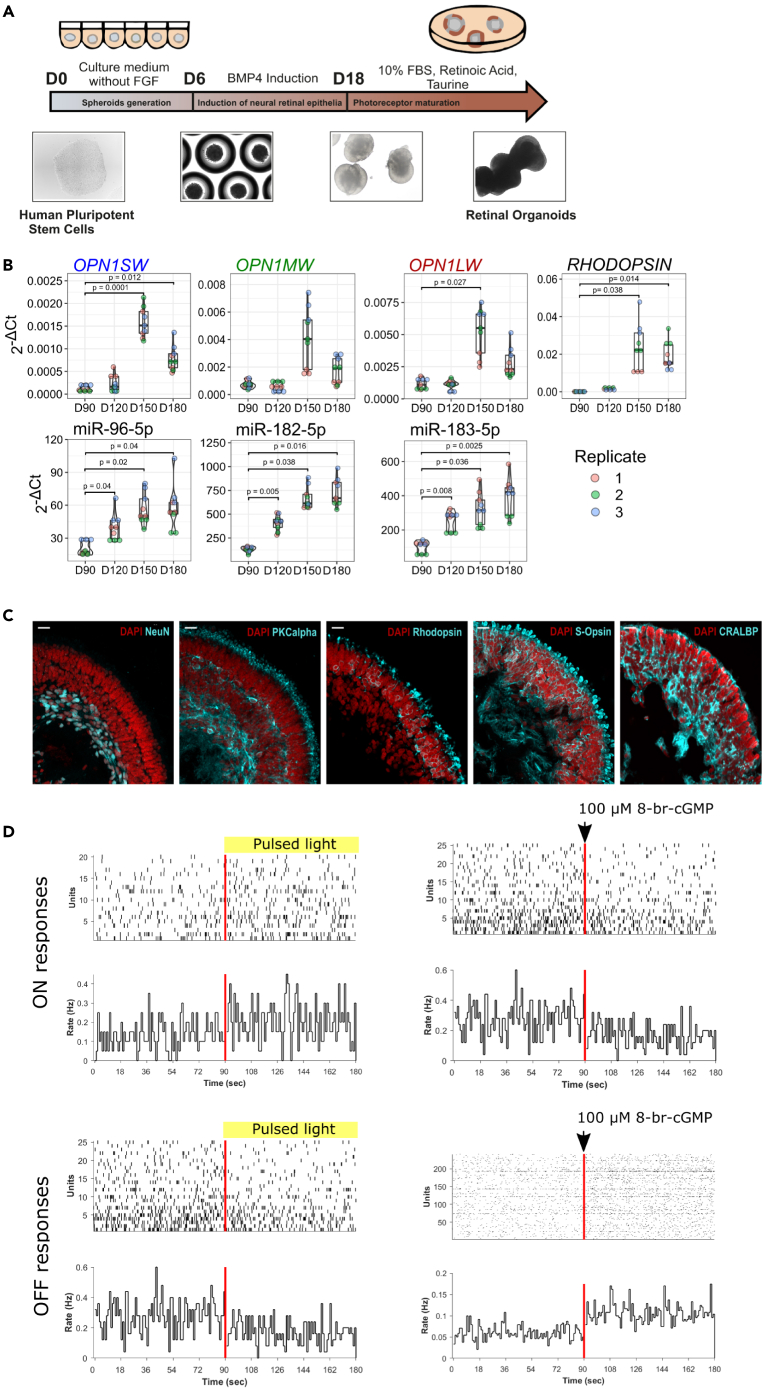
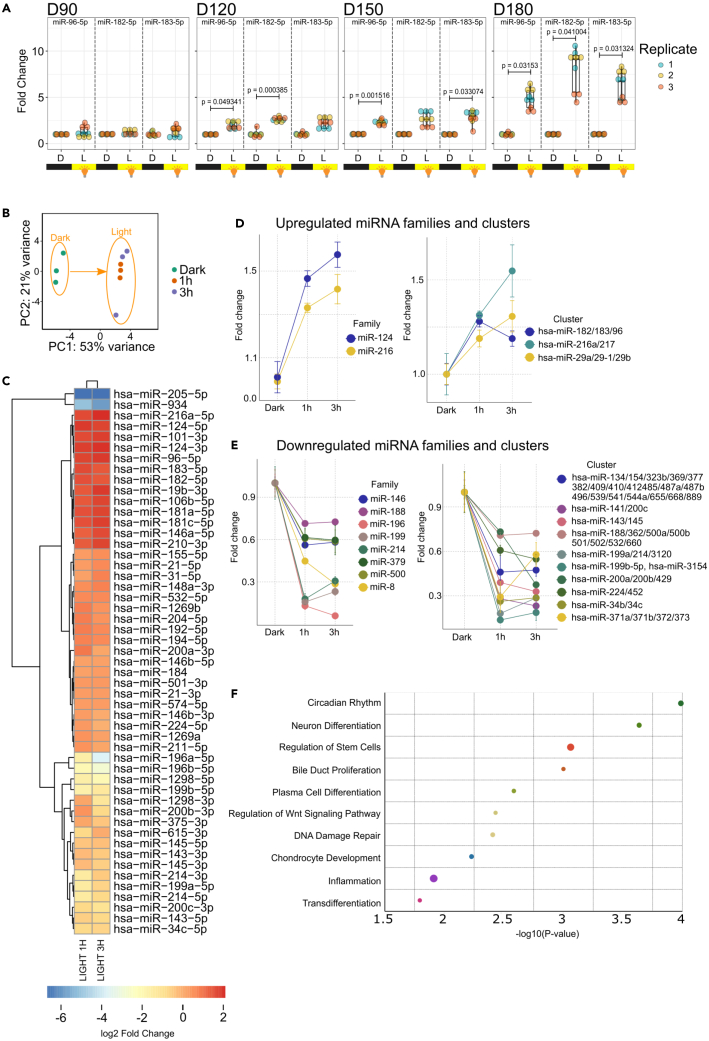
Cells in the human retina must rapidly adapt to constantly changing visual stimuli. This fast adaptation to varying levels and wavelengths of light helps to regulate circadian rhythms and allows for adaptation to high levels of illumination, thereby enabling the rest of the visual system to remain responsive. It has been shown that retinal microRNA (miRNA) molecules play a key role in regulating these processes. However, despite extensive research using various model organisms, light-regulated miRNAs in human retinal cells remain unknown. Here, we aim to characterize these miRNAs. We generated light-responsive human retinal organoids that express miRNA families and clusters typically found in the retina. Using an in-house developed photostimulation device, we identified a subset of light-regulated miRNAs. Importantly, we found that these miRNAs are differentially regulated by distinct wavelengths of light and have a rapid turnover, highlighting the dynamic and adaptive nature of the human retina.
人类视网膜中的细胞必须迅速适应不断变化的视觉刺激。这种对不同光强度和波长的快速适应有助于调节昼夜节律,并能适应高强度照明,从而使视觉系统的其他部分保持反应能力。研究表明,视网膜微小RNA(miRNA)分子在调节这些过程中起关键作用。然而,尽管使用各种模式生物进行了广泛研究,但人类视网膜细胞中受光调节的miRNA仍不清楚。在此,我们旨在对这些miRNA进行表征。我们生成了表达视网膜中常见的miRNA家族和簇的光响应性人类视网膜类器官。使用自行开发的光刺激装置,我们鉴定出了一组受光调节的miRNA。重要的是,我们发现这些miRNA受不同波长光的差异调节,并且周转迅速,突出了人类视网膜的动态和适应性本质。