Department of Infection, Immunity and Cardiovascular Disease, University of Sheffield Medical School , Sheffield, United Kingdom.
School of Biosciences, University of Sheffield , Sheffield, United Kingdom.
mBio. 2023 Aug 31;14(4):e0148223. doi: 10.1128/mbio.01482-23. Epub 2023 Jul 24.
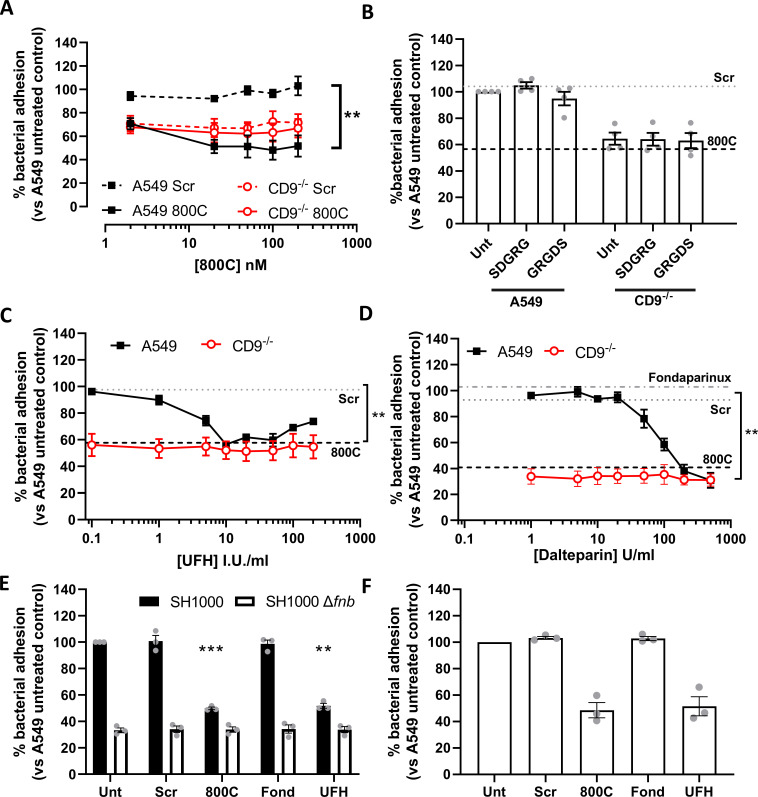
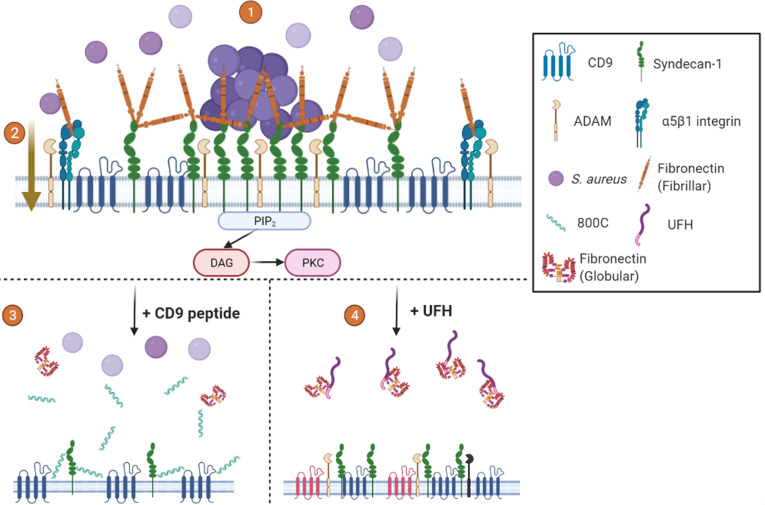
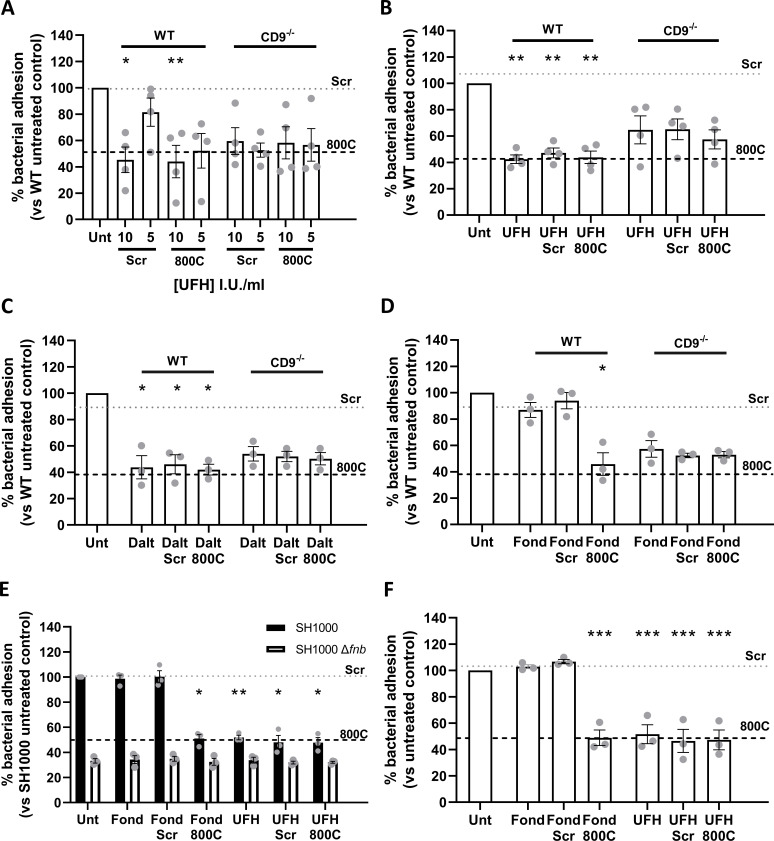
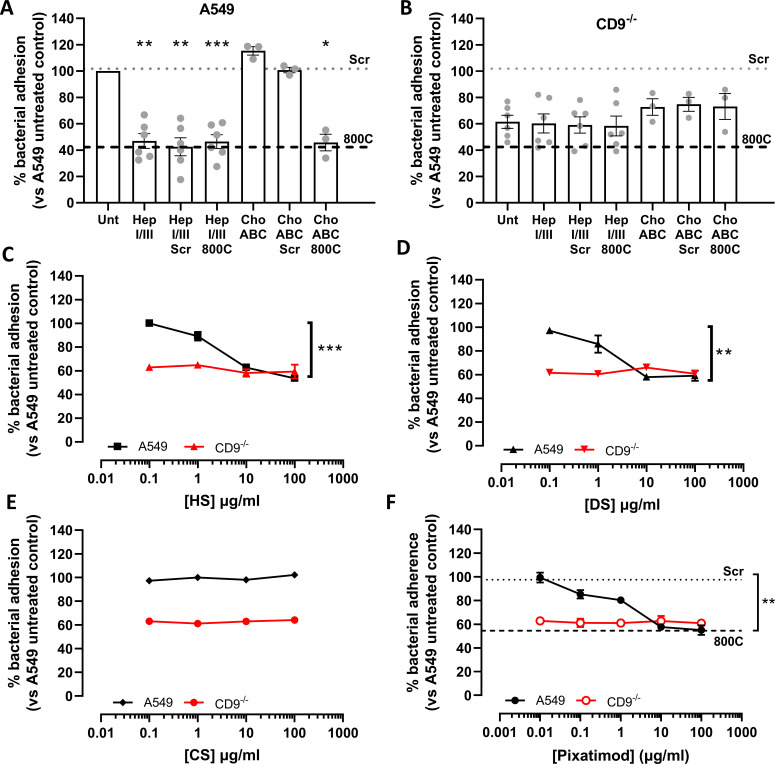
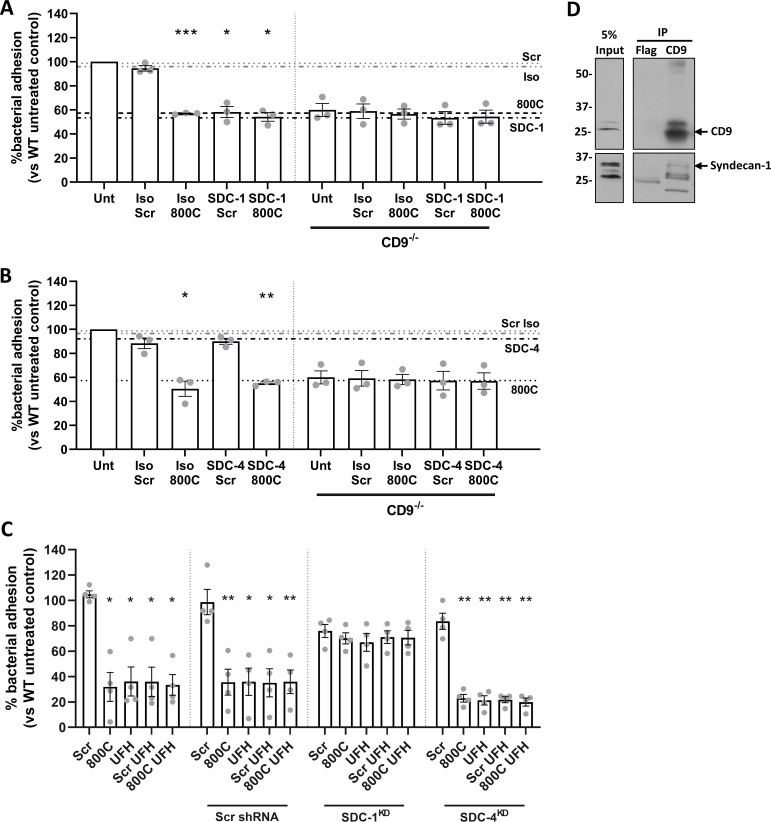
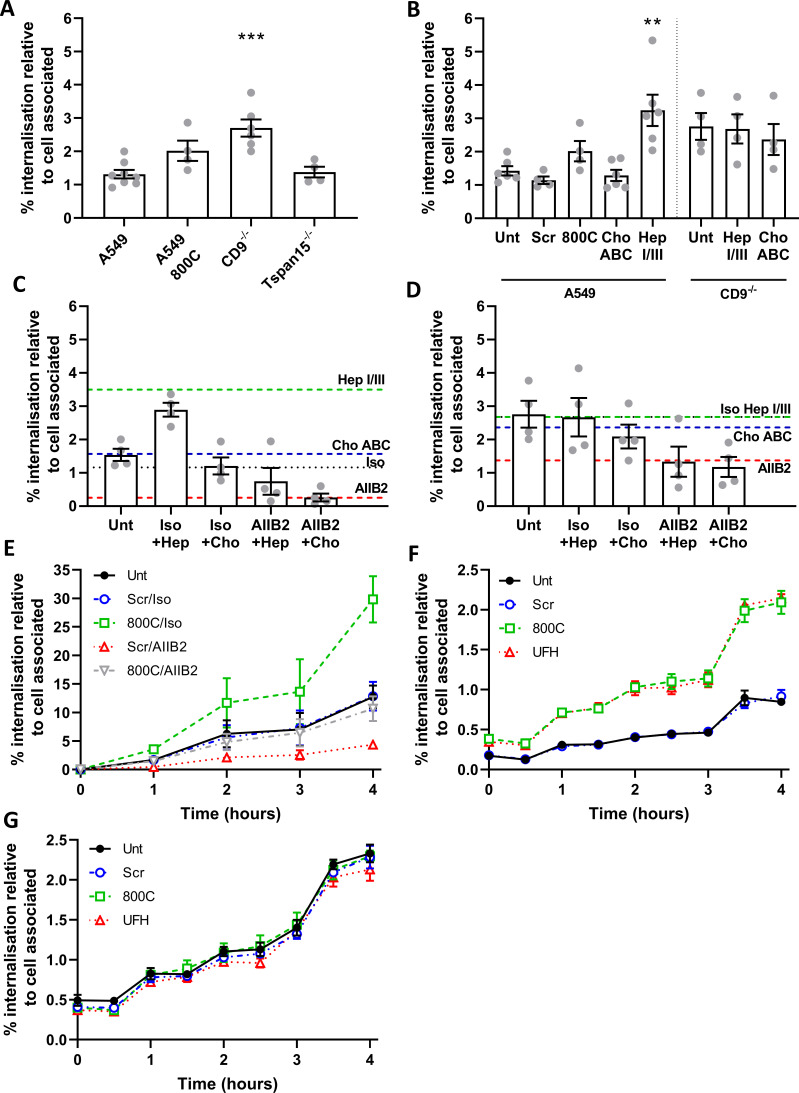
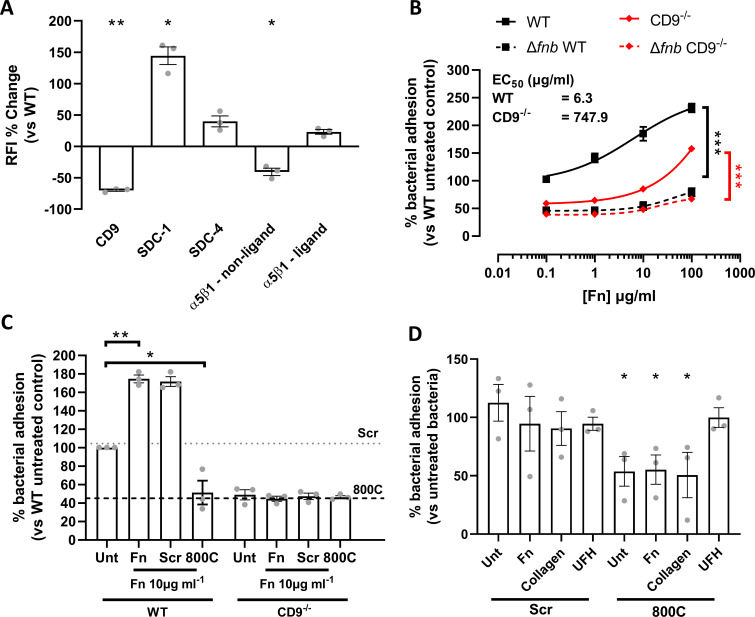
Epithelial colonization is a critical first step in bacterial pathogenesis. can utilize several host factors to associate with cells, including α5β1 integrin and heparan sulfate proteoglycans, such as the syndecans. Here, we demonstrate that a partner protein of both integrins and syndecans, the host membrane adapter protein tetraspanin CD9, is essential for syndecan-mediated staphylococcal adhesion. Fibronectin is also essential in this process, while integrins are only critical for post-adhesion entry into human epithelial cells. Treatment of epithelial cells with CD9-derived peptide or heparin caused significant reductions in staphylococcal adherence, dependent on both CD9 and syndecan-1. Exogenous fibronectin caused a CD9-dependent increase in staphylococcal adhesion, whereas blockade of β1 integrins did not affect adhesion but did reduce the subsequent internalization of adhered bacteria. CD9 disruption or deletion increased β1 integrin-mediated internalization, suggesting that CD9 coordinates sequential staphylococcal adhesion and internalization. CD9 controls staphylococcal adhesion through syndecan-1, using a mechanism that likely requires CD9-mediated syndecan organization to correctly display fibronectin at the host cell surface. We propose that CD9-derived peptides or heparin analogs could be developed as anti-adhesion treatments to inhibit the initial stages of staphylococcal pathogenesis. IMPORTANCE infection is a significant cause of disease and morbidity. utilize multiple adhesion pathways to associate with epithelial cells, including interactions with proteoglycans or β1 integrins through a fibronectin bridge. Interference with another host protein, tetraspanin CD9, halves staphylococcal adherence to epithelial cells, although CD9 does not interact directly with bacteria. Here, we define the role of CD9 in staphylococcal adherence and uptake, observing that CD9 coordinates syndecan-1, fibronectin, and β1 integrins to allow efficient staphylococcal infection. Two treatments that disrupt this action are effective and may provide an alternative to antibiotics. We provide insights into the mechanisms that underlie staphylococcal infection of host cells, linking two known adhesion pathways together through CD9 for the first time.
上皮定植是细菌发病机制的关键第一步。细菌可以利用几种宿主因素与细胞结合,包括α5β1 整联蛋白和硫酸乙酰肝素蛋白聚糖,如连接蛋白。在这里,我们证明整联蛋白和连接蛋白的伴侣蛋白、宿主膜衔接蛋白四跨膜蛋白 CD9 对于连接蛋白介导的葡萄球菌黏附是必不可少的。纤连蛋白在这个过程中也是必不可少的,而整联蛋白对于黏附后进入人上皮细胞是至关重要的。用 CD9 衍生肽或肝素处理上皮细胞会导致葡萄球菌黏附显著减少,这依赖于 CD9 和连接蛋白-1。外源性纤连蛋白导致 CD9 依赖性葡萄球菌黏附增加,而β1 整联蛋白的阻断不影响黏附,但确实减少了随后黏附细菌的内化。CD9 破坏或缺失增加了β1 整联蛋白介导的内化,表明 CD9 协调了葡萄球菌的连续黏附和内化。CD9 通过连接蛋白-1控制葡萄球菌的黏附,使用一种机制,可能需要 CD9 介导的连接蛋白组织来正确地在宿主细胞表面展示纤连蛋白。我们提出,CD9 衍生肽或肝素类似物可以被开发为抗黏附治疗方法,以抑制葡萄球菌发病机制的初始阶段。重要性 感染是疾病和发病率的一个重要原因。细菌利用多种黏附途径与上皮细胞结合,包括通过纤连蛋白桥与蛋白聚糖或β1 整联蛋白的相互作用。干扰另一种宿主蛋白四跨膜蛋白 CD9 会使葡萄球菌与上皮细胞的黏附减少一半,尽管 CD9 与细菌不直接相互作用。在这里,我们定义了 CD9 在葡萄球菌黏附和摄取中的作用,观察到 CD9 协调连接蛋白-1、纤连蛋白和β1 整联蛋白,以实现有效的葡萄球菌感染。两种破坏这种作用的治疗方法是有效的,可能为抗生素提供替代方法。我们提供了对宿主细胞中葡萄球菌感染机制的深入了解,首次通过 CD9 将两个已知的黏附途径联系在一起。