Department of Complex Trait Genetics, Center for Neurogenomics and Cognitive Research, Vrije Universiteit Amsterdam, Amsterdam Neuroscience, Amsterdam, The Netherlands.
Department of Psychiatry, Robert Wood Johnson Medical School, Rutgers-The State University of New Jersey, Piscataway, NJ, USA.
Mol Psychiatry. 2023 Oct;28(10):4225-4233. doi: 10.1038/s41380-023-02174-0. Epub 2023 Jul 25.
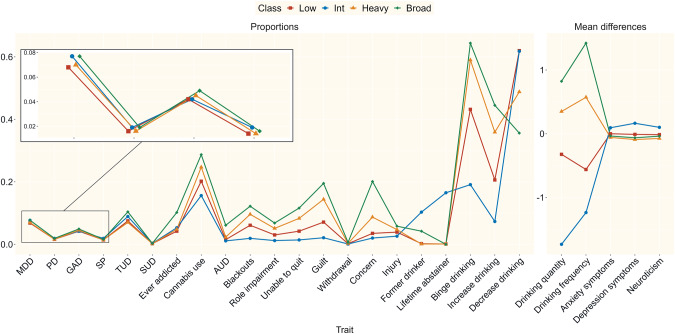
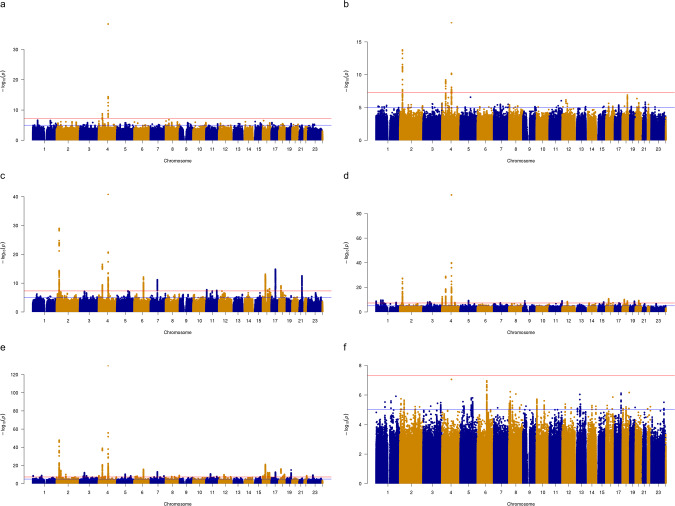
Alcohol misuse (AM) is highly prevalent and harmful, with theorized subgroups differing on internalizing and externalizing dimensions. Despite known heterogeneity, genome-wide association studies (GWAS) are usually conducted on unidimensional phenotypes. These approaches have identified important genes related to AM but fail to capture a large part of the heritability, even with recent increases in sample sizes. This study aimed to address phenotypic heterogeneity in GWAS to aid gene finding and to uncover the etiology of different types of AM. Genetic and phenotypic data from 410,414 unrelated individuals of multiple ancestry groups (primarily European) in the UK Biobank were obtained. Mixture modeling was applied to measures of alcohol misuse and internalizing/externalizing psychopathology to uncover phenotypically homogenous subclasses, which were carried forward to GWAS and functional annotation. A four-class model emerged with "low risk", "internalizing-light/non-drinkers", "heavy alcohol use-low impairment", and "broad high risk" classes. SNP heritability ranged from 3 to 18% and both known AM signals and novel signals were captured by genomic risk loci. Class comparisons showed distinct patterns of regional brain tissue enrichment and genetic correlations with internalizing and externalizing phenotypes. Despite some limitations, this study demonstrated the utility of genetic research on homogenous subclasses. Not only were novel genetic signals identified that might be used for follow-up studies, but addressing phenotypic heterogeneity allows for the discovery and investigation of differential genetic vulnerabilities in the development of AM, which is an important step towards the goal of personalized medicine.
酒精使用障碍(AM)的发病率很高,且危害极大,其理论亚组在内在化和外在化维度上存在差异。尽管存在已知的异质性,但全基因组关联研究(GWAS)通常针对单一维度的表型进行。这些方法已经确定了与 AM 相关的重要基因,但即使最近增加了样本量,也未能捕捉到大部分遗传率。本研究旨在解决 GWAS 中的表型异质性,以帮助寻找基因,并揭示不同类型 AM 的病因。从英国生物库中获得了来自 410414 名不同祖先群体(主要是欧洲人)的无关个体的遗传和表型数据。对酒精使用障碍和内在化/外在化精神病理学的测量值进行混合建模,以发现表型同质的亚类,这些亚类被推进 GWAS 和功能注释。出现了一个四分类模型,包括“低风险”、“内在化轻/不饮酒者”、“重度饮酒低损伤”和“广泛高风险”类别。SNP 遗传率在 3%至 18%之间,已知的 AM 信号和新的信号都被基因组风险位点捕获。类别比较显示出区域脑组织富集和与内在化和外在化表型的遗传相关性的独特模式。尽管存在一些局限性,但本研究证明了对同质亚类进行遗传研究的效用。不仅发现了可能用于后续研究的新的遗传信号,而且解决表型异质性还可以发现和研究 AM 发展过程中的不同遗传脆弱性,这是实现个体化医学目标的重要一步。