Reiss Allison B, Greene Caitriona, Dayaramani Christopher, Rauchman Steven H, Stecker Mark M, De Leon Joshua, Pinkhasov Aaron
Department of Medicine and Biomedical Research Institute, NYU Long Island School of Medicine, Long Island, NY 11501, USA.
Fresno Institute of Neuroscience, Fresno, CA 93730, USA.
Neurol Int. 2023 Jul 6;15(3):821-841. doi: 10.3390/neurolint15030052.
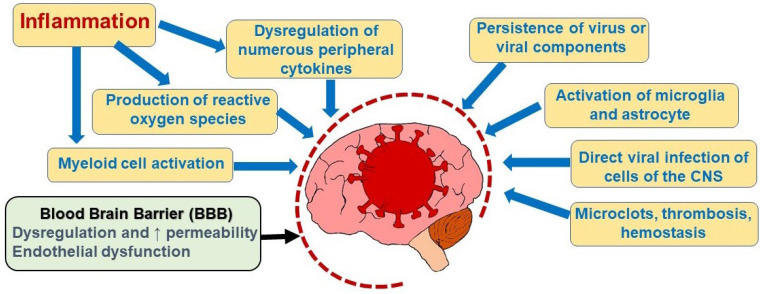
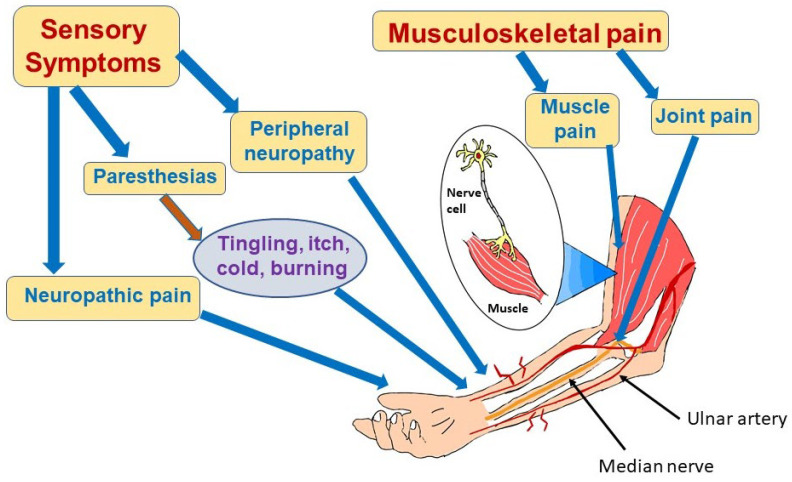
SARS-CoV-2, a single-stranded RNA coronavirus, causes an illness known as coronavirus disease 2019 (COVID-19). Long-term complications are an increasing issue in patients who have been infected with COVID-19 and may be a result of viral-associated systemic and central nervous system inflammation or may arise from a virus-induced hypercoagulable state. COVID-19 may incite changes in brain function with a wide range of lingering symptoms. Patients often experience fatigue and may note brain fog, sensorimotor symptoms, and sleep disturbances. Prolonged neurological and neuropsychiatric symptoms are prevalent and can interfere substantially in everyday life, leading to a massive public health concern. The mechanistic pathways by which SARS-CoV-2 infection causes neurological sequelae are an important subject of ongoing research. Inflammation- induced blood-brain barrier permeability or viral neuro-invasion and direct nerve damage may be involved. Though the mechanisms are uncertain, the resulting symptoms have been documented from numerous patient reports and studies. This review examines the constellation and spectrum of nervous system symptoms seen in long COVID and incorporates information on the prevalence of these symptoms, contributing factors, and typical course. Although treatment options are generally lacking, potential therapeutic approaches for alleviating symptoms and improving quality of life are explored.
严重急性呼吸综合征冠状病毒2(SARS-CoV-2)是一种单链RNA冠状病毒,可引发一种名为2019冠状病毒病(COVID-19)的疾病。长期并发症在感染COVID-19的患者中日益成为一个问题,这可能是病毒相关的全身和中枢神经系统炎症所致,也可能源于病毒诱导的高凝状态。COVID-19可能会引发脑功能变化,并伴有一系列持续存在的症状。患者常感到疲劳,可能还会出现脑雾、感觉运动症状和睡眠障碍。长期的神经和神经精神症状很普遍,会对日常生活造成严重干扰,引发了重大的公共卫生问题。SARS-CoV-2感染导致神经后遗症的机制途径是正在进行的研究的一个重要课题。可能涉及炎症诱导的血脑屏障通透性、病毒神经侵袭和直接神经损伤。尽管机制尚不确定,但众多患者报告和研究已记录了由此产生的症状。本综述探讨了长期COVID中出现的神经系统症状的种类和范围,并纳入了这些症状的患病率、促成因素和典型病程等信息。尽管通常缺乏治疗选择,但本文也探讨了缓解症状和改善生活质量的潜在治疗方法。