Kaya Ibrahim, Nilsson Anna, Luptáková Dominika, He Yachao, Vallianatou Theodosia, Bjärterot Patrik, Svenningsson Per, Bezard Erwan, Andrén Per E
Department of Pharmaceutical Biosciences, Spatial Mass Spectrometry, Science for Life Laboratory, Uppsala University, Uppsala, Sweden.
Section of Neurology, Department of Clinical Neuroscience, Karolinska Institutet, Stockholm, Sweden.
NPJ Parkinsons Dis. 2023 Jul 26;9(1):118. doi: 10.1038/s41531-023-00558-1.
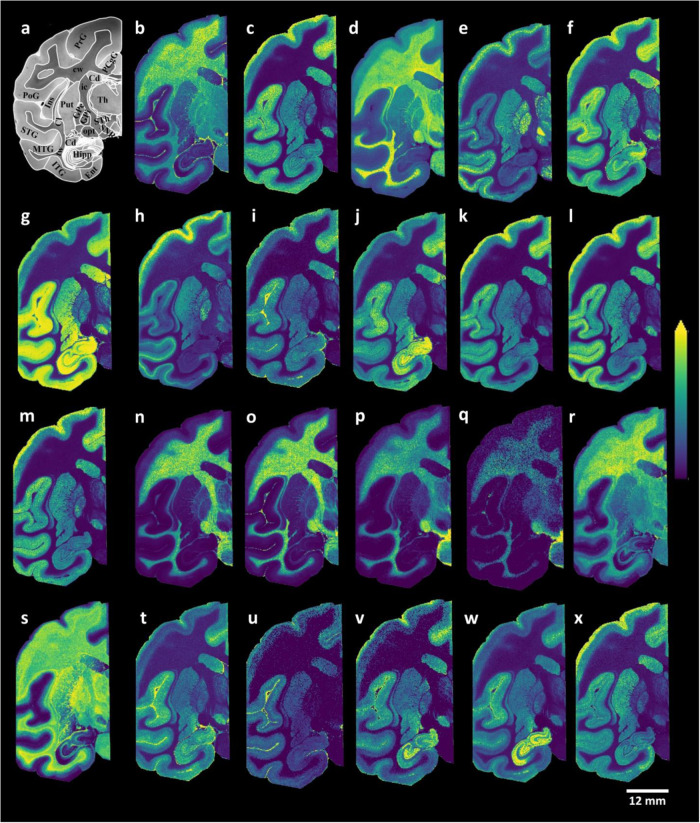
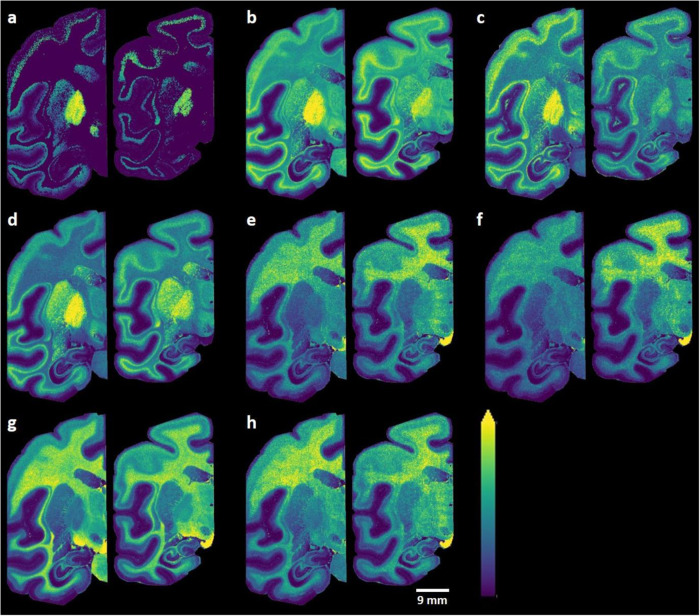
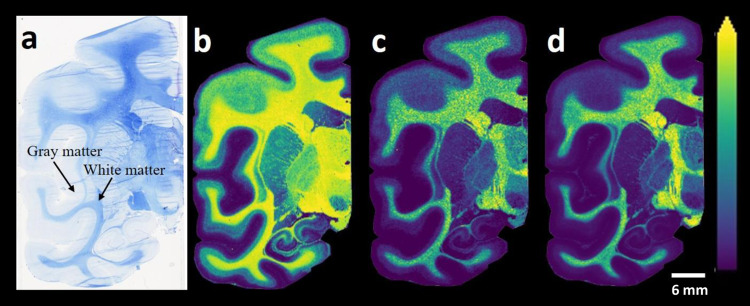
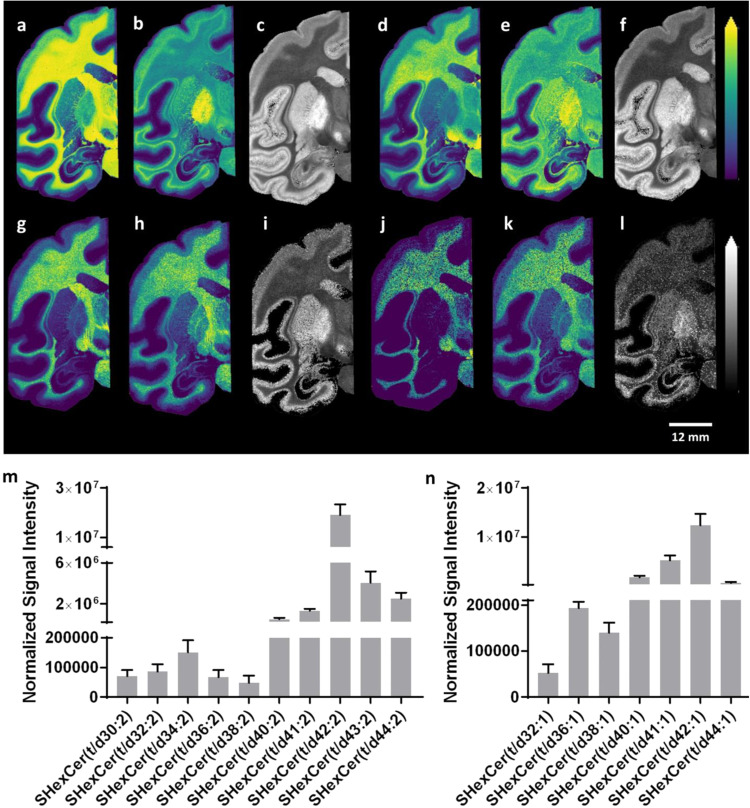
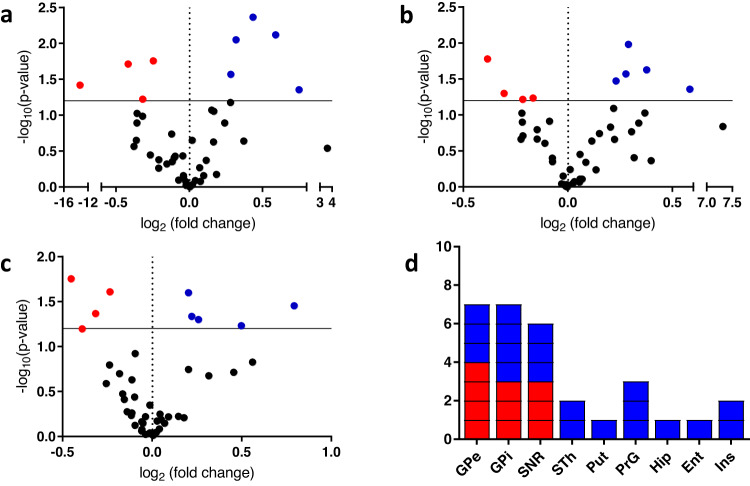
Metabolism of MPTP (1-methyl-4-phenyl-1,2,3,6-tetrahydropyridine) to the neurotoxin MPP in the brain causes permanent Parkinson's disease-like symptoms by destroying dopaminergic neurons in the pars compacta of the substantia nigra in humans and non-human primates. However, the complete molecular pathology underlying MPTP-induced parkinsonism remains poorly understood. We used dual polarity matrix-assisted laser desorption/ionization mass spectrometry imaging to thoroughly image numerous glycerophospholipids and sphingolipids in coronal brain tissue sections of MPTP-lesioned and control non-human primate brains (Macaca mulatta). The results revealed specific distributions of several sulfatide lipid molecules based on chain-length, number of double bonds, and importantly, hydroxylation stage. More specifically, certain long-chain hydroxylated sulfatides with polyunsaturated chains in the molecular structure were depleted within motor-related brain regions in the MPTP-lesioned animals, e.g., external and internal segments of globus pallidus and substantia nigra pars reticulata. In contrast, certain long-chain non-hydroxylated sulfatides were found to be elevated within the same brain regions. These findings demonstrate region-specific dysregulation of sulfatide metabolism within the MPTP-lesioned macaque brain. The depletion of long-chain hydroxylated sulfatides in the MPTP-induced pathology indicates oxidative stress and oligodendrocyte/myelin damage within the pathologically relevant brain regions. Hence, the presented findings improve our current understanding of the molecular pathology of MPTP-induced parkinsonism within primate brains, and provide a basis for further research regarding the role of dysregulated sulfatide metabolism in PD.
MPTP(1-甲基-4-苯基-1,2,3,6-四氢吡啶)在大脑中代谢为神经毒素MPP,通过破坏人类和非人类灵长类动物黑质致密部的多巴胺能神经元,导致永久性帕金森病样症状。然而,MPTP诱导的帕金森病的完整分子病理学仍知之甚少。我们使用双极性基质辅助激光解吸/电离质谱成像技术,对MPTP损伤的和对照非人类灵长类动物大脑(食蟹猴)的冠状脑组织切片中的多种甘油磷脂和鞘脂进行全面成像。结果揭示了几种硫脂脂质分子基于链长、双键数量以及重要的羟基化阶段的特定分布。更具体地说,分子结构中具有多不饱和链的某些长链羟基化硫脂在MPTP损伤动物的运动相关脑区中减少,例如苍白球的外部和内部节段以及黑质网状部。相反,在相同脑区中发现某些长链非羟基化硫脂升高。这些发现表明MPTP损伤的猕猴大脑中硫脂代谢存在区域特异性失调。MPTP诱导的病理学中长链羟基化硫脂的减少表明病理相关脑区内存在氧化应激和少突胶质细胞/髓鞘损伤。因此,所呈现的发现增进了我们目前对灵长类动物大脑中MPTP诱导的帕金森病分子病理学的理解,并为进一步研究硫脂代谢失调在帕金森病中的作用提供了基础。