
热响应基因在热胁迫条件下参与植物生长、光合作用及抗氧化防御过程。
Heat responsive gene functions in plant growth, photosynthesis and antioxidant defense under heat stress conditions.
作者信息
Zhu Xi, Duan Huimin, Jin Hui, Chen Shu, Chen Zhuo, Shao Shunwei, Tang Jinghua, Zhang Yu
机构信息
Key Laboratory of Tropical Fruit Biology, Ministry of Agriculture and Rural Affairs of China, Zhanjiang, China.
Key Laboratory of Hainan Province for Postharvest Physiology and Technology of Tropical Horticultural Products, South Subtropical Crops Research Institute, Chinese Academy of Tropical Agricultural Sciences, Zhanjiang, China.
出版信息
Front Plant Sci. 2023 Jul 11;14:1227526. doi: 10.3389/fpls.2023.1227526. eCollection 2023.
BACKGROUNDS
Potato is sensitive to heat stress particularly during plant seedling growth. However, limited studies have characterized the expression pattern of the family genes under heat stress and lacked validation of its function in potato plants.
METHODS
Potato plants were cultivated at 30°C and 35°C to induce heat stress responses. qRT-PCR was carried out to characterize the expression pattern of family genes in potato plants subjected to heat stress. loss-of-function and gain-of-function plants were established. Morphological phenotypes and growth were indicated by plant height and mass. Photosynthesis and transpiration were suggested by stomatal aperture, net photosynthetic rate, transpiration rate, and stomatal conductance. Biochemical and genetic responses were indicated by enzyme activity and mRNA expression of genes encoding CAT, SOD, and POD, and contents of HO, MDA, and proline.
RESULTS
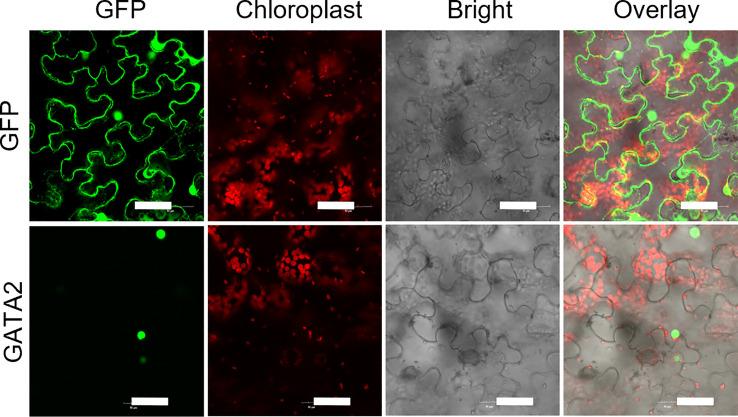
The expression patterns of family genes were altered in response to heat stress. StGATA2 protein located in the nucleus. is implicated in regulating plant height and weight of potato plants in response to heat stresses, especially acute heat stress. over-expression promoted photosynthesis while inhibited transpiration under heat stress. overexpression induced biochemical responses of potato plant against heat stress by regulating the contents of HO, MDA and proline and the activity of CAT, SOD and POD. overexpression caused genetic responses (CAT, SOD and POD) of potato plant against heat stress.
CONCLUSION
Our data indicated that could enhance the ability of potato plants to resist heat stress-induced damages, which may provide an effective strategy to engineer potato plants for better adaptability to adverse heat stress conditions.
背景
马铃薯对热胁迫敏感,尤其是在幼苗生长期间。然而,关于热胁迫下该家族基因表达模式的研究有限,且缺乏对其在马铃薯植株中功能的验证。
方法
将马铃薯植株在30°C和35°C下培养以诱导热胁迫反应。进行qRT-PCR以表征热胁迫下马铃薯植株中该家族基因的表达模式。构建了功能缺失和功能获得植株。通过株高和质量来表征形态表型和生长情况。通过气孔孔径、净光合速率、蒸腾速率和气孔导度来反映光合作用和蒸腾作用。通过编码CAT、SOD和POD的基因的酶活性和mRNA表达以及HO、MDA和脯氨酸的含量来表明生化和遗传反应。
结果
该家族基因的表达模式因热胁迫而改变。StGATA2蛋白位于细胞核中。该基因参与调控热胁迫下马铃薯植株的株高和重量,尤其是急性热胁迫。在热胁迫下,该基因过表达促进光合作用而抑制蒸腾作用。该基因过表达通过调节HO、MDA和脯氨酸的含量以及CAT、SOD和POD的活性来诱导马铃薯植株对热胁迫的生化反应。该基因过表达引发马铃薯植株对热胁迫的遗传反应(CAT、SOD和POD)。
结论
我们的数据表明,该基因可以增强马铃薯植株抵抗热胁迫诱导损伤的能力,这可能为培育更能适应不利热胁迫条件的马铃薯植株提供一种有效策略。




 Zotero 插件