Department of Pathology, Sindh Institute of Urology and Transplantation, Karachi, Pakistan.
Department of Urology, Sindh Institute of Urology and Transplantation, Karachi, Pakistan.
Transpl Int. 2023 Jul 11;36:11290. doi: 10.3389/ti.2023.11290. eCollection 2023.
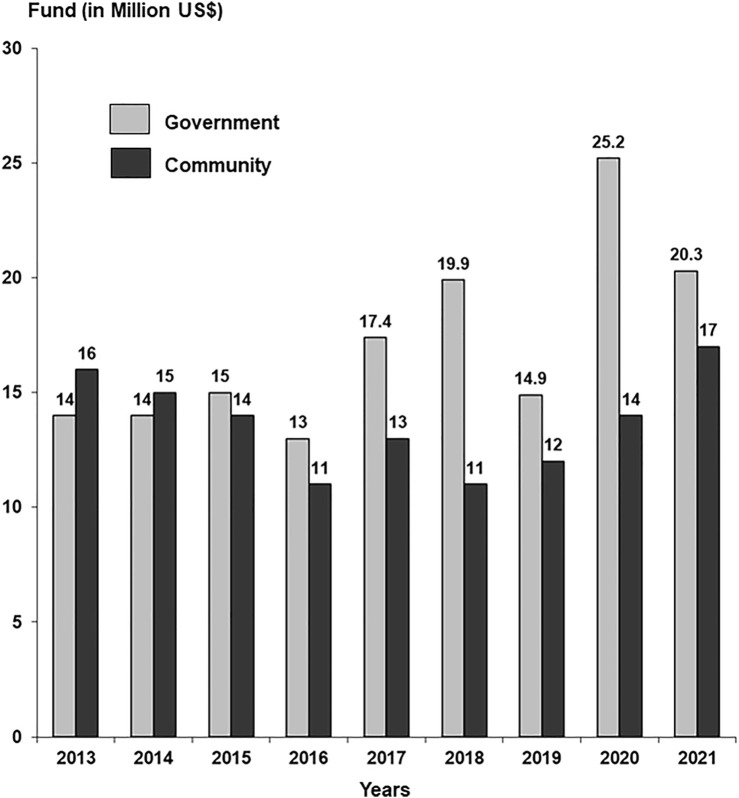
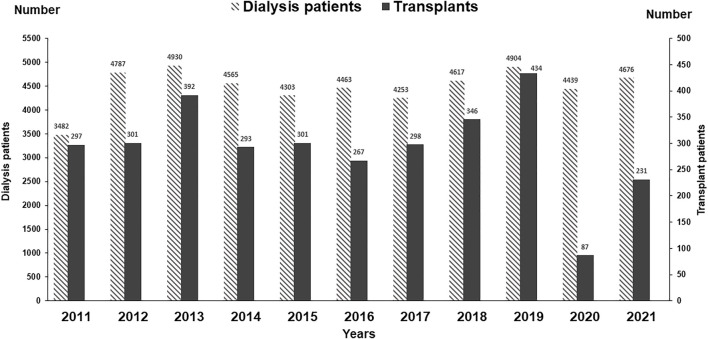
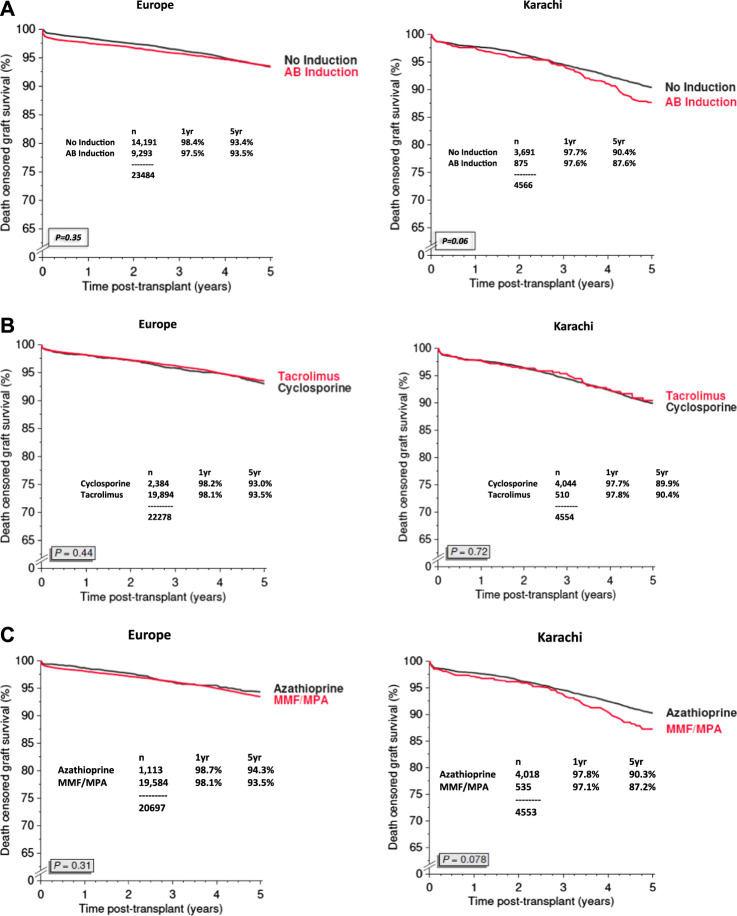
Pakistan is a low-middle income country where incidence of End Stage Kidney Disease (ESKD) is 100-150 per million population (pmp). Paucity and high costs of renal replacement therapy (RRT) renders the majority disfranchised, since the dialysis rate is 15 pmp and the transplant rate is 4-5 pmp. In view of this, our center started an integrated dialysis and transplant program where all treatment is provided "Free of Cost" to all patients, with lifelong follow-up and medications. The model is based on the concept of community-government partnership funded by both partners. The annual contribution in 2021 was $37.4 million. >1,500 patients were dialyzed daily, and 6-8 received transplants weekly. Of the 6,553 transplants performed between 1985-2021, 988 (15%) were children. Overall, the 1 and 5-year graft survival rate was 97% and 88%. The donor clinic has 3,786 donors in regular yearly follow-up for up to 30-35 years where ESKD prevalence is 0.29%. Access to dialysis was increased by establishing six satellite centers reducing patient time and travel costs. Cost reductions by dialyzer reuse and generic drugs resulted in an annual saving of $5.8 m. This sustainable model has overcome the inherent socio-economic, logistic, cultural, and gender biases in RRT in LMICs. It has provided RRT with equity to the disfranchised in Pakistan and can be replicated in other LMICs with community-government support.
巴基斯坦是一个中低收入国家,末期肾病(ESKD)的发病率为每百万人中有 100-150 人。由于肾脏替代疗法(RRT)的稀缺性和高成本,大多数人被剥夺了这种治疗的权利,因为透析率为 15 每百万人,移植率为 4-5 每百万人。鉴于此,我们的中心启动了一个综合透析和移植项目,为所有患者提供“免费”的所有治疗,包括终身随访和药物治疗。该模式基于社区-政府伙伴关系的概念,由双方合作伙伴共同出资。2021 年的年度捐款为 3740 万美元。每天有超过 1500 名患者接受透析,每周有 6-8 名患者接受移植。在 1985 年至 2021 年期间进行的 6553 例移植中,有 988 例(15%)是儿童。总的来说,1 年和 5 年移植物存活率分别为 97%和 88%。供体诊所对 3786 名定期随访的供体进行了长达 30-35 年的随访,ESKD 的患病率为 0.29%。通过建立六个卫星中心,增加了获得透析的机会,减少了患者的时间和旅行成本。通过复用透析器和使用仿制药降低成本,每年可节省 580 万美元。这种可持续的模式克服了中低收入国家 RRT 固有的社会经济、后勤、文化和性别偏见。它为巴基斯坦被剥夺权利的人提供了 RRT,并可以在社区-政府支持下在其他中低收入国家复制。