Li Lin, Cheng Yinlin, Ji Weidong, Liu Mimi, Hu Zhensheng, Yang Yining, Wang Yushan, Zhou Yi
Zhongshan School of Medicine, Sun Yat-sen University, No. 74, Zhongshan Second Road, Yuexiu District, Guangzhou, 510080, Guangdong, China.
People's Hospital of Xinjiang Uygur Autonomous Region, No. 91 Tianchi Road, Tianshan District, Urumqi, 830001, Xijiang, China.
Diabetol Metab Syndr. 2023 Jul 27;15(1):165. doi: 10.1186/s13098-023-01112-y.
Diabetes mellitus is a global epidemic disease. Long-time exposure of patients to hyperglycemia can lead to various type of chronic tissue damage. Early diagnosis of and screening for diabetes are crucial to population health.
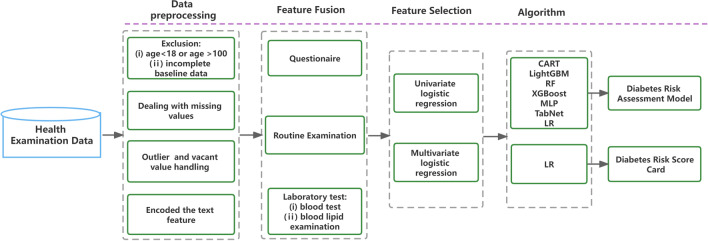
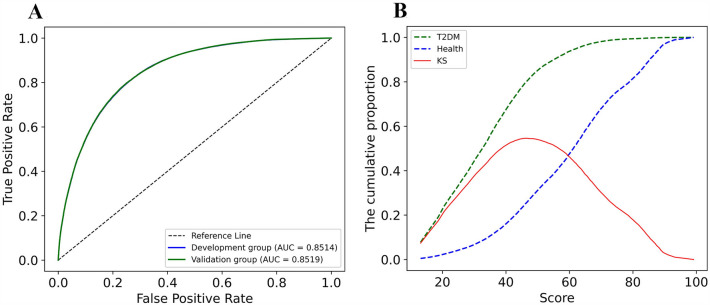
We collected the national physical examination data in Xinjiang, China, in 2020 (a total of more than 4 million people). Three types of physical examination indices were analyzed: questionnaire, routine physical examination and laboratory values. Integrated learning, deep learning and logistic regression methods were used to establish a risk model for type-2 diabetes mellitus. In addition, to improve the convenience and flexibility of the model, a diabetes risk score card was established based on logistic regression to assess the risk of the population.
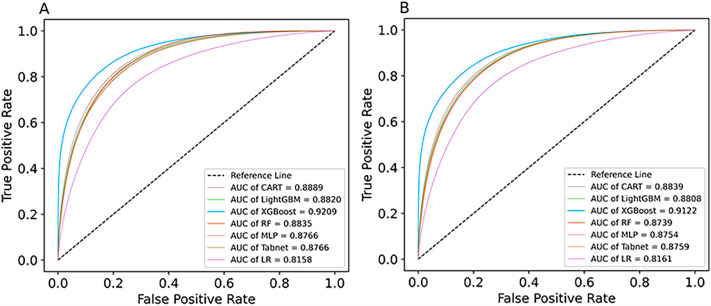
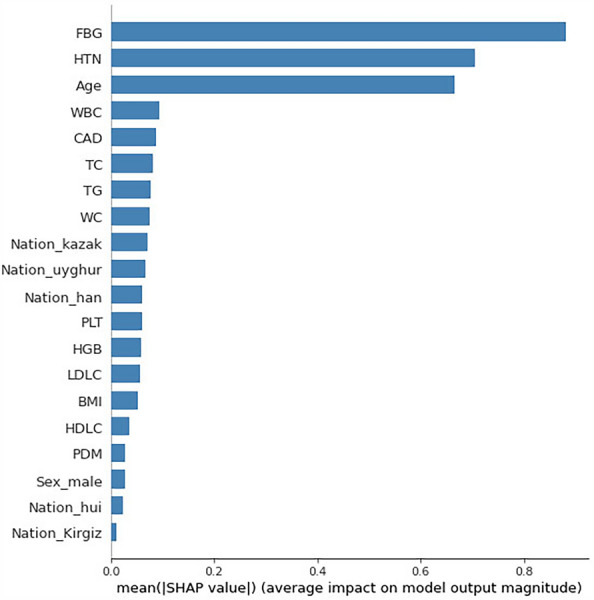
An XGBoost-based risk prediction model outperformed the other five risk assessment algorithms. The AUC of the model was 0.9122. Based on the feature importance ranking map, we found that hypertension, fasting blood glucose, age, coronary heart disease, ethnicity, parental diabetes mellitus, triglycerides, waist circumference, total cholesterol, and body mass index were the most important features of the risk prediction model for type-2 diabetes.
This study established a diabetes risk assessment model based on multiple ethnicities, a large sample and many indices, and classified the diabetes risk of the population, thus providing a new forecast tool for the screening of patients and providing information on diabetes prevention for healthy populations.
糖尿病是一种全球性流行病。患者长期暴露于高血糖状态会导致各种类型的慢性组织损伤。糖尿病的早期诊断和筛查对人群健康至关重要。
我们收集了2020年中国新疆的全国体检数据(总计400多万人)。分析了三种类型的体检指标:问卷、常规体检和实验室值。采用集成学习、深度学习和逻辑回归方法建立2型糖尿病风险模型。此外,为提高模型的便利性和灵活性,基于逻辑回归建立了糖尿病风险评分卡以评估人群风险。
基于XGBoost的风险预测模型优于其他五种风险评估算法。该模型的AUC为0.9122。基于特征重要性排名图,我们发现高血压、空腹血糖、年龄、冠心病、种族、父母糖尿病史、甘油三酯、腰围、总胆固醇和体重指数是2型糖尿病风险预测模型的最重要特征。
本研究基于多民族、大样本和多指标建立了糖尿病风险评估模型,并对人群糖尿病风险进行了分类,从而为患者筛查提供了新的预测工具,并为健康人群提供糖尿病预防信息。