Nigmatullin Rinat, Taylor Caroline S, Basnett Pooja, Lukasiewicz Barbara, Paxinou Alexandra, Lizarraga-Valderrama Lorena R, Haycock John W, Roy Ipsita
Higher Steaks Ltd., 25 Cambridge Science Park Rd, Milton, Cambridge CB4 0FW, UK.
School of Life Sciences, College of Liberal Arts and Sciences, University of Westminster, London W1B 2HW, UK.
Regen Biomater. 2023 Jul 21;10:rbad063. doi: 10.1093/rb/rbad063. eCollection 2023.
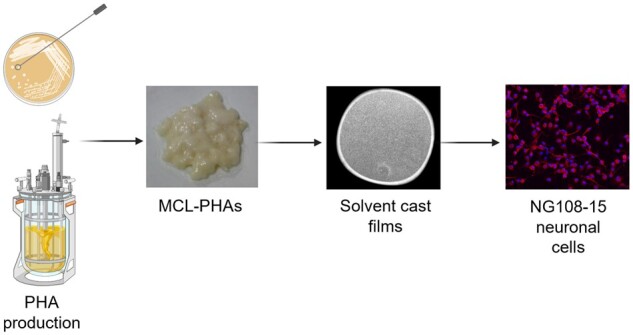
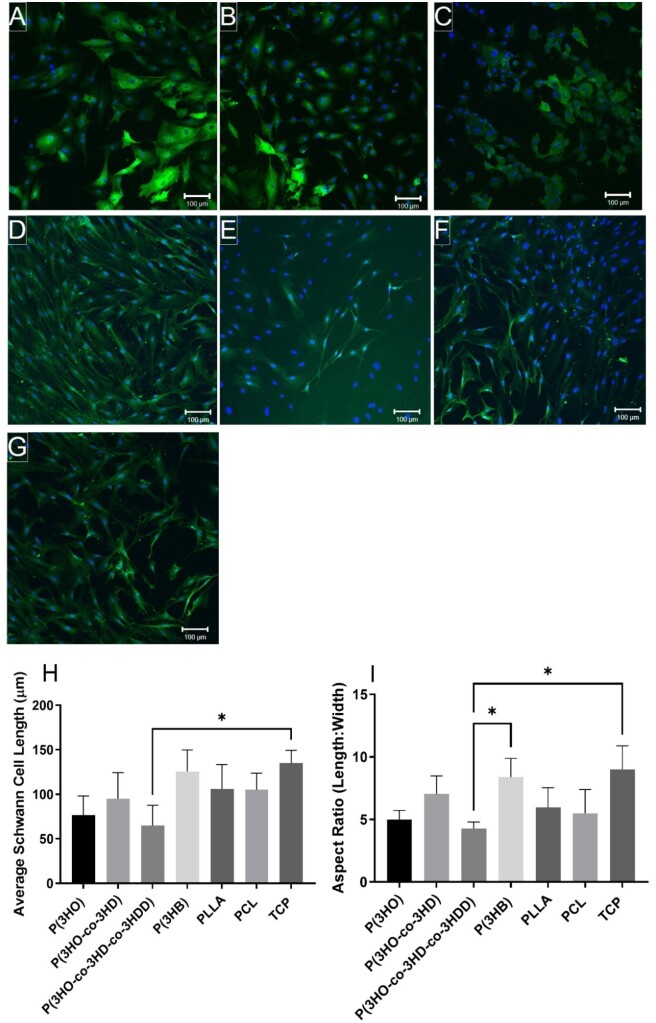
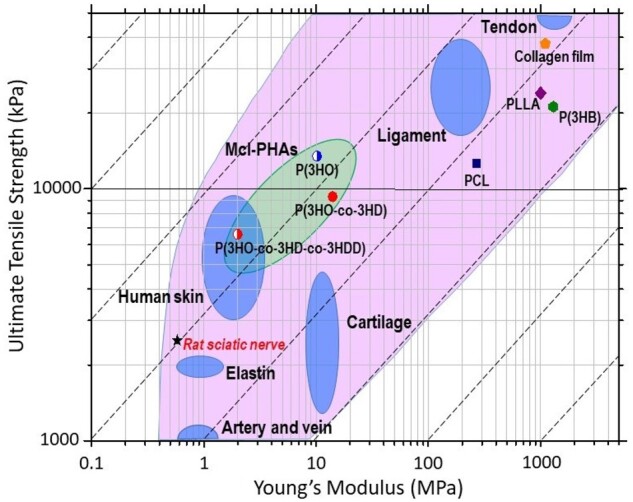
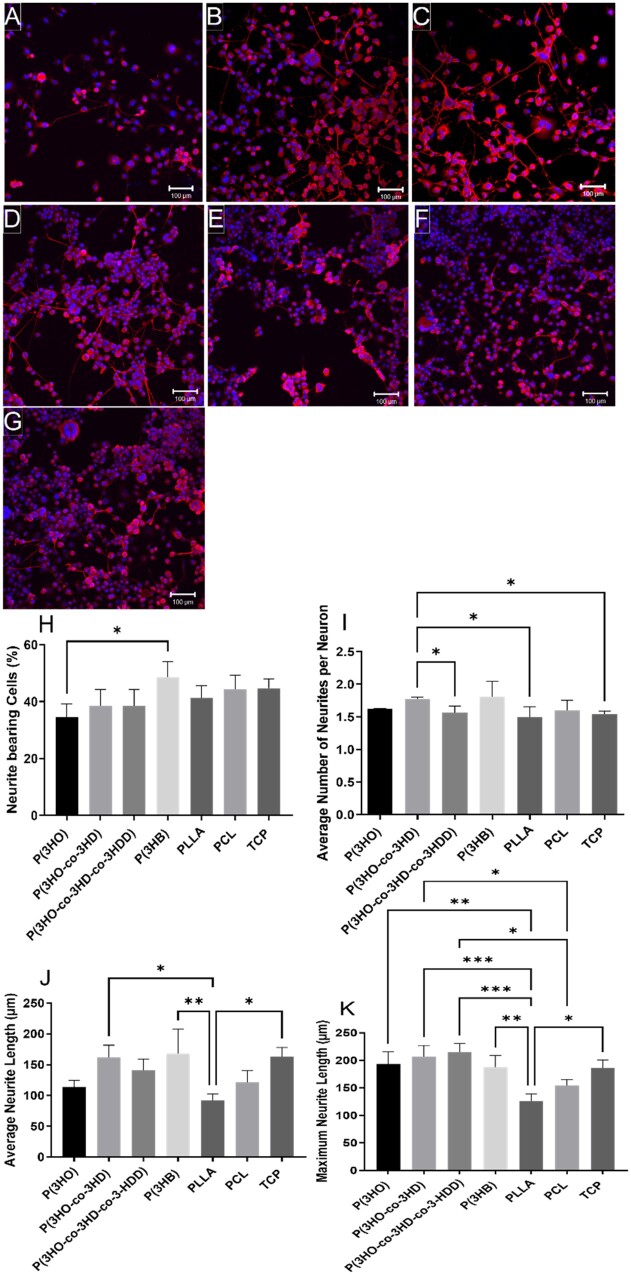
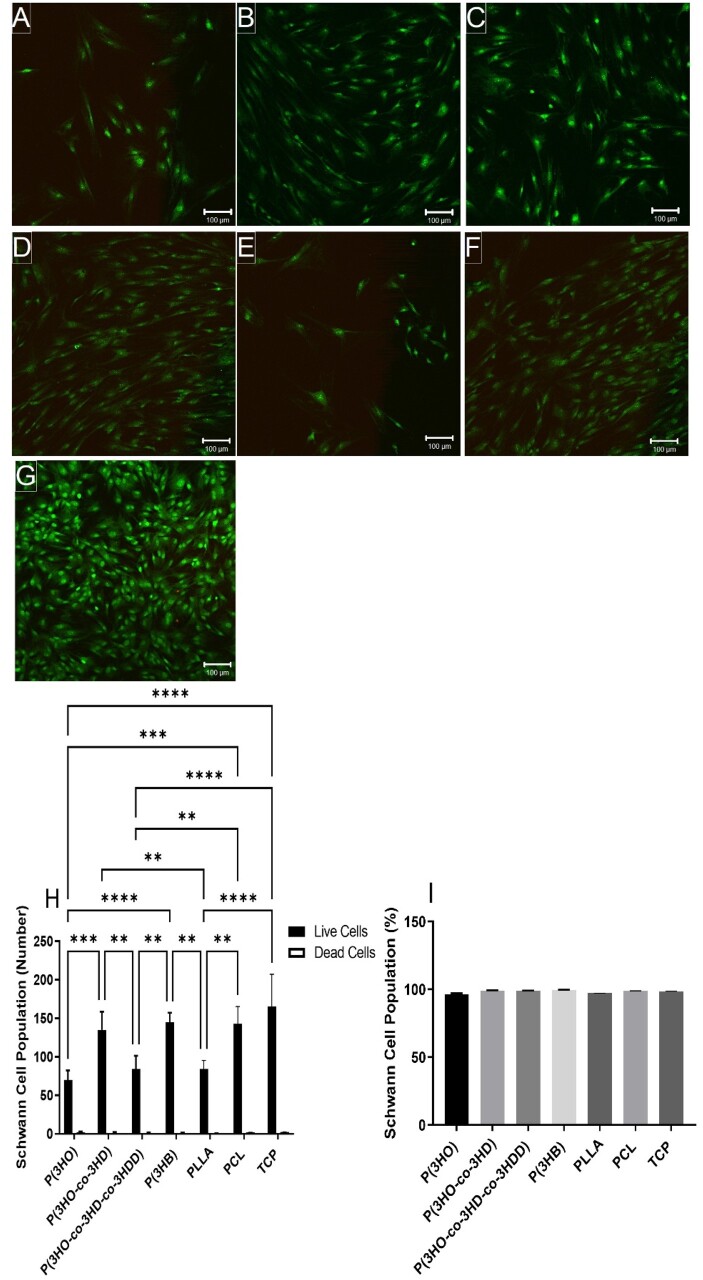
Polyhydroxyalkanoates are natural, biodegradable, thermoplastic and sustainable polymers with a huge potential in fabrication of bioresorbable implantable devices for tissue engineering. We describe a comparative evaluation of three medium chain length polyhydroxyalkanoates (mcl-PHAs), namely poly(3-hydroxyoctanoate), poly(3-hydroxyoctanoate-co-3-hydoxydecanoate) and poly(3-hydroxyoctanoate-co-3-hydroxydecanoate-co-3-hydroxydodecanoate), one short chain length polyhydroxyalkanoate, poly(3-hydroxybutyrate), P(3HB) and synthetic aliphatic polyesters (polycaprolactone and polylactide) with a specific focus on nerve regeneration, due to mechanical properties of mcl-PHAs closely matching nerve tissues. biological studies with NG108-15 neuronal cell and primary Schwann cells did not show a cytotoxic effect of the materials on both cell types. All mcl-PHAs supported cell adhesion and viability. Among the three mcl-PHAs, P(3HO--3HD) exhibited superior properties with regards to numbers of cells adhered and viable cells for both cell types, number of neurite extensions from NG108-15 cells, average length of neurite extensions and Schwann cells. Although, similar characteristics were observed for flat P(3HB) surfaces, high rigidity of this biomaterial, and FDA-approved polymers such as PLLA, limits their applications in peripheral nerve regeneration. Therefore, we have designed, synthesized and evaluated these materials for nerve tissue engineering and regenerative medicine, the interaction of mcl-PHAs with neuronal and Schwann cells, identifying mcl-PHAs as excellent materials to enhance nerve regeneration and potentially their clinical application in peripheral nerve repair.
聚羟基脂肪酸酯是天然的、可生物降解的、热塑性的和可持续的聚合物,在制造用于组织工程的生物可吸收植入装置方面具有巨大潜力。我们描述了三种中链长度聚羟基脂肪酸酯(mcl-PHAs),即聚(3-羟基辛酸酯)、聚(3-羟基辛酸酯-co-3-羟基癸酸酯)和聚(3-羟基辛酸酯-co-3-羟基癸酸酯-co-3-羟基十二酸酯)、一种短链长度聚羟基脂肪酸酯聚(3-羟基丁酸酯)、P(3HB)以及合成脂肪族聚酯(聚己内酯和聚丙交酯)的比较评估,特别关注神经再生,因为mcl-PHAs的机械性能与神经组织紧密匹配。对NG108-15神经元细胞和原代雪旺细胞的生物学研究未显示这些材料对两种细胞类型有细胞毒性作用。所有mcl-PHAs都支持细胞黏附和活力。在这三种mcl-PHAs中,P(3HO-3HD)在两种细胞类型的黏附细胞数量和活细胞数量、NG108-15细胞的神经突延伸数量、神经突延伸平均长度以及雪旺细胞方面表现出优异性能。尽管对于扁平的P(3HB)表面观察到了类似特征,但这种生物材料的高刚性以及FDA批准的聚合物如聚左旋乳酸限制了它们在周围神经再生中的应用。因此,我们设计、合成并评估了这些用于神经组织工程和再生医学的材料,研究了mcl-PHAs与神经元和雪旺细胞的相互作用,确定mcl-PHAs是增强神经再生的优异材料,并有可能在周围神经修复中得到临床应用。