Younes Maged, Aquilina Gabriele, Degen Gisela, Engel Karl-Heinz, Fowler Paul, Frutos Fernandez Maria Jose, Fürst Peter, Gürtler Rainer, Husøy Trine, Manco Melania, Mennes Wim, Passamonti Sabina, Moldeus Peter, Shah Romina, Waalkens-Berendsen Ine, Wright Matthew, Cheyns Karlien, FitzGerald Reginald, Mirat Manuela, Mortensen Alicja, Ulbrich Beate, Woutersen Ruud, Rincon Ana Maria, Ruggeri Laura, Smeraldi Camilla, Tard Alexandra, Gundert-Remy Ursula
EFSA J. 2023 Jul 26;21(7):e08103. doi: 10.2903/j.efsa.2023.8103. eCollection 2023 Jul.
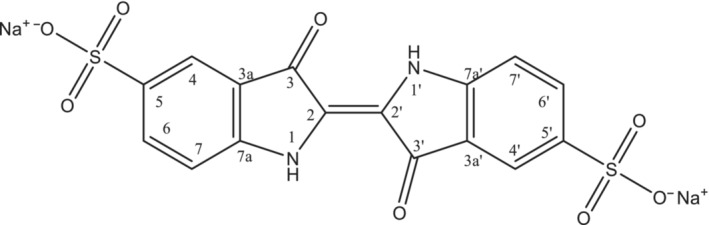
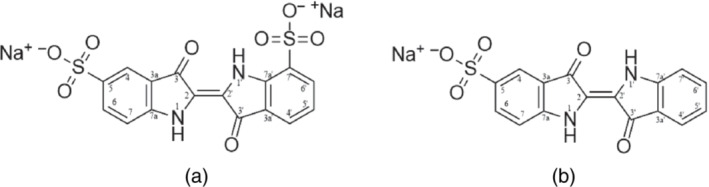
Indigo carmine (E 312) was re-evaluated in 2014 by the EFSA Panel on Food Additives and Nutrient sources added to Food (ANS). The ANS Panel confirmed the acceptable daily intake (ADI) of 5 mg/kg body weight (bw) per day for indigo carmine allocated by JECFA (1975). The ANS Panel indicated that the ADI was applicable to a material with a purity of 93% pure colouring and manufactured using processes resulting in comparable residuals as material used in the Borzelleca et al. studies (1985, 1986) and Borzelleca and Hogan (1985) which were the basis for deriving the ADI. The ANS Panel considered that any extension of the ADI to indigo carmine of lower purity and/or manufactured using a different process would require new data to address the adverse effects on the testes observed in the Dixit and Goyal (2013) study. Following a European Commission call for data to submit data to fill the data gaps, an IBO submitted technical and toxicological data. Considering the technical data, the EFSA Panel on Food Additives and Flavourings (FAF Panel) recommended some modifications of the existing EU specifications for E 132, mainly to lower the limits for toxic elements. Considering the toxicological data, an IBO has submitted a 56-day dietary study to address the adverse effects on testes using a material with 88% purity. The results of this study submitted did not confirm the severe adverse effects observed in the Dixit and Goyal study. Considering all the available information, the Panel confirmed the ADI of 5 mg/kg bw per day for indigo carmine (E 132) disodium salts, meeting the proposed revisions of the specifications (85% minimum for the colouring matter). The Panel concluded that there is no safety concern for the use of indigo carmine (E 132) disodium salts at the reported use levels and submitted analytical data.
靛蓝胭脂红(E 312)于2014年由欧洲食品安全局食品添加剂和添加到食品中的营养源专家委员会(ANS)重新评估。ANS专家委员会确认了食品添加剂联合专家委员会(JECFA,1975年)规定的靛蓝胭脂红每日可接受摄入量(ADI)为5毫克/千克体重/天。ANS专家委员会指出,该ADI适用于纯度为93%的纯色物质,且其生产工艺产生的残留量与Borzelleca等人(1985年、1986年)以及Borzelleca和Hogan(1985年)研究中使用的物质相当,这些研究是推导ADI的依据。ANS专家委员会认为,将ADI扩展至纯度较低和/或采用不同工艺生产的靛蓝胭脂红需要新的数据,以解决Dixit和Goyal(2013年)研究中观察到的对睾丸的不良影响。应欧盟委员会要求提交数据以填补数据空白,一家国际生物组织提交了技术和毒理学数据。考虑到技术数据,欧洲食品安全局食品添加剂和香料专家委员会(FAF专家委员会)建议对E 132的现有欧盟规格进行一些修改,主要是降低有毒元素的限量。考虑到毒理学数据,一家国际生物组织提交了一项为期56天的膳食研究,以研究使用纯度为88%的物质对睾丸的不良影响。提交的这项研究结果并未证实Dixit和Goyal研究中观察到的严重不良影响。考虑到所有现有信息,专家委员会确认了靛蓝胭脂红(E 132)二钠盐的ADI为5毫克/千克体重/天,符合提议的规格修订(色素最低含量为85%)。专家委员会得出结论,在报告的使用水平下使用靛蓝胭脂红(E 132)二钠盐不存在安全问题,并提交了分析数据。