Key Laboratory of Prevention and Control Agents for Animal Bacteriosis (Ministry of Agriculture and Rural Affairs), Hubei Provincial Key Laboratory of Animal Pathogenic Microbiology, Institute of Animal Husbandry and Veterinary, Hubei Academy of Agricultural Sciences, Wuhan, China.
Hubei Hongshan Laboratory, Wuhan, China.
Front Cell Infect Microbiol. 2023 Jul 12;13:1207855. doi: 10.3389/fcimb.2023.1207855. eCollection 2023.
is a widespread zoonotic pathogen that causes severe damage to the poultry industry. This study focused on the antibacterial effects and mechanism of action of coptisine against .
The minimum inhibitory concentration and half maximal inhibitory concentration of coptisine against was measured. Additionally, the effect of coptisine on growth, cell wall, activity of respiratory enzymes, soluble protein content and DNA synthesis were also analyzed. Finally, the effect of coptisine on gene transcription was determined using RNA sequencing.
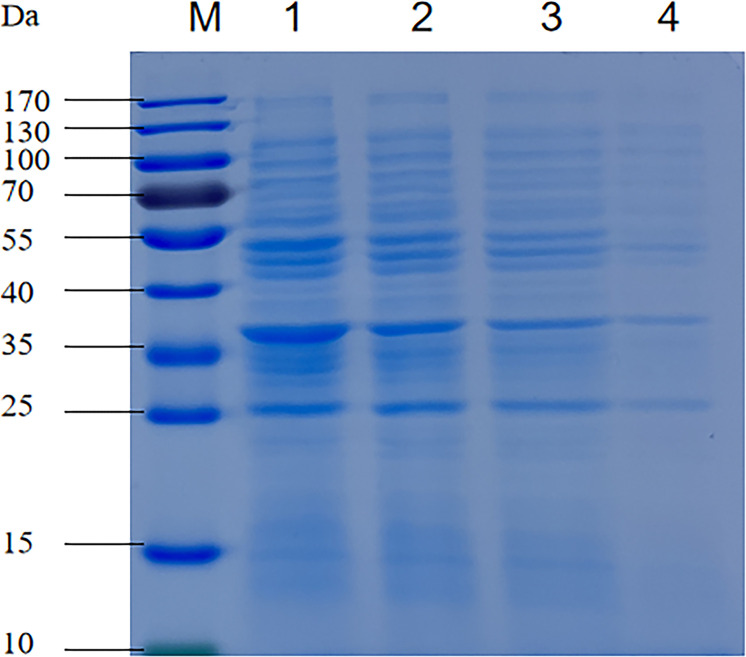
We demonstrated that coptisine has a strong antibacterial effect against , with a minimum inhibitory concentration of 0.125 mg/mL. Moreover, the measurement of the half maximal inhibitory concentration confirmed that coptisine was safe for the pathogen. The growth curve showed that coptisine inhibited bacterial growth. Measurement of alkaline phosphatase activity in the culture solution showed that coptisine affected cell wall permeability. Transmission electron microscopy revealed that coptisine chloride destroyed the cell structure. In addition, coptisine blocked the respiratory system, as measured by the levels of critical enzymes of the tricarboxylic acid cycle and glycolysis, succinate dehydrogenase and lactate dehydrogenase, respectively. Similarly, coptisine inhibited the synthesis of soluble proteins and genomic DNA. The KEGG pathway analysis of the differentially expressed genes showed that they were associated with cellular, respiratory, and amino acid metabolism, which were downregulated after coptisine treatment. Additionally, genes related to RNA degradation and the aminoacyl-tRNA pathway were upregulated.
In this study, we demonstrated that coptisine exerts an antibacterial effect on . These findings suggest that coptisine has a multifaceted impact on various pathways, resulting in the inhibition of . Thus, coptisine is a potential alternative to antibiotics for the treatment of infections in a clinical setting.
是一种广泛存在的人畜共患病原体,对家禽业造成严重损害。本研究专注于黄连碱对 的抗菌作用和作用机制。
测定黄连碱对 的最小抑菌浓度和半最大抑制浓度。此外,还分析了黄连碱对生长、细胞壁、呼吸酶活性、可溶性蛋白含量和 DNA 合成的影响。最后,通过 RNA 测序确定了黄连碱对基因转录的影响。
我们证明黄连碱对 具有很强的抗菌作用,最小抑菌浓度为 0.125mg/ml。此外,半最大抑制浓度的测定证实黄连碱对病原体是安全的。生长曲线表明黄连碱抑制细菌生长。测定培养液中碱性磷酸酶活性表明黄连碱影响细胞壁通透性。透射电子显微镜显示黄连碱破坏了细胞结构。此外,黄连碱阻断了呼吸系统,分别通过三羧酸循环和糖酵解的关键酶琥珀酸脱氢酶和乳酸脱氢酶的水平来衡量。同样,黄连碱抑制可溶性蛋白和基因组 DNA 的合成。差异表达基因的 KEGG 通路分析表明,它们与细胞、呼吸和氨基酸代谢有关,黄连碱处理后这些基因下调。此外,与 RNA 降解和氨酰-tRNA 途径相关的基因上调。
在这项研究中,我们证明黄连碱对 具有抗菌作用。这些发现表明,黄连碱对多种途径具有多方面的影响,导致 的抑制。因此,黄连碱可能是治疗临床感染的抗生素替代品。