Wang Wei, Li Xiaoning, Fan Shugao, He Yang, Wei Meng, Wang Jiayi, Yin Yanling, Liu Yanfeng
School of Resources and Environmental Engineering, Ludong University, Yantai, China.
The Engineering Research Institute of Agriculture and Forestry, Ludong University, Yantai, China.
Front Plant Sci. 2023 Jul 12;14:1216048. doi: 10.3389/fpls.2023.1216048. eCollection 2023.
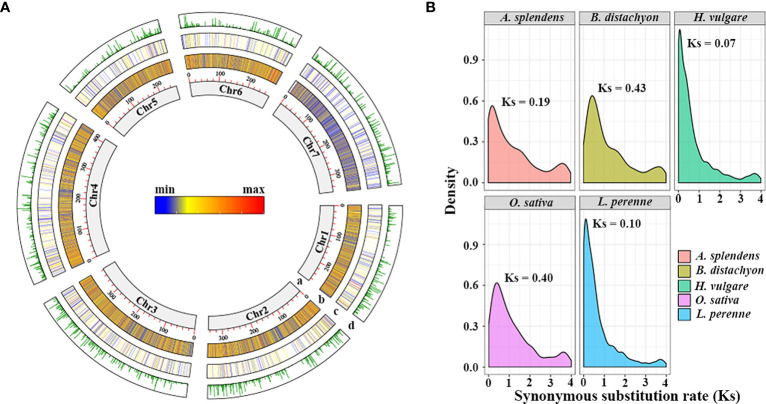
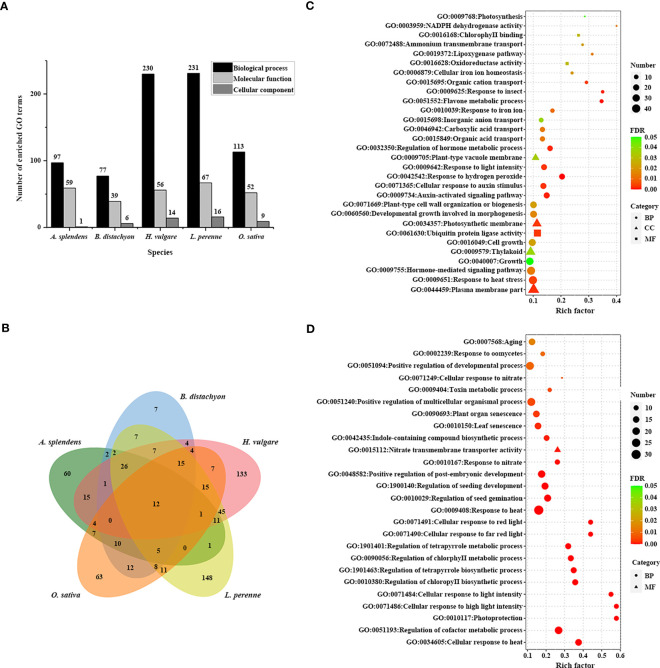
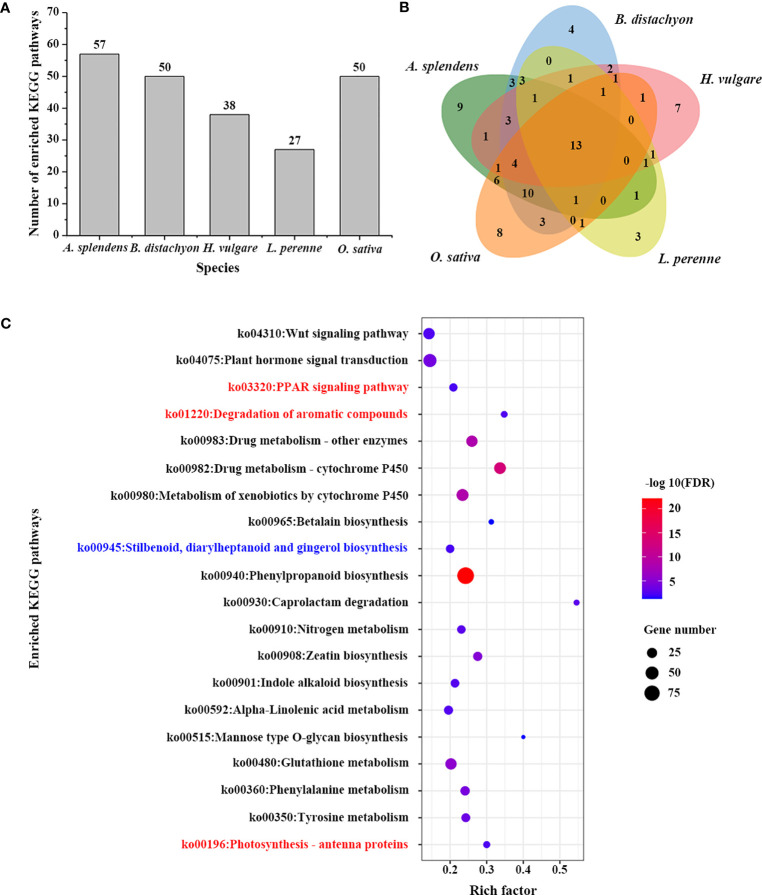
Perennial ryegrass ( L.) is an agronomically important cool-season grass species that is widely used as forage for ruminant animal production and cultivated in temperate regions for the establishment of lawns. However, the underlying genetic mechanism of the response of to low temperature is still unclear. In the present study, we performed a comprehensive study and identified 3,770 tandem duplication genes (TDGs) in , and evolutionary analysis revealed that might have undergone a duplication event approximately 7.69 Mya. GO and KEGG pathway functional analyses revealed that these TDGs were mainly enriched in photosynthesis, hormone-mediated signaling pathways and responses to various stresses, suggesting that TDGs contribute to the environmental adaptability of . In addition, the expression profile analysis revealed that the expression levels of TDGs were highly conserved and significantly lower than those of all genes in different tissues, while the frequency of differentially expressed genes (DEGs) from TDGs was much higher than that of DEGs from all genes in response to low-temperature stress. Finally, in-depth analysis of the important and expanded gene family indicated that the members of the ELIP subfamily could rapidly respond to low temperature and persistently maintain higher expression levels during all low temperature stress time points, suggesting that ELIPs most likely mediate low temperature responses and help to facilitate adaptation to low temperature in . Our results provide evidence for the genetic underpinning of low-temperature adaptation and valuable resources for practical application and genetic improvement for stress resistance in .
多年生黑麦草(Lolium perenne L.)是一种在农学上具有重要意义的冷季型草种,广泛用作反刍动物生产的饲料,并在温带地区种植用于草坪建植。然而,多年生黑麦草对低温响应的潜在遗传机制仍不清楚。在本研究中,我们进行了全面研究,在多年生黑麦草中鉴定出3770个串联重复基因(TDGs),进化分析表明多年生黑麦草可能在约769万年前经历了一次重复事件。基因本体(GO)和京都基因与基因组百科全书(KEGG)通路功能分析表明,这些TDGs主要富集在光合作用、激素介导的信号通路以及对各种胁迫的响应中,这表明TDGs有助于多年生黑麦草的环境适应性。此外,表达谱分析表明,TDGs的表达水平高度保守,且在不同组织中显著低于所有基因的表达水平,而TDGs中差异表达基因(DEGs)的频率在低温胁迫下远高于所有基因中的DEGs频率。最后,对重要且扩张的基因家族进行深入分析表明,早期光诱导蛋白(ELIP)亚家族的成员能够快速响应低温,并在所有低温胁迫时间点持续保持较高的表达水平,这表明ELIPs很可能介导低温响应并有助于多年生黑麦草适应低温。我们的研究结果为多年生黑麦草低温适应的遗传基础提供了证据,并为其实际应用和抗逆性遗传改良提供了宝贵资源。