Alhussan Amel Ali, Abdelhamid Abdelaziz A, Towfek S K, Ibrahim Abdelhameed, Abualigah Laith, Khodadadi Nima, Khafaga Doaa Sami, Al-Otaibi Shaha, Ahmed Ayman Em
Department of Computer Sciences, College of Computer and Information Sciences, Princess Nourah Bint Abdulrahman University, P.O. Box 84428, Riyadh 11671, Saudi Arabia.
Department of Computer Science, College of Computing and Information Technology, Shaqra University, Shaqra 11961, Saudi Arabia.
Biomimetics (Basel). 2023 Jun 26;8(3):270. doi: 10.3390/biomimetics8030270.
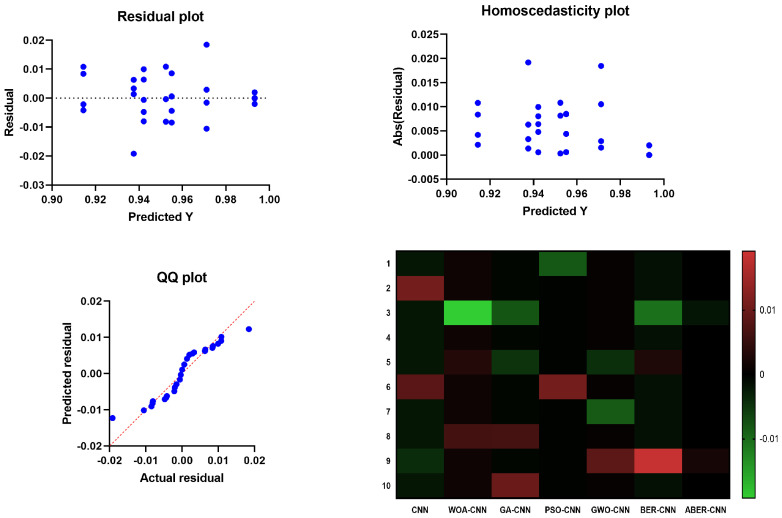
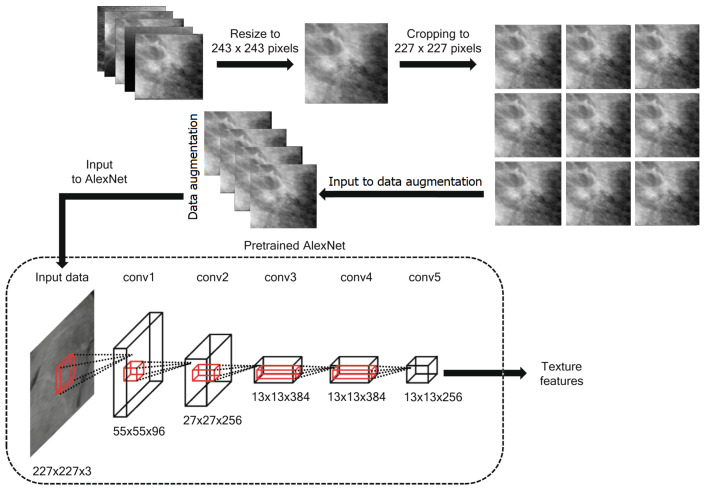
Breast cancer is one of the most common cancers in women, with an estimated 287,850 new cases identified in 2022. There were 43,250 female deaths attributed to this malignancy. The high death rate associated with this type of cancer can be reduced with early detection. Nonetheless, a skilled professional is always necessary to manually diagnose this malignancy from mammography images. Many researchers have proposed several approaches based on artificial intelligence. However, they still face several obstacles, such as overlapping cancerous and noncancerous regions, extracting irrelevant features, and inadequate training models. In this paper, we developed a novel computationally automated biological mechanism for categorizing breast cancer. Using a new optimization approach based on the Advanced Al-Biruni Earth Radius (ABER) optimization algorithm, a boosting to the classification of breast cancer cases is realized. The stages of the proposed framework include data augmentation, feature extraction using AlexNet based on transfer learning, and optimized classification using a convolutional neural network (CNN). Using transfer learning and optimized CNN for classification improved the accuracy when the results are compared to recent approaches. Two publicly available datasets are utilized to evaluate the proposed framework, and the average classification accuracy is 97.95%. To ensure the statistical significance and difference between the proposed methodology, additional tests are conducted, such as analysis of variance (ANOVA) and Wilcoxon, in addition to evaluating various statistical analysis metrics. The results of these tests emphasized the effectiveness and statistical difference of the proposed methodology compared to current methods.
乳腺癌是女性中最常见的癌症之一,2022年估计有287,850例新发病例。有43,250名女性死于这种恶性肿瘤。早期检测可以降低与这种癌症相关的高死亡率。尽管如此,从乳腺X线摄影图像中手动诊断这种恶性肿瘤始终需要专业技术人员。许多研究人员提出了几种基于人工智能的方法。然而,他们仍然面临一些障碍,例如癌性和非癌性区域重叠、提取无关特征以及训练模型不足。在本文中,我们开发了一种用于乳腺癌分类的新型计算自动化生物学机制。使用基于高级阿尔 - 比鲁尼地球半径(ABER)优化算法的新优化方法,实现了对乳腺癌病例分类的提升。所提出框架的阶段包括数据增强、基于迁移学习使用AlexNet进行特征提取以及使用卷积神经网络(CNN)进行优化分类。与最近的方法相比,使用迁移学习和优化的CNN进行分类提高了准确率。使用两个公开可用的数据集来评估所提出的框架,平均分类准确率为97.95%。为了确保所提出方法的统计显著性和差异,除了评估各种统计分析指标外,还进行了额外的测试,如方差分析(ANOVA)和威尔科克森检验。这些测试的结果强调了所提出方法与当前方法相比的有效性和统计差异。