
一项评估交配频率对夏威夷短尾乌贼(Euprymna scolopes)繁殖性能影响的案例研究。
A case study assessing the impact of mating frequency on the reproductive performance of the Hawaiian bobtail squid Euprymna scolopes.
作者信息
Cecere Andrew G, Cook Rachel A, Miyashiro Tim I
机构信息
Department of Biochemistry and Molecular Biology, The Pennsylvania State University, University Park, PA, USA.
The One Health Microbiome Center, Huck Institutes of the Life Sciences, The Pennsylvania State University, University Park, PA, USA.
出版信息
Lab Anim Res. 2023 Jul 28;39(1):17. doi: 10.1186/s42826-023-00168-1.
BACKGROUND
The symbiosis between the Hawaiian bobtail squid Euprymna scolopes and bacterium Vibrio fischeri serves as a model for investigating the molecular mechanisms that promote the initial formation of animal-bacterial symbioses. Research with this system frequently depends on freshly hatched E. scolopes, but the husbandry factors that promote hatchling production in a mariculture facility remain underreported. Here we report on the reproductive performance of E. scolopes in response to decreased mating frequency.
RESULTS
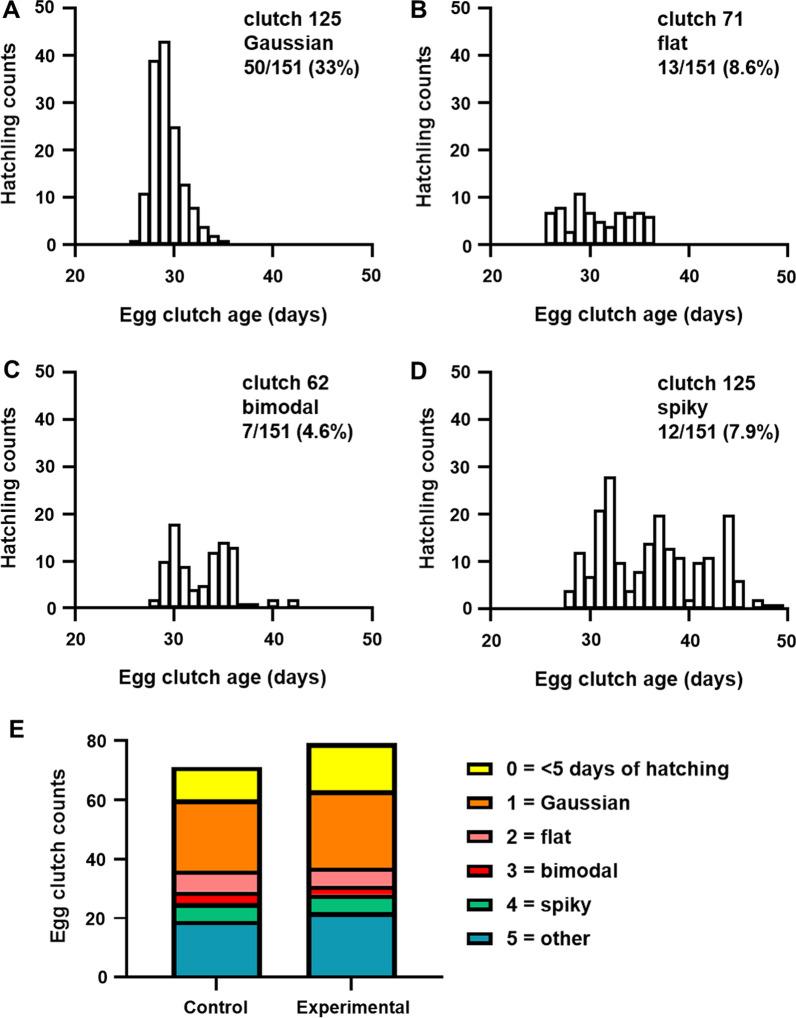
One animal cohort was maintained in a mariculture facility for 107 days, with females assigned to either a control group (mating once every 14 days) or an experimental group (mating once every 21 days). No differences between the groups were observed in survival, the number of egg clutches laid, or hatchling counts. Each group featured multiple females that were hyper-reproductive, i.e., they generated more than 8 egg clutches while in captivity. Examination of the distributions for daily hatchling counts of individual egg clutches revealed significant variation in the hatching patterns among clutches that was independent of mating frequency. Finally, an assessment of hatchling production showed that 93.5% of total hatchlings produced by the cohort were derived from egg clutches laid within the first 70 days.
CONCLUSIONS
These results suggest a lower mating frequency does not impede hatchling production. Furthermore, the variation in hatchling production among egg clutches provides new insight into the reproductive performance of E. scolopes as a lab animal for microbiology research.
背景
夏威夷短尾乌贼(Euprymna scolopes)与费氏弧菌(Vibrio fischeri)之间的共生关系是研究促进动物 - 细菌共生初始形成分子机制的模型。该系统的研究常常依赖刚孵化的短尾乌贼,但在海水养殖设施中促进幼体产出的养殖因素仍鲜有报道。在此,我们报告了短尾乌贼在交配频率降低时的繁殖性能。
结果
一组动物在海水养殖设施中饲养了107天,雌性被分为对照组(每14天交配一次)或实验组(每21天交配一次)。在存活率、产卵窝数或幼体数量方面,两组之间未观察到差异。每组都有多个超繁殖的雌性,即它们在圈养期间产生了超过8窝卵。对单个卵窝每日幼体数量分布的检查显示,各卵窝孵化模式存在显著差异,且与交配频率无关。最后,对幼体产出的评估表明,该组产生的幼体总数中有93.5%来自前70天内产下的卵窝。
结论
这些结果表明较低的交配频率不会阻碍幼体产出。此外,各卵窝幼体产出的差异为短尾乌贼作为微生物学研究实验动物的繁殖性能提供了新的见解。


 Zotero 插件