Herouvi Despina, Paltoglou George, Soldatou Alexandra, Kalpia Christina, Karanasios Spyridon, Karavanaki Kyriaki
Diabetes and Metabolism Clinic, 2nd Department of Pediatrics, University of Athens, "P&A Kyriakou" Children's Hospital, 11527 Athens, Greece.
Children (Basel). 2023 Jul 17;10(7):1230. doi: 10.3390/children10071230.
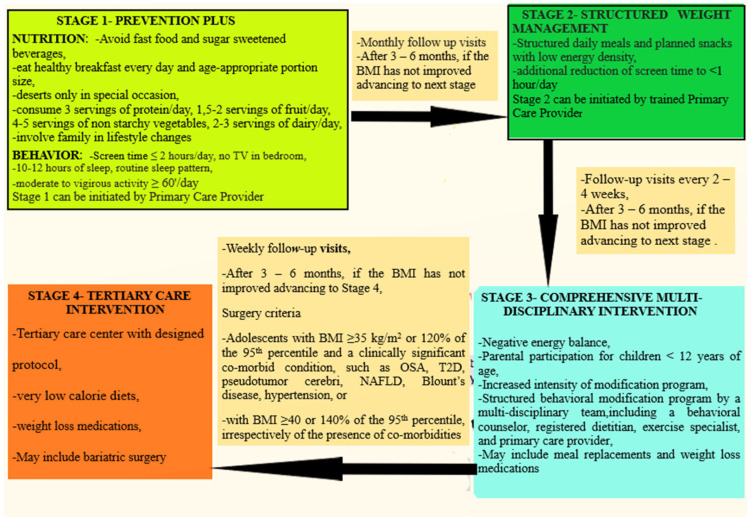
Obesity is a multifactorial chronic impairment that further decreases quality of life and life expectancy. Worldwide, childhood obesity has become a pandemic health issue causing several comorbidities that frequently present already in childhood, including cardiovascular (hypertension, dyslipidemia), metabolic (Type 2 diabetes mellitus, fatty liver disease, metabolic syndrome), respiratory, gastrointestinal and musculoskeletal disorders. In addition, obese children frequently experience stress and psychosocial symptoms, including mood disorders, anxiety, prejudice and low self-esteem. Given that cardiovascular risk factors and pediatric obesity have the tendency to pertain into adulthood, obesity management, including weight control and physical activity, should start before the late teens and certainly before the first signs of atherosclerosis can be detected. This review aims to concisely present options for childhood obesity management, including lifestyle modification strategies and pharmacological treatment, as well as the respective treatment indications for the general practitioner.
肥胖是一种多因素慢性损害,会进一步降低生活质量和预期寿命。在全球范围内,儿童肥胖已成为一个大流行的健康问题,引发了多种常在儿童期就出现的合并症,包括心血管疾病(高血压、血脂异常)、代谢性疾病(2型糖尿病、脂肪肝疾病、代谢综合征)、呼吸系统疾病、胃肠道疾病和肌肉骨骼疾病。此外,肥胖儿童经常经历压力和心理社会症状,包括情绪障碍、焦虑、偏见和自卑。鉴于心血管危险因素和儿童肥胖有延续至成年期的倾向,肥胖管理,包括体重控制和体育活动,应在青少年晚期之前开始,当然要在能检测到动脉粥样硬化的最初迹象之前开始。本综述旨在简要介绍儿童肥胖管理的选择,包括生活方式改变策略和药物治疗,以及全科医生的相应治疗指征。