Ibrahim Hamdy, Billings Caroline, Abdalla Moataz, Korra Ahmed, Anderson David Edger
Department of Mechanical Engineering, University of Tennessee, Chattanooga, TN 37403, USA.
College of Veterinary Medicine, University of Tennessee, Knoxville, TN 37996, USA.
Bioengineering (Basel). 2023 Jul 24;10(7):877. doi: 10.3390/bioengineering10070877.
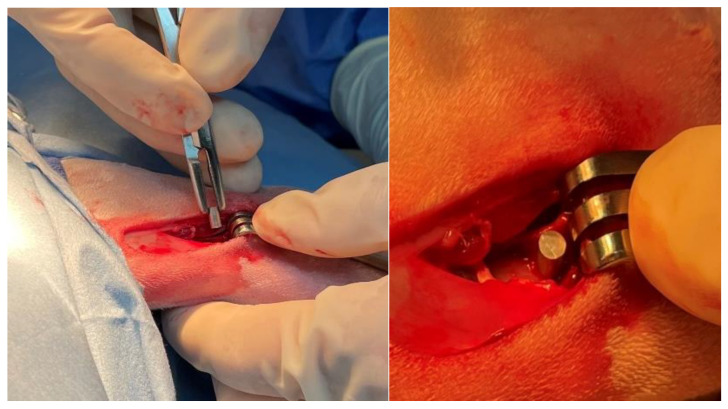
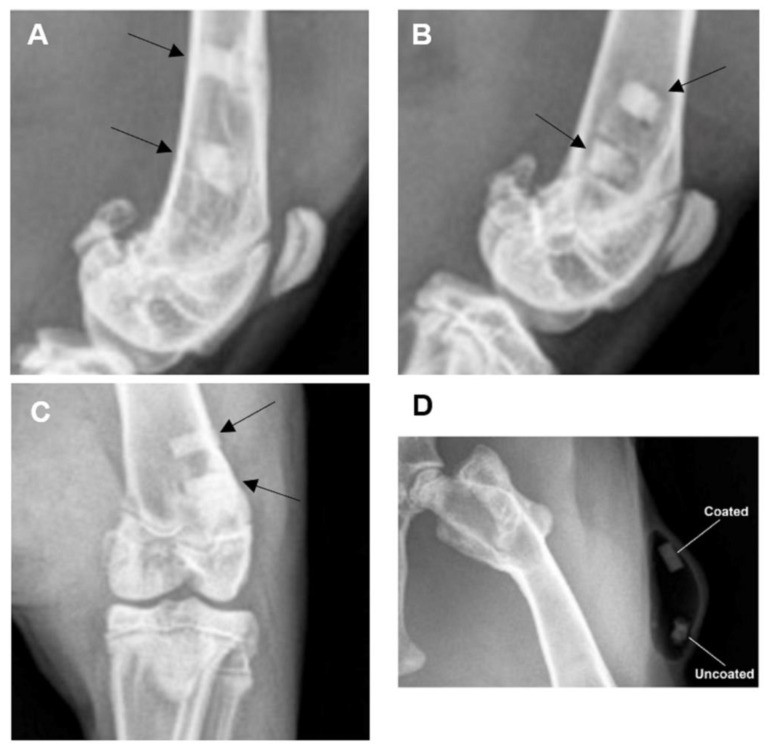
The biodegradable nature of magnesium in aqueous mediums makes it an attractive material for various biomedical applications when it is not recommended that the material stay permanently in the body. Some of the main challenges that hinder the use of magnesium for bone fracture repair are its limited mechanical strength and fast corrosion rates. To this end, we developed a novel Mg-Zn-Ca-Mn-based alloy and post-fabrication methods that can deliver high-strength and corrosion-controlled implant materials to address these challenges. This study is focused on assessing the in vitro corrosion and in vivo biocompatibility of the developed magnesium-based alloy and post-fabrication processes. The developed heat treatment process resulted in an increase in the microhardness from 71.9 ± 5.4 HV for the as-cast Mg alloy to as high as 98.1 ± 6.5 HV for the heat-treated Mg alloy, and the ceramic coating resulted in a significant reduction in the corrosion rate from 10.37 mm/yr for the uncoated alloy to 0.03 mm/yr after coating. The in vivo assessments showed positive levels of biocompatibility in terms of degradation rates and integration of the implants in a rabbit model. In the rabbit studies, the implants became integrated into the bone defect and showed minimal evidence of an immune response. The results of this study show that it is possible to produce biocompatible Mg-based implants with stronger and more corrosion-controlled properties based on the developed Mg-Zn-Ca-Mn-based alloy and post-fabrication methods.
镁在水性介质中的生物可降解特性使其成为各种生物医学应用的理想材料,前提是该材料不适合永久留在体内。阻碍镁用于骨折修复的一些主要挑战包括其有限的机械强度和快速的腐蚀速率。为此,我们开发了一种新型的Mg-Zn-Ca-Mn基合金及后加工方法,能够提供高强度且腐蚀可控的植入材料来应对这些挑战。本研究聚焦于评估所开发的镁基合金及后加工工艺的体外腐蚀情况和体内生物相容性。所开发的热处理工艺使铸态镁合金的显微硬度从71.9±5.4 HV提高到热处理镁合金的高达98.1±6.5 HV,而陶瓷涂层使腐蚀速率从未涂层合金的10.37 mm/yr显著降低至涂层后的0.03 mm/yr。体内评估显示,在兔模型中,就降解速率和植入物的整合而言,生物相容性处于积极水平。在兔实验中,植入物融入骨缺损部位,且几乎没有免疫反应的迹象。本研究结果表明,基于所开发的Mg-Zn-Ca-Mn基合金及后加工方法,有可能生产出具有更强性能且腐蚀可控的生物相容性镁基植入物。