de Oliveira Mariana Campello, Vides Mariana Capelo, Lassi Dângela Layne Silva, Torales Julio, Ventriglio Antonio, Bombana Henrique Silva, Leyton Vilma, Périco Cintia de Azevedo-Marques, Negrão André Brooking, Malbergier André, Castaldelli-Maia João Maurício
Interdisciplinary Group of Alcohol and Drug Studies (GREA), Institute Perdizes, Department of Psychiatry Medical School, São Paulo University, São Paulo 05403-903, SP, Brazil.
Department of Psychological Medicine, School of Medical Sciences, National University of Asuncion, San Lorenzo 111421, Paraguay.
Brain Sci. 2023 Jun 24;13(7):990. doi: 10.3390/brainsci13070990.
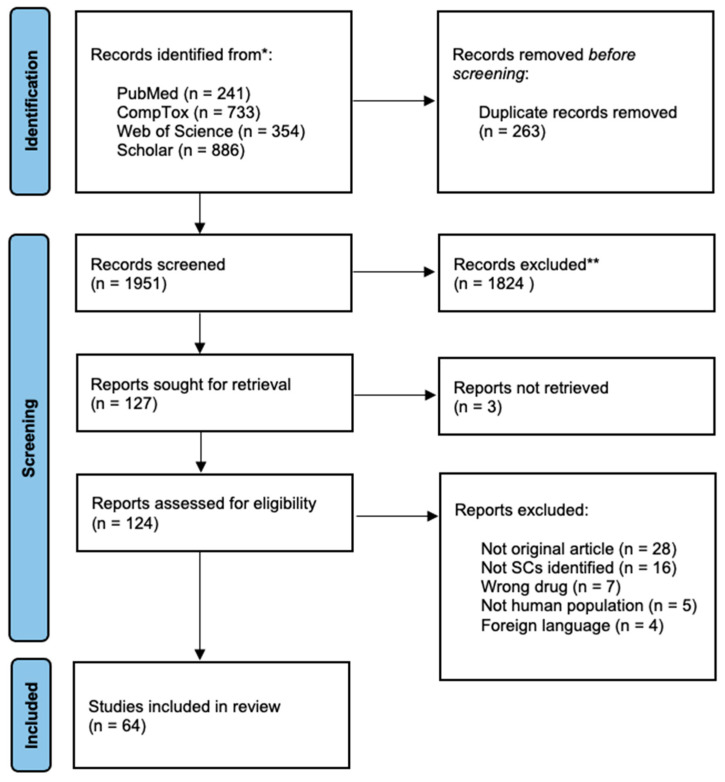
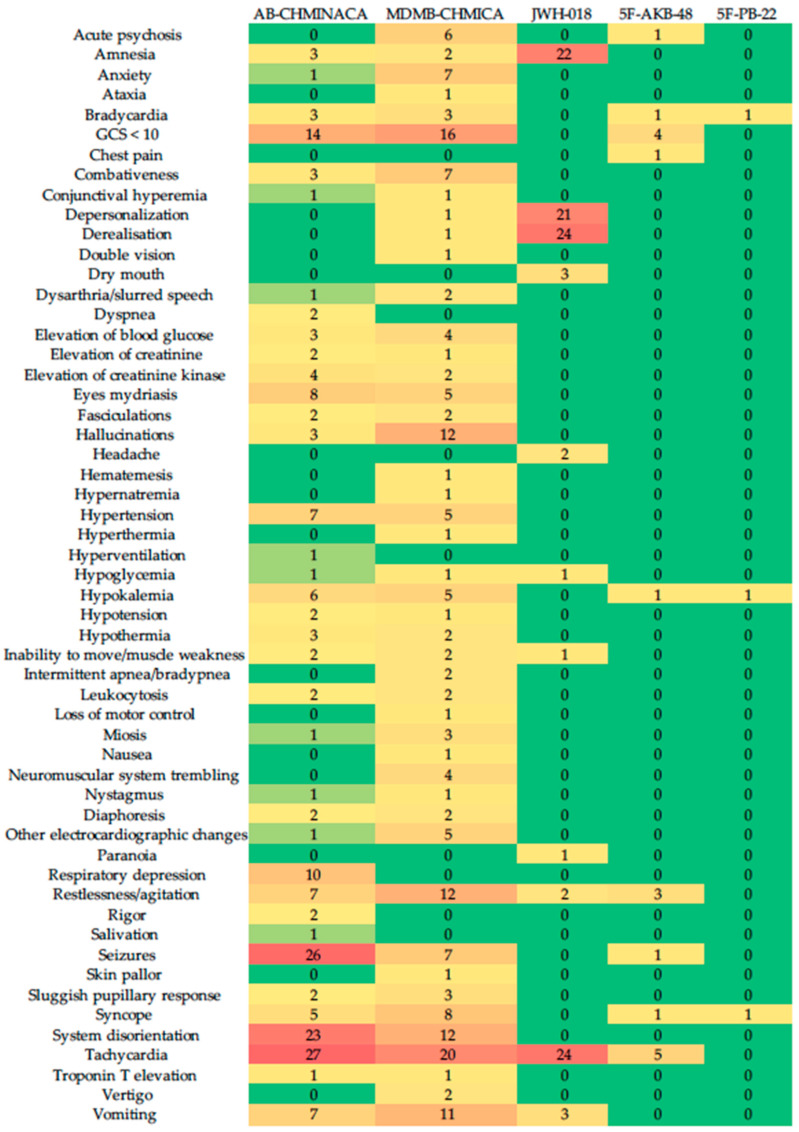
(1) Background: Synthetic cannabinoids (SCs) are emerging drugs of abuse sold as 'K2', 'K9' or 'Spice'. Evidence shows that using SCs products leads to greater health risks than cannabis. They have been associated with greater toxicity and higher addiction potential unrelated to the primary psychoactive component of marijuana, Δ9-tetrahydrocannabinol (Δ9-THC). Moreover, early cases of intoxication and death related to SCs highlight the inherent danger that may accompany the use of these substances. However, there is limited knowledge of the toxicology of Spice ingredients. This systematic review intends to analyze the toxicity of SCs compounds in Spice/K2 drugs. (2) Methods: Studies analyzing synthetic cannabinoid toxicity and dependence were included in the present review. We searched the PubMed database of the US National Library of Medicine, Google Scholar, CompTox Chemicals, and Web of Science up to May 2022. (3) Results: Sixty-four articles reporting the effects of synthetic cannabinoids in humans were included in our review. Ten original papers and fifty-four case studies were also included. Fourteen studies reported death associated with synthetic cannabinoid use, with AB-CHMINACA and MDMB-CHMICA being the main reported SCs. Tachycardia and seizures were the most common toxicity symptoms. The prevalence of neuropsychiatric symptoms was higher in third-generation SCs. (4) Conclusion: SCs may exhibit higher toxicity than THC and longer-lasting effects. Their use may be harmful, especially in people with epilepsy and schizophrenia, because of the increased risk of the precipitation of psychiatric and neurologic disorders. Compared to other drugs, SCs have a higher potential to trigger a convulsive crisis, a decline in consciousness, and hemodynamic changes. Therefore, it is crucial to clarify their potential harms and increase the availability of toxicology data in both clinical and research settings.
(1) 背景:合成大麻素(SCs)是作为“K2”“K9”或“香料”出售的新型滥用药物。证据表明,使用合成大麻素产品比使用大麻会带来更大的健康风险。它们与更高的毒性和更高的成瘾潜力相关,这与大麻的主要精神活性成分Δ9-四氢大麻酚(Δ9-THC)无关。此外,早期与合成大麻素相关的中毒和死亡案例凸显了使用这些物质可能伴随的内在危险。然而,对于“香料”成分的毒理学了解有限。本系统评价旨在分析“香料”/K2药物中合成大麻素化合物的毒性。(2) 方法:本评价纳入了分析合成大麻素毒性和依赖性的研究。我们检索了美国国立医学图书馆的PubMed数据库、谷歌学术、综合毒理学化学数据库以及截至2022年5月的科学网。(3) 结果:我们的评价纳入了64篇报告合成大麻素对人类影响的文章。还纳入了10篇原创论文和54篇病例研究。14项研究报告了与合成大麻素使用相关的死亡,其中AB-CHMINACA和MDMB-CHMICA是主要报告的合成大麻素。心动过速和癫痫发作是最常见的毒性症状。第三代合成大麻素中神经精神症状的发生率更高。(4) 结论:合成大麻素可能比四氢大麻酚表现出更高的毒性和更持久的作用。其使用可能有害,尤其是对癫痫和精神分裂症患者,因为引发精神和神经疾病的风险增加。与其他药物相比,合成大麻素有更高的可能性引发惊厥危机、意识下降和血流动力学变化。因此,明确其潜在危害并在临床和研究环境中增加毒理学数据的可获取性至关重要。