• 文献检索
  • 文档翻译
  • 深度研究
  • 学术资讯
  • Suppr Zotero 插件Zotero 插件
  • 邀请有礼
  • 套餐&价格
  • 历史记录
应用&插件
Suppr Zotero 插件Zotero 插件浏览器插件Mac 客户端Windows 客户端微信小程序
定价
高级版会员购买积分包购买API积分包
服务
文献检索文档翻译深度研究API 文档MCP 服务
关于我们
关于 Suppr公司介绍联系我们用户协议隐私条款
关注我们

Suppr 超能文献

核心技术专利:CN118964589B侵权必究
粤ICP备2023148730 号-1Suppr @ 2026

文献检索

告别复杂PubMed语法,用中文像聊天一样搜索,搜遍4000万医学文献。AI智能推荐,让科研检索更轻松。

立即免费搜索

文件翻译

保留排版,准确专业,支持PDF/Word/PPT等文件格式,支持 12+语言互译。

免费翻译文档

深度研究

AI帮你快速写综述,25分钟生成高质量综述,智能提取关键信息,辅助科研写作。

立即免费体验

基础医学与临床医学中ChatGPT的知识评估:基于多项选择题考试的表现

ChatGPT Knowledge Evaluation in Basic and Clinical Medical Sciences: Multiple Choice Question Examination-Based Performance.

作者信息

Meo Sultan Ayoub, Al-Masri Abeer A, Alotaibi Metib, Meo Muhammad Zain Sultan, Meo Muhammad Omair Sultan

机构信息

Department of Physiology, College of Medicine, King Saud University, Riyadh 11461, Saudi Arabia.

University Diabetes Unit, Department of Medicine, College of Medicine, King Saud University, Riyadh 11461, Saudi Arabia.

出版信息

Healthcare (Basel). 2023 Jul 17;11(14):2046. doi: 10.3390/healthcare11142046.

DOI:10.3390/healthcare11142046
PMID:37510487
原文链接:https://pmc.ncbi.nlm.nih.gov/articles/PMC10379728/
Abstract

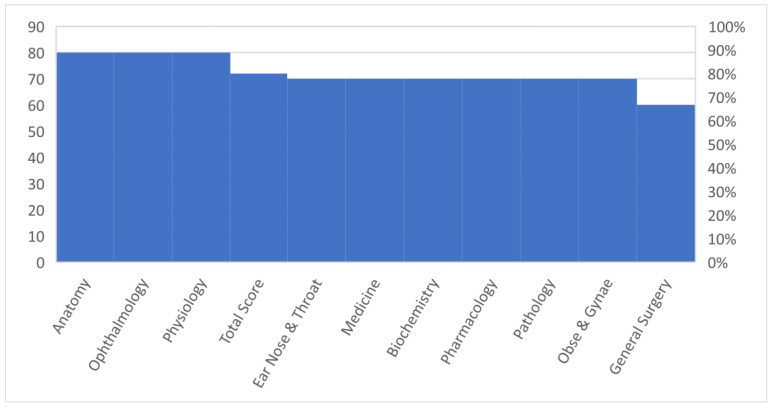
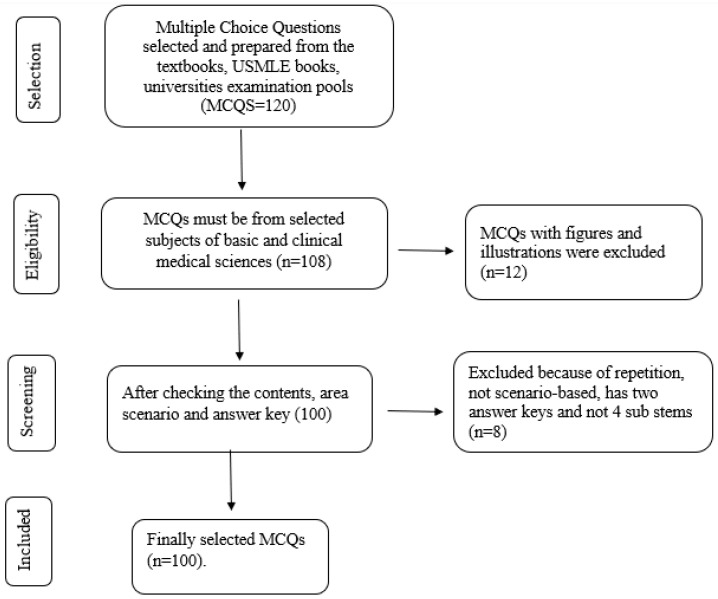
The Chatbot Generative Pre-Trained Transformer (ChatGPT) has garnered great attention from the public, academicians and science communities. It responds with appropriate and articulate answers and explanations across various disciplines. For the use of ChatGPT in education, research and healthcare, different perspectives exist with some level of ambiguity around its acceptability and ideal uses. However, the literature is acutely lacking in establishing a link to assess the intellectual levels of ChatGPT in the medical sciences. Therefore, the present study aimed to investigate the knowledge level of ChatGPT in medical education both in basic and clinical medical sciences, multiple-choice question (MCQs) examination-based performance and its impact on the medical examination system. In this study, initially, a subject-wise question bank was established with a pool of multiple-choice questions (MCQs) from various medical textbooks and university examination pools. The research team members carefully reviewed the MCQ contents and ensured that the MCQs were relevant to the subject's contents. Each question was scenario-based with four sub-stems and had a single correct answer. In this study, 100 MCQs in various disciplines, including basic medical sciences (50 MCQs) and clinical medical sciences (50 MCQs), were randomly selected from the MCQ bank. The MCQs were manually entered one by one, and a fresh ChatGPT session was started for each entry to avoid memory retention bias. The task was given to ChatGPT to assess the response and knowledge level of ChatGPT. The first response obtained was taken as the final response. Based on a pre-determined answer key, scoring was made on a scale of 0 to 1, with zero representing incorrect and one representing the correct answer. The results revealed that out of 100 MCQs in various disciplines of basic and clinical medical sciences, ChatGPT attempted all the MCQs and obtained 37/50 (74%) marks in basic medical sciences and 35/50 (70%) marks in clinical medical sciences, with an overall score of 72/100 (72%) in both basic and clinical medical sciences. It is concluded that ChatGPT obtained a satisfactory score in both basic and clinical medical sciences subjects and demonstrated a degree of understanding and explanation. This study's findings suggest that ChatGPT may be able to assist medical students and faculty in medical education settings since it has potential as an innovation in the framework of medical sciences and education.

摘要

聊天机器人生成式预训练变换器(ChatGPT)已引起公众、院士和科学界的极大关注。它能针对各个学科给出恰当且清晰的答案和解释。对于ChatGPT在教育、研究和医疗保健领域的应用,存在不同观点,其可接受性和理想用途在一定程度上存在模糊性。然而,目前的文献严重缺乏对ChatGPT在医学领域知识水平评估的相关联系。因此,本研究旨在调查ChatGPT在基础医学和临床医学教育方面的知识水平、基于多项选择题(MCQ)考试的表现及其对医学考试系统的影响。在本研究中,首先,依据来自各种医学教科书和大学考试题库的多项选择题,建立了一个按学科分类的题库。研究团队成员仔细审查了MCQ内容,并确保这些题目与学科内容相关。每个问题都基于情景,有四个子问题,且只有一个正确答案。在本研究中,从题库中随机选取了100道不同学科的MCQ,包括基础医学(50道题)和临床医学(50道题)。这些MCQ被逐一手动输入,并且为每个输入开启一个新的ChatGPT会话,以避免记忆保留偏差。将任务交给ChatGPT以评估其回答和知识水平。获得的第一个回答被视为最终回答。根据预先确定的答案键,评分范围为0到1,0表示错误答案,1表示正确答案。结果显示,在基础医学和临床医学各学科的100道MCQ中,ChatGPT尝试了所有题目,在基础医学中获得37/50(74%)的分数,在临床医学中获得35/50(70%)的分数,基础医学和临床医学的总体分数为72/100(72%)。研究得出结论,ChatGPT在基础医学和临床医学科目中都获得了令人满意的分数,并展现出一定程度的理解和解释能力。本研究结果表明,ChatGPT在医学教育环境中可能能够帮助医学生和教师,因为它在医学科学和教育框架中具有作为一项创新的潜力。
https://cdn.ncbi.nlm.nih.gov/pmc/blobs/bbbb/10379728/796397ed92f1/healthcare-11-02046-g003.jpg
https://cdn.ncbi.nlm.nih.gov/pmc/blobs/bbbb/10379728/c6827edcdc0a/healthcare-11-02046-g001.jpg
https://cdn.ncbi.nlm.nih.gov/pmc/blobs/bbbb/10379728/a409f79461f2/healthcare-11-02046-g002.jpg
https://cdn.ncbi.nlm.nih.gov/pmc/blobs/bbbb/10379728/796397ed92f1/healthcare-11-02046-g003.jpg
https://cdn.ncbi.nlm.nih.gov/pmc/blobs/bbbb/10379728/c6827edcdc0a/healthcare-11-02046-g001.jpg
https://cdn.ncbi.nlm.nih.gov/pmc/blobs/bbbb/10379728/a409f79461f2/healthcare-11-02046-g002.jpg
https://cdn.ncbi.nlm.nih.gov/pmc/blobs/bbbb/10379728/796397ed92f1/healthcare-11-02046-g003.jpg

相似文献

1
ChatGPT Knowledge Evaluation in Basic and Clinical Medical Sciences: Multiple Choice Question Examination-Based Performance.基础医学与临床医学中ChatGPT的知识评估:基于多项选择题考试的表现
Healthcare (Basel). 2023 Jul 17;11(14):2046. doi: 10.3390/healthcare11142046.
2
Medical knowledge of ChatGPT in public health, infectious diseases, COVID-19 pandemic, and vaccines: multiple choice questions examination based performance.ChatGPT 在公共卫生、传染病、COVID-19 大流行和疫苗方面的医学知识:基于多项选择题考试的表现。
Front Public Health. 2024 Apr 17;12:1360597. doi: 10.3389/fpubh.2024.1360597. eCollection 2024.
3
The Scientific Knowledge of Bard and ChatGPT in Endocrinology, Diabetes, and Diabetes Technology: Multiple-Choice Questions Examination-Based Performance.巴德和ChatGPT在内分泌学、糖尿病及糖尿病技术方面的科学知识:基于多项选择题考试的表现
J Diabetes Sci Technol. 2025 May;19(3):705-710. doi: 10.1177/19322968231203987. Epub 2023 Oct 5.
4
Is ChatGPT's Knowledge and Interpretative Ability Comparable to First Professional MBBS (Bachelor of Medicine, Bachelor of Surgery) Students of India in Taking a Medical Biochemistry Examination?在参加医学生物化学考试方面,ChatGPT的知识和解释能力能与印度首批医学学士(医学学士、外科学士)专业学生相媲美吗?
Cureus. 2023 Oct 19;15(10):e47329. doi: 10.7759/cureus.47329. eCollection 2023 Oct.
5
Can ChatGPT generate practice question explanations for medical students, a new faculty teaching tool?ChatGPT能否为医学生生成练习题解释,成为一种新的教师教学工具?
Med Teach. 2025 Mar;47(3):560-564. doi: 10.1080/0142159X.2024.2363486. Epub 2024 Jun 20.
6
Evaluating ChatGPT-3.5 and Claude-2 in Answering and Explaining Conceptual Medical Physiology Multiple-Choice Questions.评估ChatGPT-3.5和Claude-2在回答和解释概念性医学生理学选择题方面的表现。
Cureus. 2023 Sep 29;15(9):e46222. doi: 10.7759/cureus.46222. eCollection 2023 Sep.
7
How Does ChatGPT Perform on the United States Medical Licensing Examination (USMLE)? The Implications of Large Language Models for Medical Education and Knowledge Assessment.ChatGPT在美国医师执照考试(USMLE)中的表现如何?大语言模型对医学教育和知识评估的影响。
JMIR Med Educ. 2023 Feb 8;9:e45312. doi: 10.2196/45312.
8
Integrating ChatGPT in Orthopedic Education for Medical Undergraduates: Randomized Controlled Trial.将 ChatGPT 融入骨科医学本科生教育:随机对照试验。
J Med Internet Res. 2024 Aug 20;26:e57037. doi: 10.2196/57037.
9
Analysing the Applicability of ChatGPT, Bard, and Bing to Generate Reasoning-Based Multiple-Choice Questions in Medical Physiology.分析ChatGPT、Bard和必应在医学生理学中生成基于推理的多项选择题的适用性。
Cureus. 2023 Jun 26;15(6):e40977. doi: 10.7759/cureus.40977. eCollection 2023 Jun.
10
Evaluating ChatGPT as a self-learning tool in medical biochemistry: A performance assessment in undergraduate medical university examination.评估ChatGPT作为医学生物化学自学工具的效果:一项本科医科大学考试中的性能评估。
Biochem Mol Biol Educ. 2024 Mar-Apr;52(2):237-248. doi: 10.1002/bmb.21808. Epub 2023 Dec 19.

引用本文的文献

1
The Generation and Use of Medical MCQs: A Narrative Review.医学多项选择题的生成与应用:一篇叙述性综述
Adv Med Educ Pract. 2025 Aug 5;16:1331-1340. doi: 10.2147/AMEP.S513119. eCollection 2025.
2
Exploring the role of DeepSeek-R1, ChatGPT-4, and Google Gemini in medical education: How valid and reliable are they?探索DeepSeek-R1、ChatGPT-4和谷歌Gemini在医学教育中的作用:它们的有效性和可靠性如何?
Pak J Med Sci. 2025 Jul;41(7):1887-1892. doi: 10.12669/pjms.41.7.12183.
3
Performance of ChatGPT in answering the oral pathology questions of various types or subjects from Taiwan National Dental Licensing Examinations.

本文引用的文献

1
An exploratory survey about using ChatGPT in education, healthcare, and research.关于在教育、医疗保健和研究中使用 ChatGPT 的探索性调查。
PLoS One. 2023 Oct 5;18(10):e0292216. doi: 10.1371/journal.pone.0292216. eCollection 2023.
2
ChatGPT and the Future of Digital Health: A Study on Healthcare Workers' Perceptions and Expectations.ChatGPT与数字健康的未来:一项关于医护人员认知与期望的研究。
Healthcare (Basel). 2023 Jun 21;11(13):1812. doi: 10.3390/healthcare11131812.
3
Performance of ChatGPT on Specialty Certificate Examination in Dermatology multiple-choice questions.
ChatGPT在回答台湾地区国家牙科执照考试各类题型或主题的口腔病理学问题时的表现。
J Dent Sci. 2025 Jul;20(3):1709-1715. doi: 10.1016/j.jds.2025.03.030. Epub 2025 Apr 5.
4
Comparison of artificial intelligence systems in answering prosthodontics questions from the dental specialty exam in Turkey.土耳其牙科专业考试中人工智能系统回答口腔修复学问题的比较
J Dent Sci. 2025 Jul;20(3):1454-1459. doi: 10.1016/j.jds.2025.01.025. Epub 2025 Jan 31.
5
Areas of research focus and trends in the research on the application of AIGC in healthcare.人工智能生成内容(AIGC)在医疗保健领域应用的研究重点领域和研究趋势。
J Health Popul Nutr. 2025 Jun 14;44(1):195. doi: 10.1186/s41043-025-00947-7.
6
Large Language Models in Biochemistry Education: Comparative Evaluation of Performance.生物化学教育中的大语言模型:性能的比较评估
JMIR Med Educ. 2025 Apr 10;11:e67244. doi: 10.2196/67244.
7
ChatGPT and Other Large Language Models in Medical Education - Scoping Literature Review.医学教育中的ChatGPT及其他大语言模型——文献综述
Med Sci Educ. 2024 Nov 13;35(1):555-567. doi: 10.1007/s40670-024-02206-6. eCollection 2025 Feb.
8
Artificial intelligence-based chatbot assistance in clinical decision-making for medically complex patients in oral surgery: a comparative study.基于人工智能的聊天机器人在口腔外科复杂病情患者临床决策中的辅助作用:一项对比研究。
BMC Oral Health. 2025 Mar 7;25(1):351. doi: 10.1186/s12903-025-05732-w.
9
Exploring medical students' intention to use of ChatGPT from a programming course: a grounded theory study in China.从一门编程课程探究医学生使用ChatGPT的意愿:一项在中国的扎根理论研究
BMC Med Educ. 2025 Feb 8;25(1):209. doi: 10.1186/s12909-025-06807-6.
10
ChatGPT-4 Performance on German Continuing Medical Education-Friend or Foe (Trick or Treat)? Protocol for a Randomized Controlled Trial.ChatGPT-4在德国继续医学教育中的表现——朋友还是敌人(不给糖就捣蛋)?一项随机对照试验方案
JMIR Res Protoc. 2025 Feb 6;14:e63887. doi: 10.2196/63887.
ChatGPT 在皮肤病学多选题专业证书考试中的表现。
Clin Exp Dermatol. 2024 Jun 25;49(7):722-727. doi: 10.1093/ced/llad197.
4
Analysis of large-language model versus human performance for genetics questions.大语言模型与人类在遗传学问题表现上的分析。
Eur J Hum Genet. 2024 Apr;32(4):466-468. doi: 10.1038/s41431-023-01396-8. Epub 2023 May 29.
5
Performance of ChatGPT on the pharmacist licensing examination in Taiwan.ChatGPT 在台湾药剂师执照考试中的表现。
J Chin Med Assoc. 2023 Jul 1;86(7):653-658. doi: 10.1097/JCMA.0000000000000942. Epub 2023 Jul 5.
6
Chat Generative Pretrained Transformer Fails the Multiple-Choice American College of Gastroenterology Self-Assessment Test.ChatGPT 答错多项选择题美国胃肠病学院自测题
Am J Gastroenterol. 2023 Dec 1;118(12):2280-2282. doi: 10.14309/ajg.0000000000002320. Epub 2023 May 22.
7
Evaluating ChatGPT's Ability to Solve Higher-Order Questions on the Competency-Based Medical Education Curriculum in Medical Biochemistry.评估ChatGPT解决医学基础生物化学基于能力的医学教育课程中高阶问题的能力。
Cureus. 2023 Apr 2;15(4):e37023. doi: 10.7759/cureus.37023. eCollection 2023 Apr.
8
ChatGPT Is Equivalent to First-Year Plastic Surgery Residents: Evaluation of ChatGPT on the Plastic Surgery In-Service Examination.ChatGPT 相当于第一年整形外科住院医师:ChatGPT 在整形外科住院医师年度考核中的评估。
Aesthet Surg J. 2023 Nov 16;43(12):NP1085-NP1089. doi: 10.1093/asj/sjad130.
9
Performance of ChatGPT on the Plastic Surgery Inservice Training Examination.ChatGPT 在整形外科学在职培训考试中的表现。
Aesthet Surg J. 2023 Nov 16;43(12):NP1078-NP1082. doi: 10.1093/asj/sjad128.
10
Assessing the Capability of ChatGPT in Answering First- and Second-Order Knowledge Questions on Microbiology as per Competency-Based Medical Education Curriculum.根据基于能力的医学教育课程评估ChatGPT回答微生物学一阶和二阶知识问题的能力。
Cureus. 2023 Mar 12;15(3):e36034. doi: 10.7759/cureus.36034. eCollection 2023 Mar.