Alkhalil Mohammad, De Maria Giovanni Luigi, Akbar Naveed, Ruparelia Neil, Choudhury Robin P
Cardiothoracic Centre, Freeman Hospital, Newcastle-upon-Tyne NE7 7DN, UK.
Translational and Clinical Research Institute, Newcastle University, Newcastle-upon-Tyne NE1 7RU, UK.
J Clin Med. 2023 Jul 13;12(14):4668. doi: 10.3390/jcm12144668.
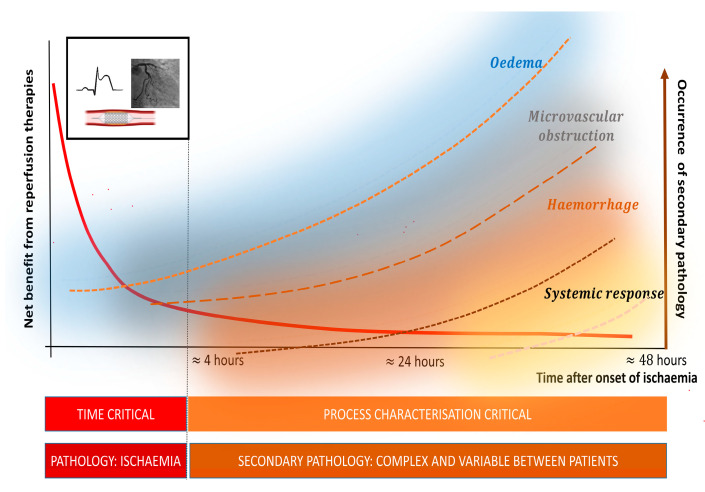
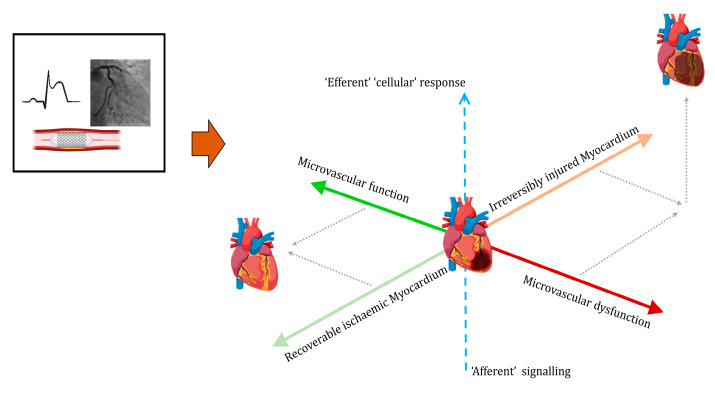
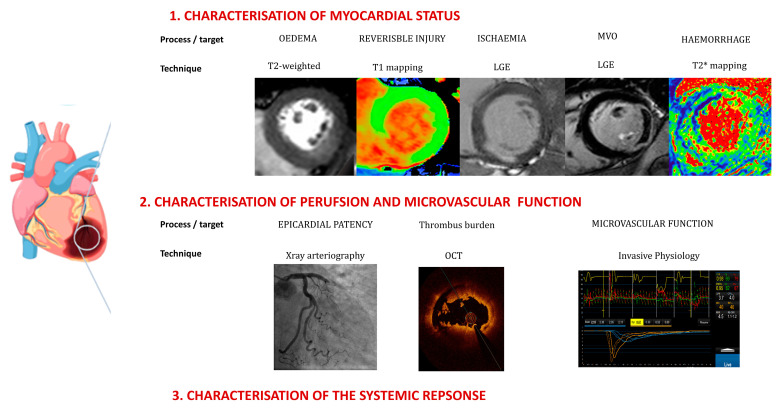
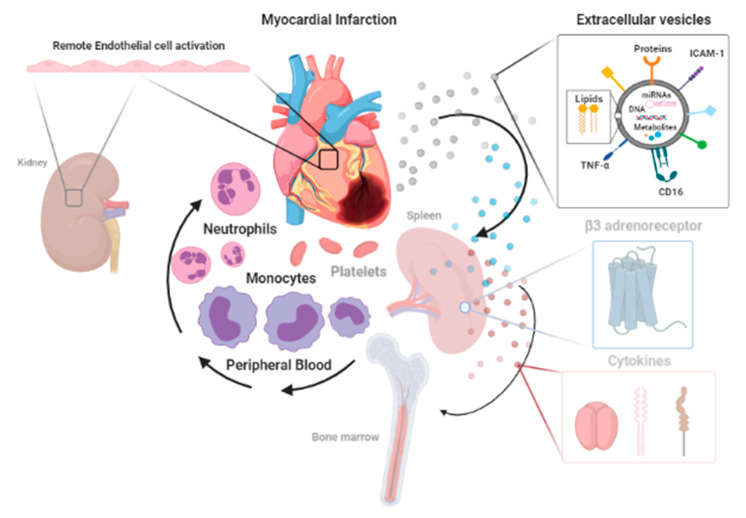
The past decade has seen a marked expansion in the understanding of the pathobiology of acute myocardial infarction and the systemic inflammatory response that it elicits. At the same time, a portfolio of tools has emerged to characterise some of these processes in vivo. However, in clinical practice, key decision making still largely relies on assessment built around the timing of the onset of chest pain, features on electrocardiograms and measurements of plasma troponin. Better understanding the heterogeneity of myocardial injury and patient-level responses should provide new opportunities for diagnostic stratification to enable the delivery of more rational therapies. Characterisation of the myocardium using emerging imaging techniques such as the T1, T2 and T2* mapping techniques can provide enhanced assessments of myocardial statuses. Physiological measures, which include microcirculatory resistance and coronary flow reserve, have been shown to predict outcomes in AMI and can be used to inform treatment selection. Functionally informative blood biomarkers, including cellular transcriptomics; microRNAs; extracellular vesicle analyses and soluble markers, all give insights into the nature and timing of the innate immune response and its regulation in acute MI. The integration of these and other emerging tools will be key to developing a fuller understanding of the patient-level processes of myocardial injury and repair and should fuel new possibilities for rational therapeutic intervention.
在过去十年中,人们对急性心肌梗死的病理生物学及其引发的全身炎症反应的理解有了显著扩展。与此同时,出现了一系列工具来在体内表征其中一些过程。然而,在临床实践中,关键决策仍在很大程度上依赖于围绕胸痛发作时间、心电图特征和血浆肌钙蛋白测量所进行的评估。更好地理解心肌损伤的异质性和患者层面的反应,应为诊断分层提供新机会,从而实现更合理的治疗。使用诸如T1、T2和T2*映射技术等新兴成像技术对心肌进行表征,可以增强对心肌状态的评估。生理测量指标,包括微循环阻力和冠状动脉血流储备,已被证明可预测急性心肌梗死的预后,并可用于指导治疗选择。具有功能信息的血液生物标志物,包括细胞转录组学、微小RNA、细胞外囊泡分析和可溶性标志物,都能深入了解急性心肌梗死中固有免疫反应的性质、时间及其调节。整合这些及其他新兴工具将是更全面理解患者层面心肌损伤和修复过程的关键,并应为合理的治疗干预带来新的可能性。