Xue Jianwei, Xie Lisheng, Chen Faquan, Wu Liangshun, Tian Qingyang, Zhou Yifan, Ying Rendong, Liu Peilin
School of Electronic and Electrical Engineering, Shanghai Jiao Tong University, Shanghai 200240, China.
Sensors (Basel). 2023 Jul 20;23(14):6548. doi: 10.3390/s23146548.
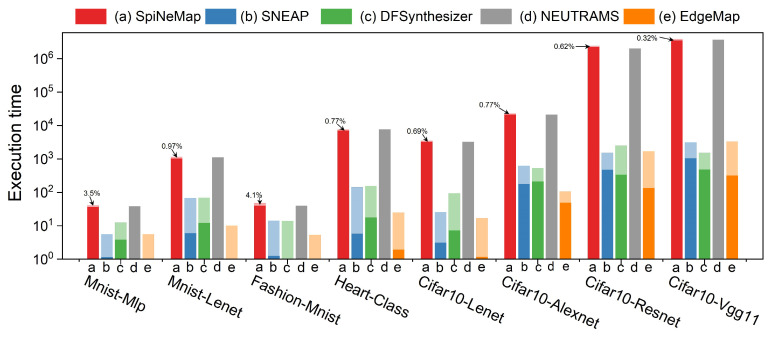
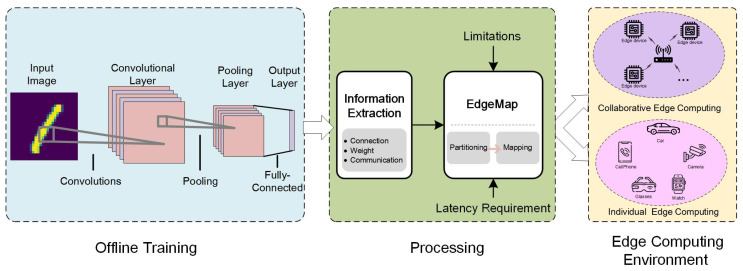
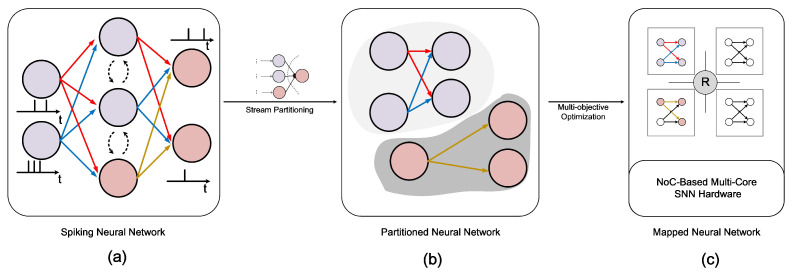
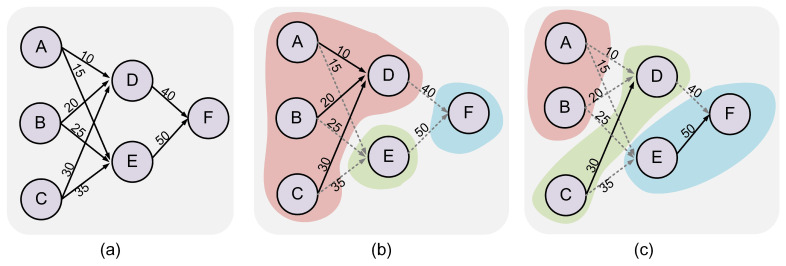
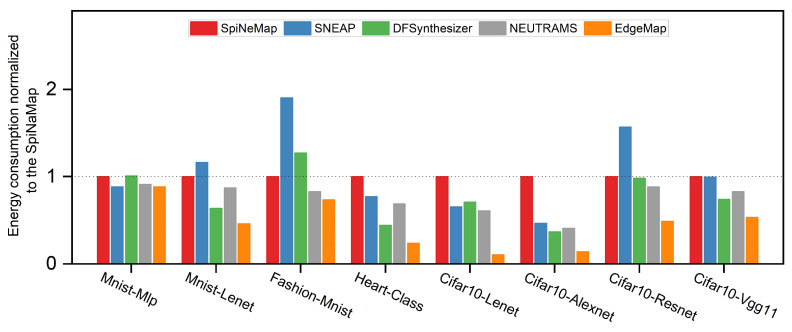
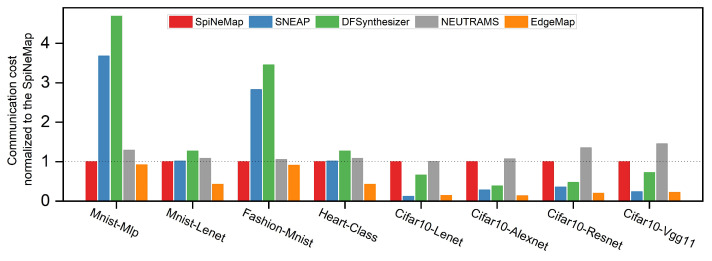
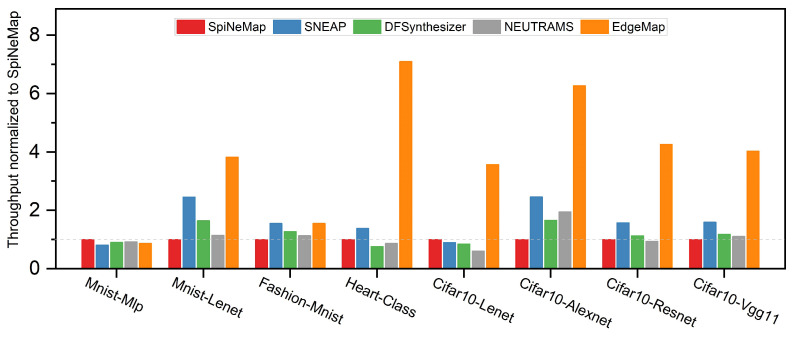
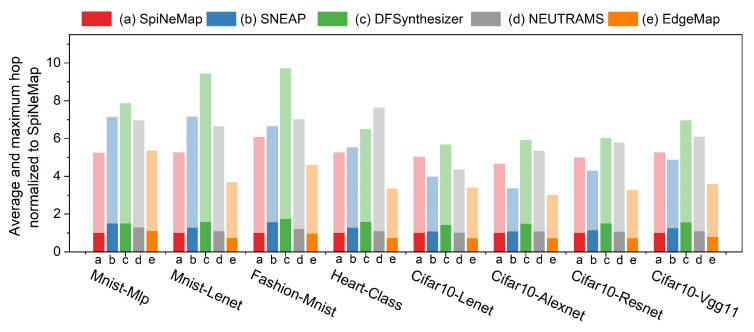
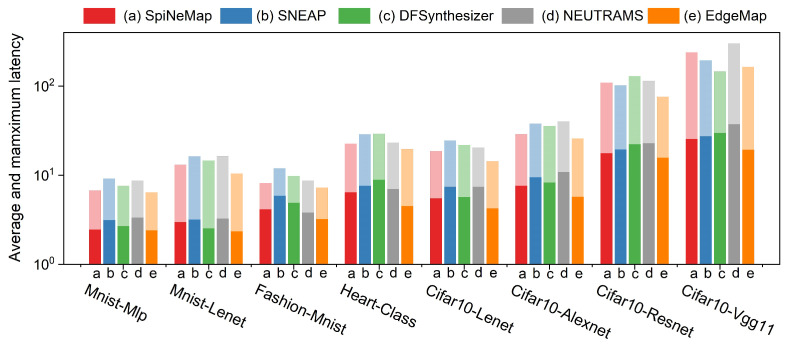
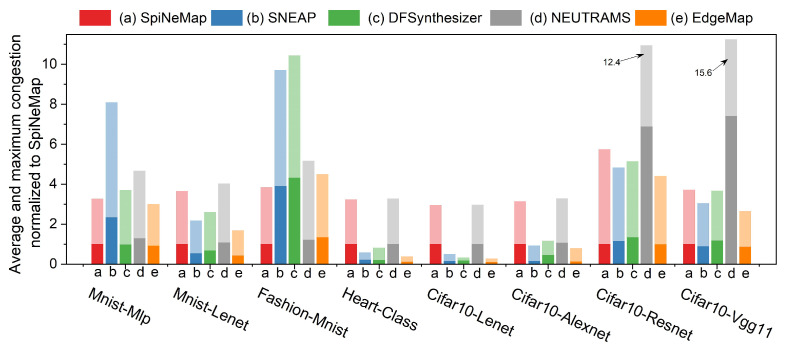
Spiking neural networks (SNNs) have attracted considerable attention as third-generation artificial neural networks, known for their powerful, intelligent features and energy-efficiency advantages. These characteristics render them ideally suited for edge computing scenarios. Nevertheless, the current mapping schemes for deploying SNNs onto neuromorphic hardware face limitations such as extended execution times, low throughput, and insufficient consideration of energy consumption and connectivity, which undermine their suitability for edge computing applications. To address these challenges, we introduce EdgeMap, an optimized mapping toolchain specifically designed for deploying SNNs onto edge devices without compromising performance. EdgeMap consists of two main stages. The first stage involves partitioning the SNN graph into small neuron clusters based on the streaming graph partition algorithm, with the sizes of neuron clusters limited by the physical neuron cores. In the subsequent mapping stage, we adopt a multi-objective optimization algorithm specifically geared towards mitigating energy costs and communication costs for efficient deployment. EdgeMap-evaluated across four typical SNN applications-substantially outperforms other state-of-the-art mapping schemes. The performance improvements include a reduction in average latency by up to 19.8%, energy consumption by 57%, and communication cost by 58%. Moreover, EdgeMap exhibits an impressive enhancement in execution time by a factor of 1225.44×, alongside a throughput increase of up to 4.02×. These results highlight EdgeMap's efficiency and effectiveness, emphasizing its utility for deploying SNN applications in edge computing scenarios.
脉冲神经网络(SNNs)作为第三代人工神经网络已引起了广泛关注,其以强大的智能特性和能源效率优势著称。这些特性使其非常适合边缘计算场景。然而,当前将SNNs部署到神经形态硬件上的映射方案面临着诸如执行时间延长、吞吐量低以及对能耗和连接性考虑不足等限制,这削弱了它们在边缘计算应用中的适用性。为应对这些挑战,我们引入了EdgeMap,这是一种专门为在不影响性能的情况下将SNNs部署到边缘设备而设计的优化映射工具链。EdgeMap由两个主要阶段组成。第一阶段涉及基于流图分区算法将SNN图划分为小的神经元簇,神经元簇的大小受物理神经元核心的限制。在随后的映射阶段,我们采用一种多目标优化算法,专门用于降低能源成本和通信成本以实现高效部署。在四个典型的SNN应用中进行评估时,EdgeMap的性能大幅优于其他现有映射方案。性能提升包括平均延迟降低高达19.8%、能耗降低57%以及通信成本降低58%。此外,EdgeMap的执行时间显著提高了1225.44倍,同时吞吐量提高了高达4.02倍。这些结果凸显了EdgeMap的效率和有效性,强调了其在边缘计算场景中部署SNN应用的实用性。