Lancet Public Health. 2023 Aug;8(8):e639-e650. doi: 10.1016/S2468-2667(23)00122-6.
South Korea has one of the longest operating universal health coverage (UHC) systems. A comprehensive analysis of long-term trajectories of morbidity and mortality in the South Korean population after the inception of UHC is needed to inform health-care policy and practice.
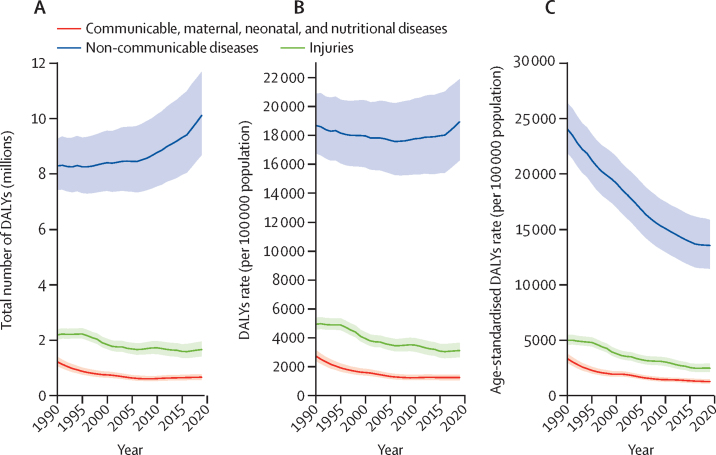
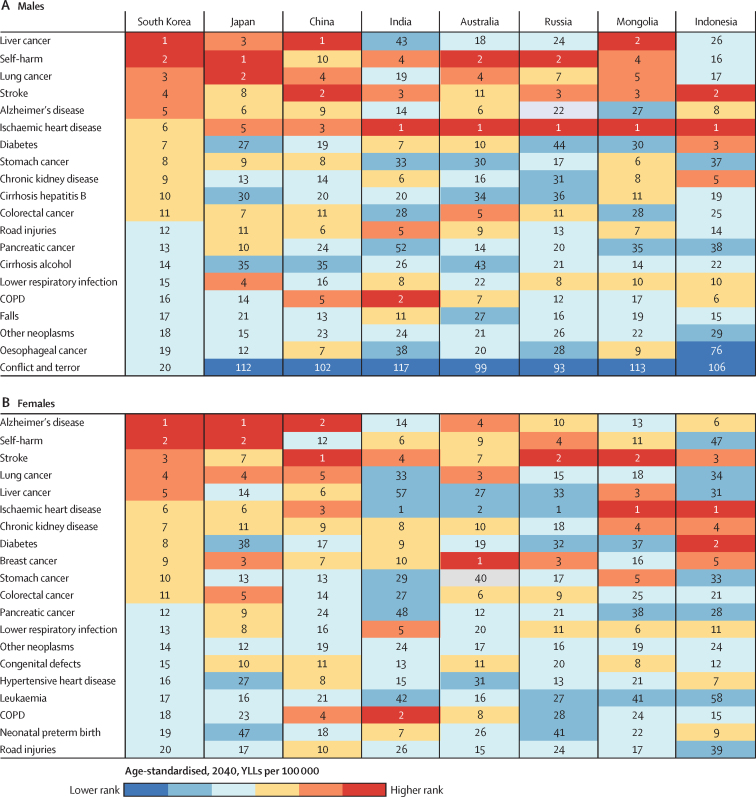
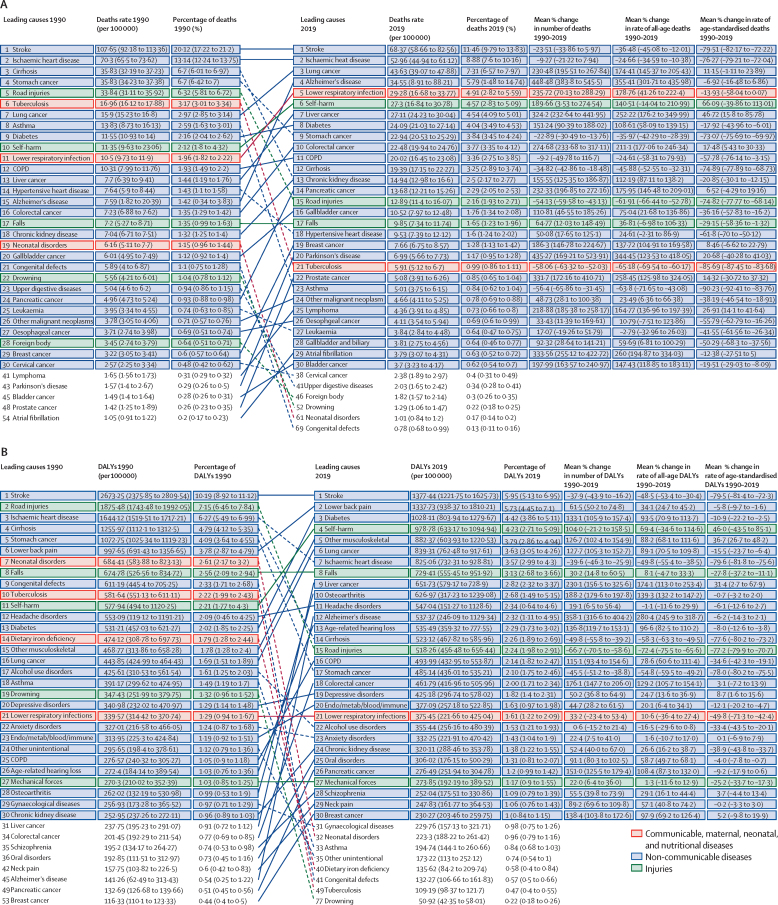
We used data from the Global Burden of Disease Study (GBD) 2019 to present estimates of cause-specific mortality, incidence, prevalence, years of life lost (YLLs), years of life lived with disability, and disability-adjusted life-years (DALYs) in South Korea from 1990 to 2019. We also examined forecasted estimates of YLLs up to 2040 to investigate likely future changes in disease burden. Finally, we evaluated GBD estimates from seven comparator countries to place disease burden in South Korea within a broader context.
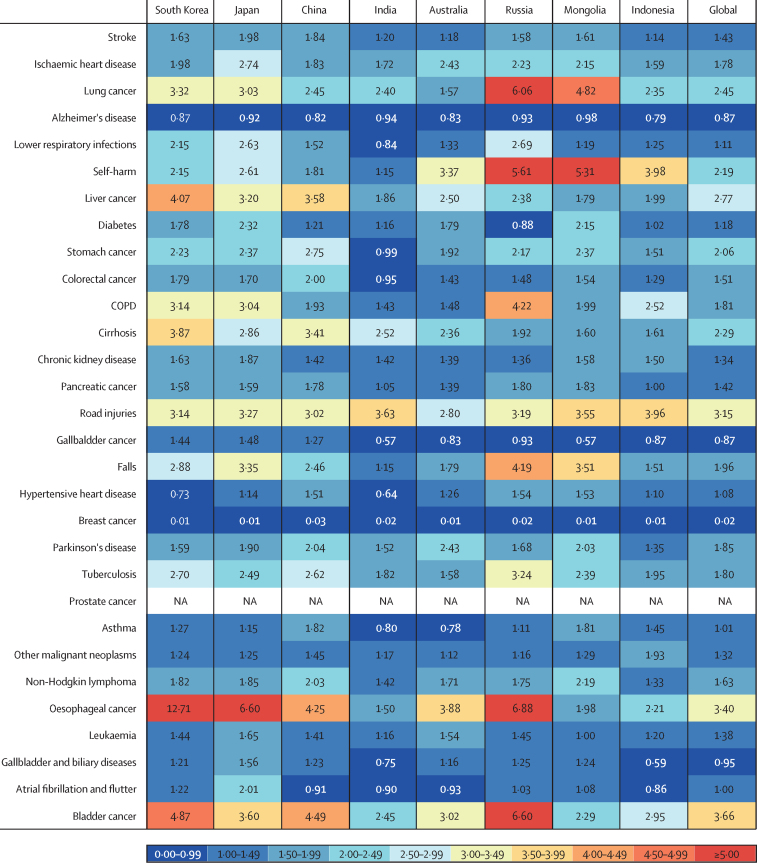
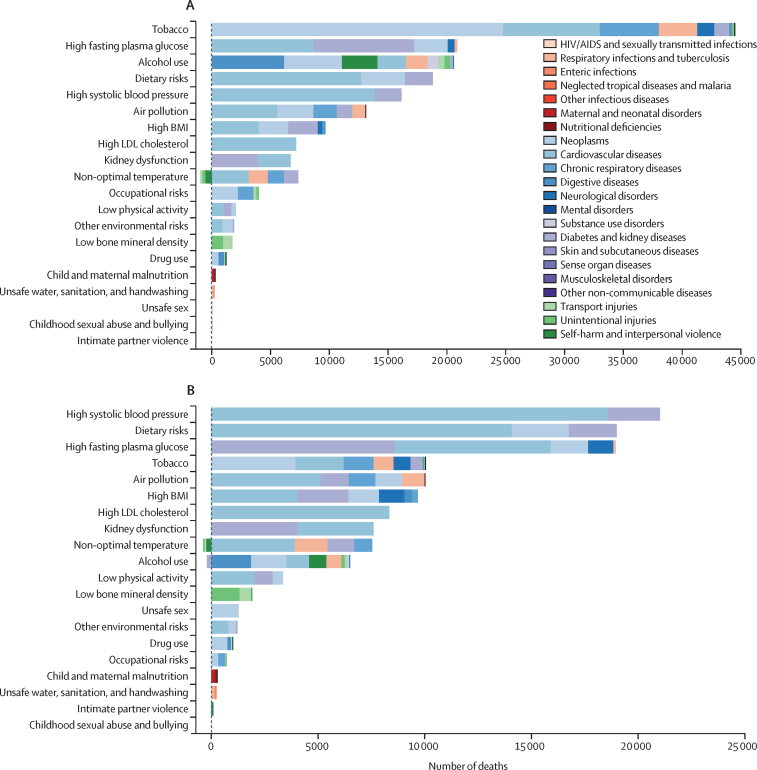
Age-standardised DALYs related to non-communicable diseases (NCDs) decreased by 43·6% (95% uncertainty interval [UI] 39·4-47·9) and mortality by 58·8% (55·9-60·5) from 1990 to 2019. In 2019, the ratio of male to female age-standardised rates of YLLs in South Korea was higher than the global average for 75·9% (22 of 29 diseases) of leading causes, indicating a disproportional disease burden on males in South Korea. Among risk factors, tobacco use accounted for the highest number of 2019 deaths (44 470 [95% UI 37 432-53 989]) in males and high systolic blood pressure for the highest number (21 014 [15 553-26 723]) in females. Among the top ten leading causes of YLLs forecast in South Korea in 2040, nine were NCDs, for both males and females.
Our report shows a positive landscape of population health outcomes in South Korea following the establishment of UHC. However, due in part to the effects of population ageing driving up medical expenditures for NCDs, financial pressures and sustainability challenges associated with UHC are pressing concerns. Policy makers should work to tackle population ageing and allocate resources efficiently by prioritising interventions that address the leading causes of death and disability identified in this study.
Bill & Melinda Gates Foundation.
韩国拥有运行时间最长的全民健康覆盖(UHC)体系之一。需要对 UHC 实施后韩国人口的发病率和死亡率的长期轨迹进行全面分析,以为医疗保健政策和实践提供信息。
我们使用来自 2019 年全球疾病负担研究(GBD)的数据,呈现了 1990 年至 2019 年韩国特定病因死亡率、发病率、患病率、生命损失年(YLL)、残疾生活年(DALY)和伤残调整生命年(DALY)的估计值。我们还预测了到 2040 年 YLL 的预估值,以调查疾病负担可能发生的未来变化。最后,我们评估了来自 7 个比较国家的 GBD 估计值,以便将韩国的疾病负担置于更广泛的背景下。
1990 年至 2019 年,与非传染性疾病(NCDs)相关的年龄标准化 DALY 减少了 43.6%(95%不确定区间[UI]39.4-47.9),死亡率减少了 58.8%(55.9-60.5)。2019 年,韩国男性与女性年龄标准化 YLL 比率高于全球平均值的疾病占 29 种主要病因中的 75.9%(22 种),表明韩国男性的疾病负担不成比例。在风险因素中,烟草使用导致的死亡人数最多(44470 人[95%UI37432-53989]),男性中收缩压高导致的死亡人数最多(21014 人[15553-26723])。在韩国 2040 年 YLL 预测的前 10 位主要病因中,9 项为 NCDs,无论男性还是女性。
我们的报告显示,在建立全民健康覆盖制度后,韩国的人口健康状况呈现出积极的态势。然而,部分由于人口老龄化导致 NCD 医疗支出增加,全民健康覆盖制度相关的财政压力和可持续性挑战成为紧迫的问题。政策制定者应努力应对人口老龄化,并通过优先考虑解决本研究确定的主要死亡和残疾原因的干预措施,有效分配资源。
比尔及梅琳达·盖茨基金会。