Zeghal Manel, Matte Kevin, Venes Angelica, Patel Shivani, Laroche Geneviève, Sarvan Sabina, Joshi Monika, Rain Jean-Christophe, Couture Jean-François, Giguère Patrick M
Department of Biochemistry, Microbiology and Immunology, Faculty of Medicine, University of Ottawa, Ottawa, Ontario, Canada.
Department of Biochemistry, Microbiology and Immunology, Faculty of Medicine, University of Ottawa, Ottawa, Ontario, Canada; Ottawa Institute of Systems Biology, University of Ottawa, Ottawa, Ontario, Canada.
J Biol Chem. 2023 Sep;299(9):105107. doi: 10.1016/j.jbc.2023.105107. Epub 2023 Jul 28.
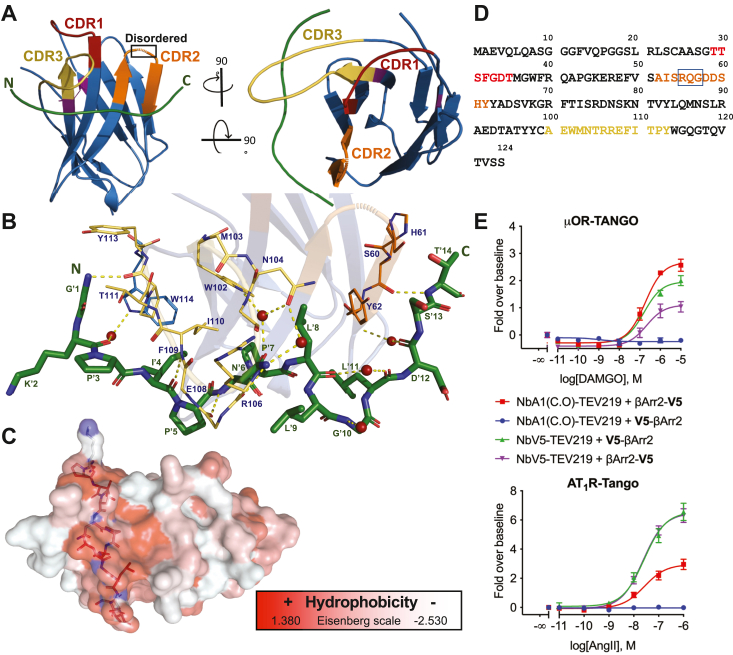
Protein-protein interactions (PPIs) form the foundation of any cell signaling network. Considering that PPIs are highly dynamic processes, cellular assays are often essential for their study because they closely mimic the biological complexities of cellular environments. However, incongruity may be observed across different PPI assays when investigating a protein partner of interest; these discrepancies can be partially attributed to the fusion of different large functional moieties, such as fluorescent proteins or enzymes, which can yield disparate perturbations to the protein's stability, subcellular localization, and interaction partners depending on the given cellular assay. Owing to their smaller size, epitope tags may exhibit a diminished susceptibility to instigate such perturbations. However, while they have been widely used for detecting or manipulating proteins in vitro, epitope tags lack the in vivo traceability and functionality needed for intracellular biosensors. Herein, we develop NbV5, an intracellular nanobody binding the V5-tag, which is suitable for use in cellular assays commonly used to study PPIs such as BRET, NanoBiT, and Tango. The NbV5:V5 tag system has been applied to interrogate G protein-coupled receptor signaling, specifically by replacing larger functional moieties attached to the protein interactors, such as fluorescent or luminescent proteins (∼30 kDa), by the significantly smaller V5-tag peptide (1.4 kDa), and for microscopy imaging which is successfully detected by NbV5-based biosensors. Therefore, the NbV5:V5 tag system presents itself as a versatile tool for live-cell imaging and a befitting adaptation to existing cellular assays dedicated to probing PPIs.
蛋白质-蛋白质相互作用(PPIs)构成了任何细胞信号网络的基础。鉴于PPIs是高度动态的过程,细胞分析对于其研究往往至关重要,因为它们紧密模拟了细胞环境的生物学复杂性。然而,在研究感兴趣的蛋白质伴侣时,不同的PPI分析之间可能会出现不一致;这些差异部分可归因于不同大功能部分的融合,如荧光蛋白或酶,这可能会根据给定的细胞分析对蛋白质的稳定性、亚细胞定位和相互作用伴侣产生不同的干扰。由于其尺寸较小,表位标签引发此类干扰的敏感性可能会降低。然而,尽管它们已广泛用于体外检测或操纵蛋白质,但表位标签缺乏细胞内生物传感器所需的体内可追踪性和功能。在此,我们开发了NbV5,一种结合V5标签的细胞内纳米抗体,适用于常用于研究PPIs的细胞分析,如生物发光共振能量转移(BRET)、纳米生物发光互补(NanoBiT)和Tango分析。NbV5:V5标签系统已应用于探究G蛋白偶联受体信号传导,具体方法是用明显更小的V5标签肽(1.4 kDa)取代连接到蛋白质相互作用体上的更大功能部分,如荧光或发光蛋白(约30 kDa),并用于基于NbV5的生物传感器成功检测的显微镜成像。因此,NbV5:V5标签系统是一种用于活细胞成像的通用工具,也是对现有用于探测PPIs的细胞分析的合适改进。