Ayub Fariha, Ahmed Haroon, Sohail Tehreem, Shahzad Khuram, Celik Figen, Wang Xu, Simsek Sami, Cao Jianping
Department of Biosciences, COMSATS University Islamabad (CUI), Park Road, Chakh Shahzad, Islamabad, Pakistan.
Department of Parasitology, Faculty of Veterinary Medicine, Firat University, Elazig, Turkey.
Heliyon. 2023 Jul 11;9(7):e18176. doi: 10.1016/j.heliyon.2023.e18176. eCollection 2023 Jul.
Toxoplasmosis is a well-known zoonotic disease caused by . The main causes of the disease range from eating undercooked or contaminated meat and shellfish to cleaning litter trays into which cats that excreted toxoplasma via faeces. This pathogen can live for a very long time, possibly a lifetime, within the bodies of humans and other animals.
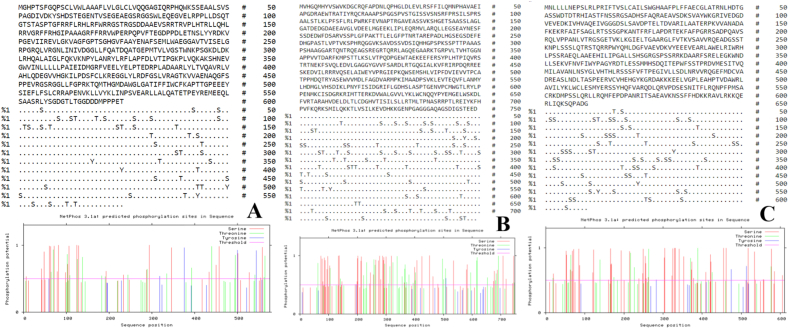
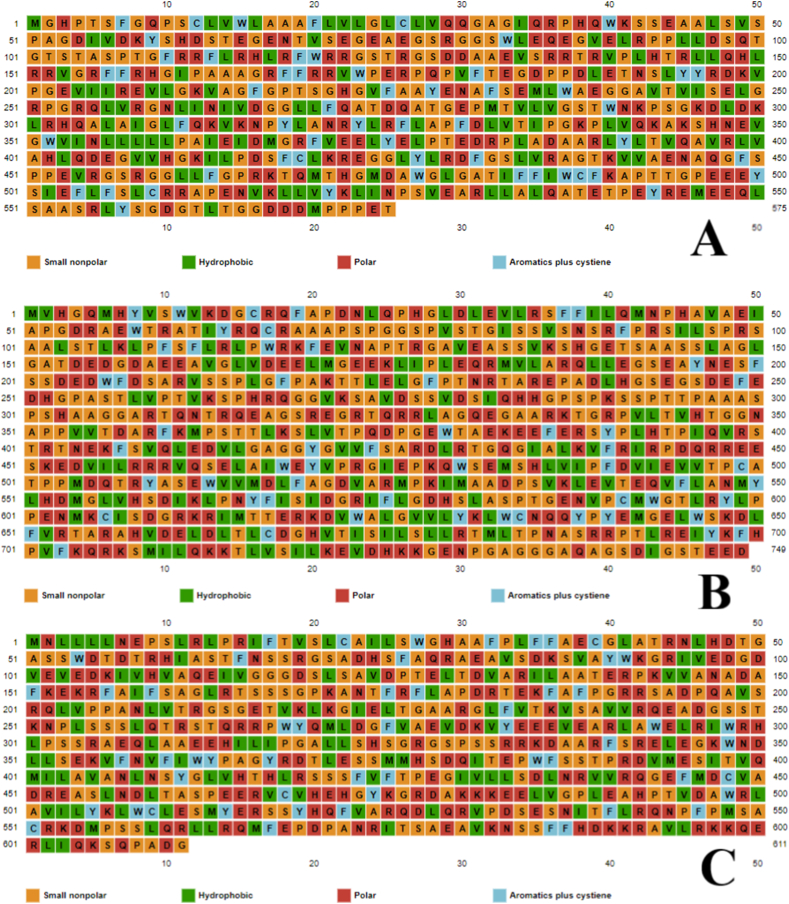
This study aimed to predict and analyse candidate immunogenic epitopes for vaccine development by evaluating the physio-chemical properties, multiple sequence alignment, secondary and tertiary structures, phosphorylation sites, transmembrane domains, and signal peptides, of rhoptry proteins ROP7, ROP21, and ROP22 using bioinformatics tools.
To find immunogenic epitopes of rhoptry proteins, numerous bioinformatics web servers were used containing multiple sequence alignment, physiochemical properties, antigenicity and allergenicity, post-translational modification sites (PTMs), signal peptides, transmembrane domains, secondary and tertiary structures, and screening of predicted epitopes. We evaluated immunogenic linear B-cell epitopes as candidate proteins for vaccine development.
Nine epitopes were identified for each protein, and analysis of immunogenicity, revealed three candidate epitopes for ROP7, one for ROP21, and four for ROP22. Among all candidate epitopes, ROP22 contained the most immunogenic epitopes with immunogenicity score of 0.50575.
We acquired detailed information on predicted immunogenic epitopes using in-silico methods. The results provide a foundation for further experimental analysis of toxoplasmosis, and potential vaccine development.
弓形虫病是一种由……引起的著名人畜共患病。该疾病的主要病因包括食用未煮熟或受污染的肉类和贝类,以及清理被通过粪便排出弓形虫的猫污染的猫砂盆。这种病原体可以在人类和其他动物体内存活很长时间,甚至可能是终生。
本研究旨在通过使用生物信息学工具评估棒状体蛋白ROP7、ROP21和ROP22的理化性质、多序列比对、二级和三级结构、磷酸化位点、跨膜结构域和信号肽,来预测和分析用于疫苗开发的候选免疫原性表位。
为了找到棒状体蛋白的免疫原性表位,使用了众多生物信息学网络服务器,这些服务器包含多序列比对、理化性质、抗原性和致敏性、翻译后修饰位点(PTMs)、信号肽、跨膜结构域、二级和三级结构,以及对预测表位的筛选。我们评估了免疫原性线性B细胞表位作为疫苗开发的候选蛋白。
每种蛋白鉴定出9个表位,免疫原性分析显示,ROP7有3个候选表位,ROP21有1个,ROP22有4个。在所有候选表位中,ROP22包含的免疫原性表位最多,免疫原性评分为0.50575。
我们使用计算机模拟方法获得了关于预测免疫原性表位的详细信息。这些结果为弓形虫病的进一步实验分析和潜在疫苗开发提供了基础。