Scripps Institution of Oceanography, UC San Diego, USA.
Population Sciences, Beckman Research Institute, City of Hope, 1500 E Duarte Rd, Duarte, CA, 91010, USA.
Environ Pollut. 2023 Oct 15;335:122277. doi: 10.1016/j.envpol.2023.122277. Epub 2023 Jul 29.
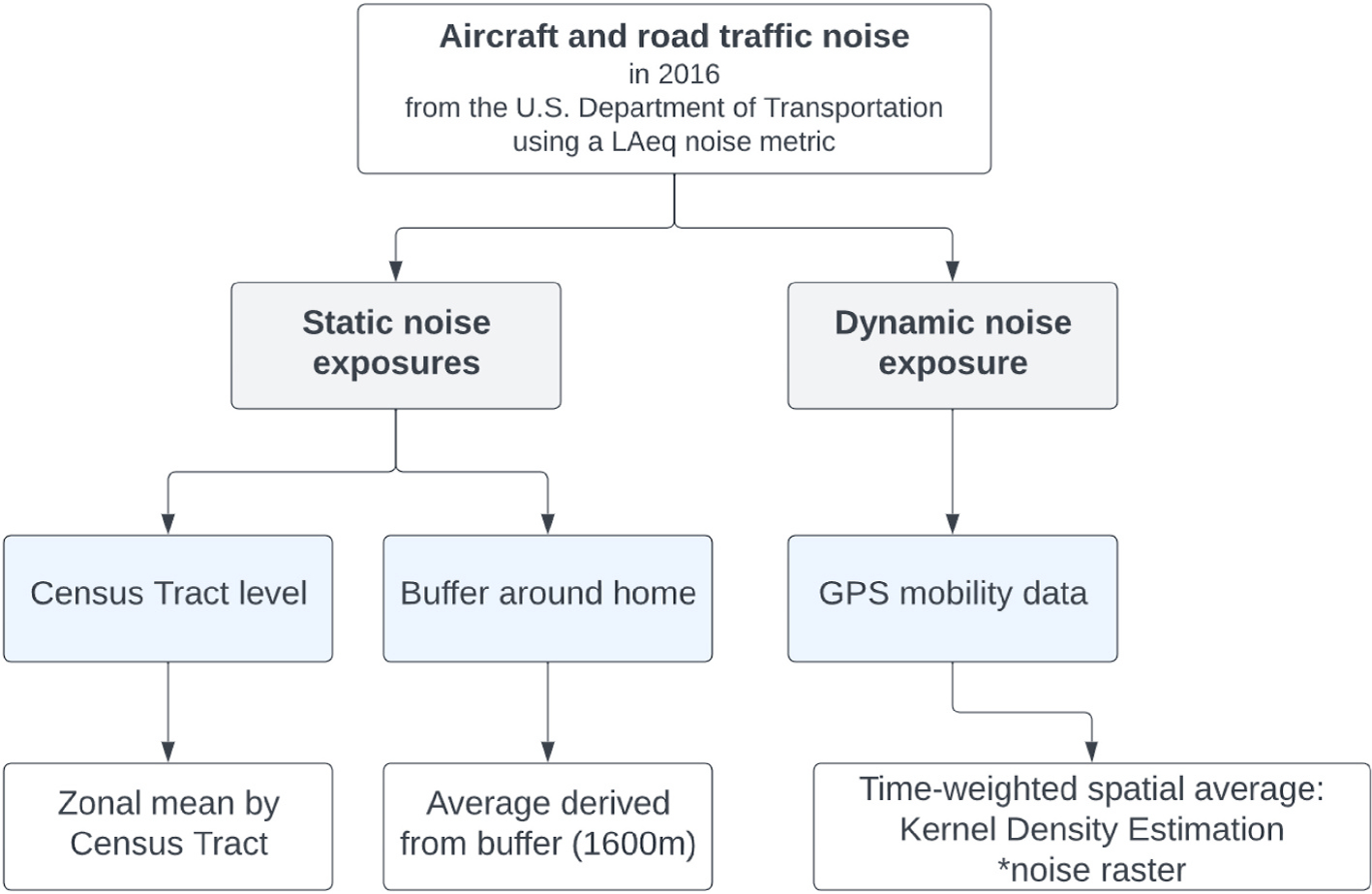
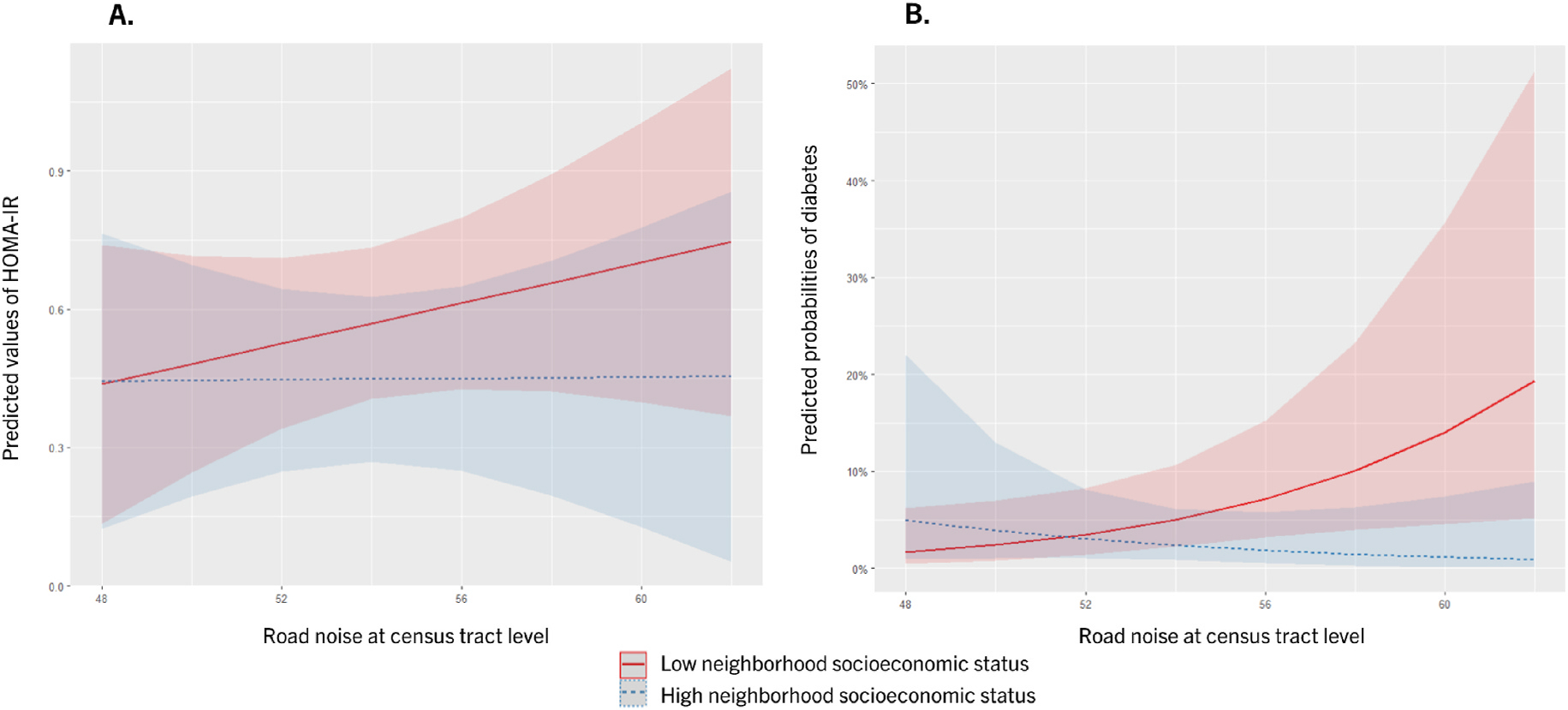
Evidence linking traffic noise to insulin resistance and diabetes is limited and unanswered questions remain regarding the potential effect modification by neighborhood socioeconomic status (nSES). We aimed to assess socioeconomic inequalities in noise exposure, whether road and aircraft noise exposures were associated with insulin resistance or diabetes, and whether nSES modified these relationships. Among the Community of Mine Study in San Diego County, road and aircraft noise exposure at enrollment was calculated based on the static (participant's administrative boundary, and circular buffer around participant homes), and dynamic (mobility data by global positioning system, GPS) spatio-temporal aggregation methods. Associations of noise with insulin resistance (HOMA-IR) or type 2 diabetes (T2DM) were quantified using generalized estimating equation models adjusted for sex, age, ethnicity, individual income, and air pollution (nitrogen dioxide) exposure. Additive interaction between noise and nSES was assessed. Among 573 participants (mean age 58.7 y), participants living in low nSES were exposed to higher levels of aircraft and road noise using noise level at the census tract, circular buffer, or Kernel Density Estimation (KDE) of GPS data. Participants exposed to road noise greater or equal to the median (53 dB(A)) at the census tract and living in low nSES had an increased level of insulin resistance (β = 0.15, 95%CI: -0.04, 0.34) and higher odds of T2DM (Odds Ratio = 2.34, 95%CI: 1.12, 4.90). A positive additive interaction was found as participants living in low nSES had higher odds of T2DM. The impact of noise exposure on insulin resistance and T2DM differs substantially by nSES. Public health benefits of reducing exposure to road or aircraft noise would be larger in individuals living in low nSES.
将交通噪音与胰岛素抵抗和糖尿病联系起来的证据有限,邻里社会经济地位(nSES)对潜在的影响修饰作用仍存在疑问。我们旨在评估噪音暴露的社会经济不平等,道路和飞机噪音暴露是否与胰岛素抵抗或糖尿病有关,以及 nSES 是否改变了这些关系。在圣地亚哥县社区研究中,根据静态(参与者的行政边界和参与者家庭周围的圆形缓冲区)和动态(全球定位系统,GPS 的移动数据)时空聚合方法,在登记时计算道路和飞机噪声暴露。使用广义估计方程模型,根据性别、年龄、种族、个人收入和空气污染(二氧化氮)暴露,对噪音与胰岛素抵抗(HOMA-IR)或 2 型糖尿病(T2DM)的关联进行量化。评估了噪音与 nSES 之间的附加交互作用。在 573 名参与者(平均年龄 58.7 岁)中,居住在低 nSES 的参与者在使用普查区、圆形缓冲区或 GPS 数据核密度估计(KDE)的噪音水平时,暴露于更高水平的飞机和道路噪音。在普查区暴露于道路噪音大于或等于中位数(53dB(A))且居住在低 nSES 的参与者,胰岛素抵抗水平升高(β=0.15,95%置信区间:-0.04,0.34),T2DM 的几率更高(比值比=2.34,95%置信区间:1.12,4.90)。发现了积极的附加交互作用,因为居住在低 nSES 的参与者 T2DM 的几率更高。噪音暴露对胰岛素抵抗和 T2DM 的影响在很大程度上因 nSES 而异。减少道路或飞机噪音暴露对个人健康的益处将在居住在低 nSES 的人群中更大。