Department of Urology, Sun Yat-sen Memorial Hospital, 107 Yanjiangxi Road, Yuexiu District, Guangzhou, 510120, Guangdong, P. R. China.
Guangdong Provincial Key Laboratory of Malignant Tumor Epigenetics and Gene Regulation, State Key Laboratory of Oncology in South China, Sun Yat-sen Memorial Hospital, Guangzhou, Guangdong, P. R. China.
J Exp Clin Cancer Res. 2023 Aug 2;42(1):191. doi: 10.1186/s13046-023-02757-3.
Circular RNAs (circRNAs) circularized by back-splicing of pre-mRNA are widely expressed and affected the proliferation, invasion and metastasis of bladder cancer (BCa). However, the mechanism underlying circRNA biogenesis in mediating the distant metastasis of BCa still unexplored.
RNA sequencing data between BCa and normal adjacent tissues was applied to identify the differentially expressed circRNAs. The functions of circNIPBL in BCa were investigated via a series of biochemical experiments. The Clinical significance of circNIPBL was examined in a cohort of larger BCa tissues.
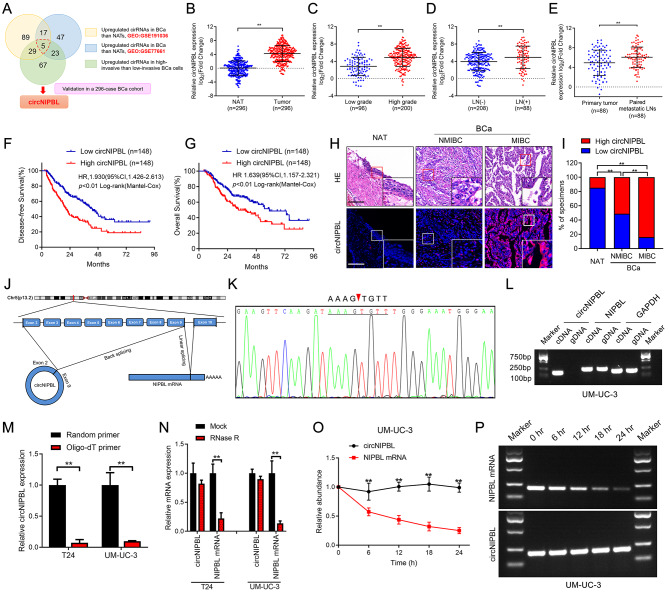
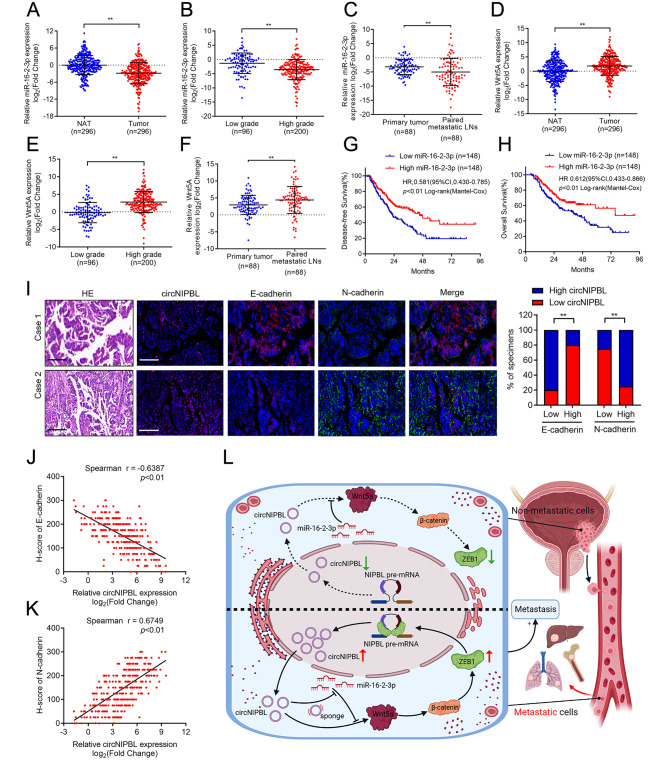
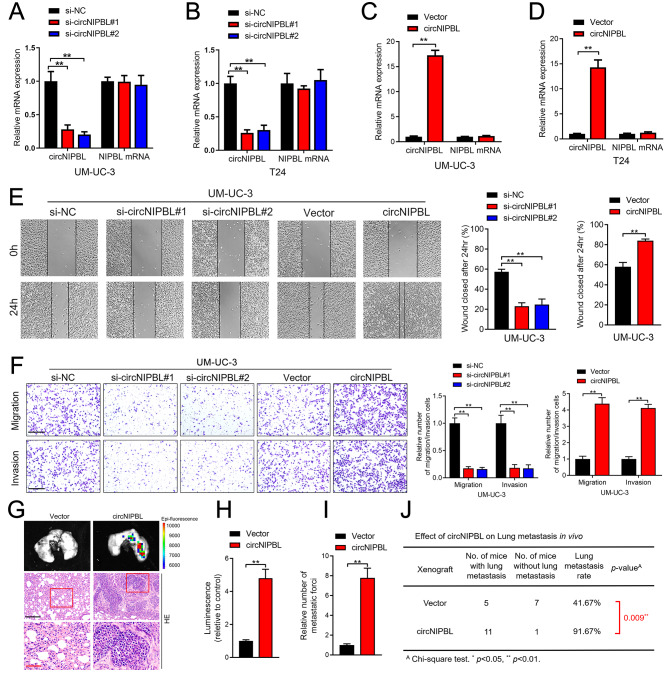
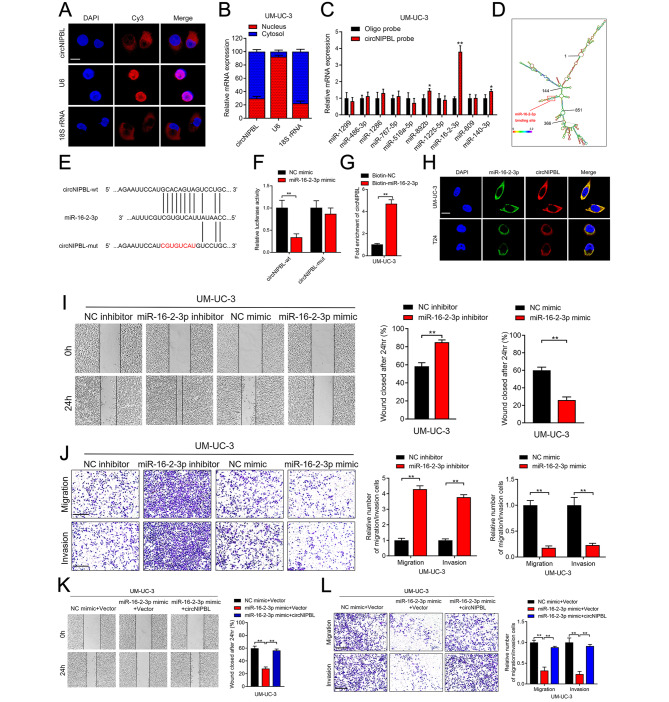
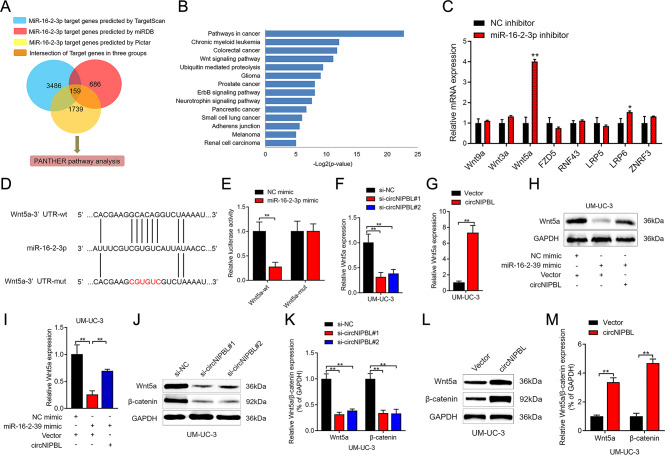
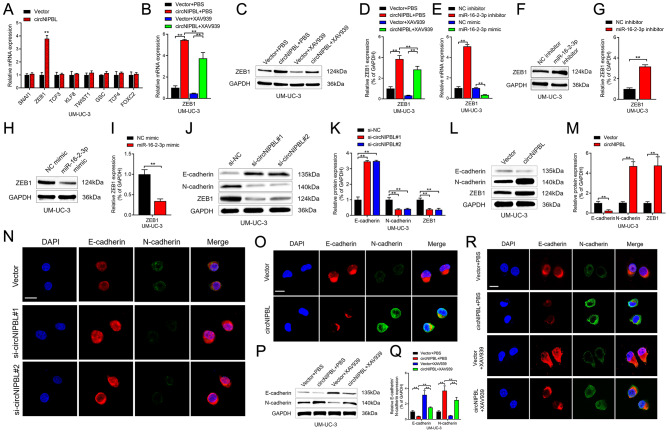
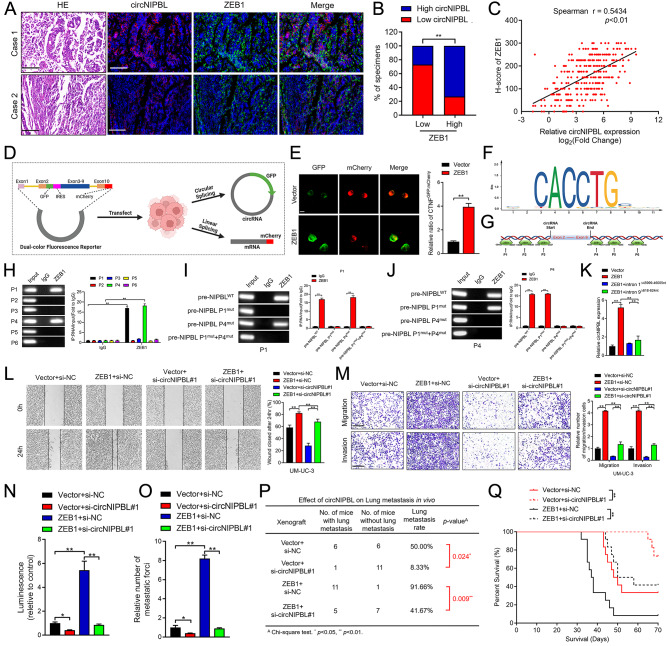
In the present study, we identified a novel circRNA (hsa_circ_0001472), circNIPBL, which was significantly upregulated and had great influence on the poor prognosis of patients with BCa. Functionally, circNIPBL promotes BCa metastasis in vitro and in vivo. Mechanistically, circNIPBL upregulate the expression of Wnt5a and activated the Wnt/β-catenin signaling pathway via directly sponged miR-16-2-3p, leading to the upregulation of ZEB1, which triggers the EMT of BCa. Moreover, we revealed that ZEB1 interacted with the flanking introns of exons 2-9 on NIPBL pre-mRNA to trigger circNIPBL biogenesis, thus forming a positive feedback loop. Importantly, circNIPBL overexpression significantly facilitated the distant metastasis of BCa in the orthotopic bladder cancer model, while silencing ZEB1 remarkably blocked the effects of metastasis induced by circNIPBL overexpression.
Our study highlights that circNIPBL-induced Wnt signaling pathway activation triggers ZEB1-mediated circNIPBL biogenesis, which forms a positive feedback loop via the circNIPBL/miR-16-2-3p/Wnt5a/ZEB1 axis, supporting circNIPBL as a novel therapeutic target and potential biomarker for BCa patients.
通过前体 mRNA 的反向剪接形成的环状 RNA(circRNAs)广泛表达,并影响膀胱癌(BCa)的增殖、侵袭和转移。然而,circRNA 生物发生在介导 BCa 远处转移中的机制仍未被探索。
应用 BCa 和正常相邻组织之间的 RNA 测序数据来鉴定差异表达的 circRNAs。通过一系列生化实验研究 circNIPBL 在 BCa 中的功能。在较大的 BCa 组织队列中检查 circNIPBL 的临床意义。
在本研究中,我们鉴定了一种新型 circRNA(hsa_circ_0001472),即 circNIPBL,其表达显著上调,对 BCa 患者的预后有很大影响。功能上,circNIPBL 在体外和体内促进 BCa 转移。机制上,circNIPBL 通过直接海绵 miR-16-2-3p 上调 Wnt5a 的表达并激活 Wnt/β-catenin 信号通路,导致 ZEB1 的上调,从而引发 BCa 的 EMT。此外,我们揭示了 ZEB1 与 NIPBL 前体 mRNA 的外显子 2-9 侧翼内含子相互作用,触发 circNIPBL 的生物发生,从而形成正反馈环。重要的是,circNIPBL 的过表达显著促进了 BCa 的原位膀胱癌模型中的远处转移,而沉默 ZEB1 则显著阻断了由 circNIPBL 过表达诱导的转移作用。
我们的研究强调了 circNIPBL 诱导的 Wnt 信号通路激活触发 ZEB1 介导的 circNIPBL 生物发生,通过 circNIPBL/miR-16-2-3p/Wnt5a/ZEB1 轴形成正反馈环,支持 circNIPBL 作为 BCa 患者的新型治疗靶标和潜在生物标志物。