Polley Christian, Distler Thomas, Scheufler Caroline, Detsch Rainer, Lund Henrik, Springer Armin, Schneidereit Dominik, Friedrich Oliver, Boccaccini Aldo R, Seitz Hermann
Chair of Microfluidics, University of Rostock, Rostock, Germany.
Institute of Biomaterials, Friedrich-Alexander-University Erlangen-Nuremberg, Erlangen, Germany.
Mater Today Bio. 2023 Jul 6;21:100719. doi: 10.1016/j.mtbio.2023.100719. eCollection 2023 Aug.
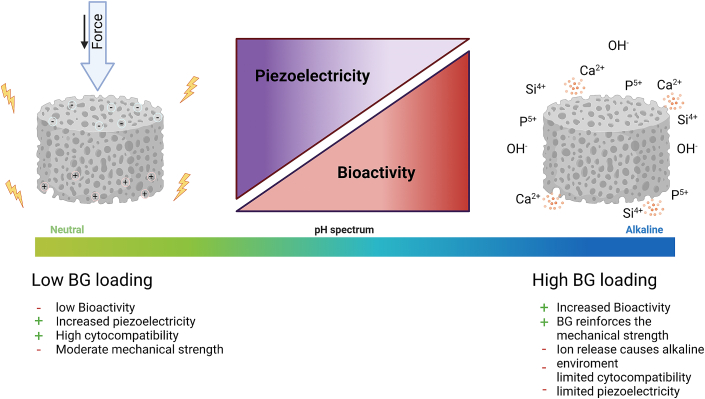
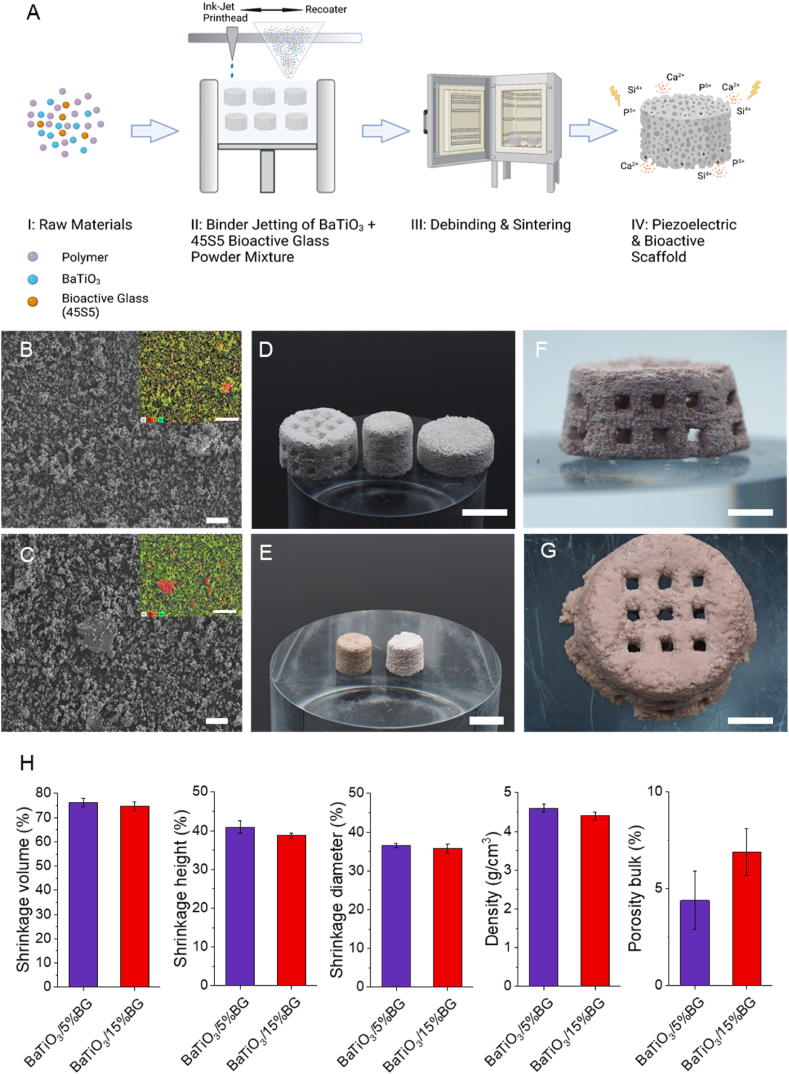
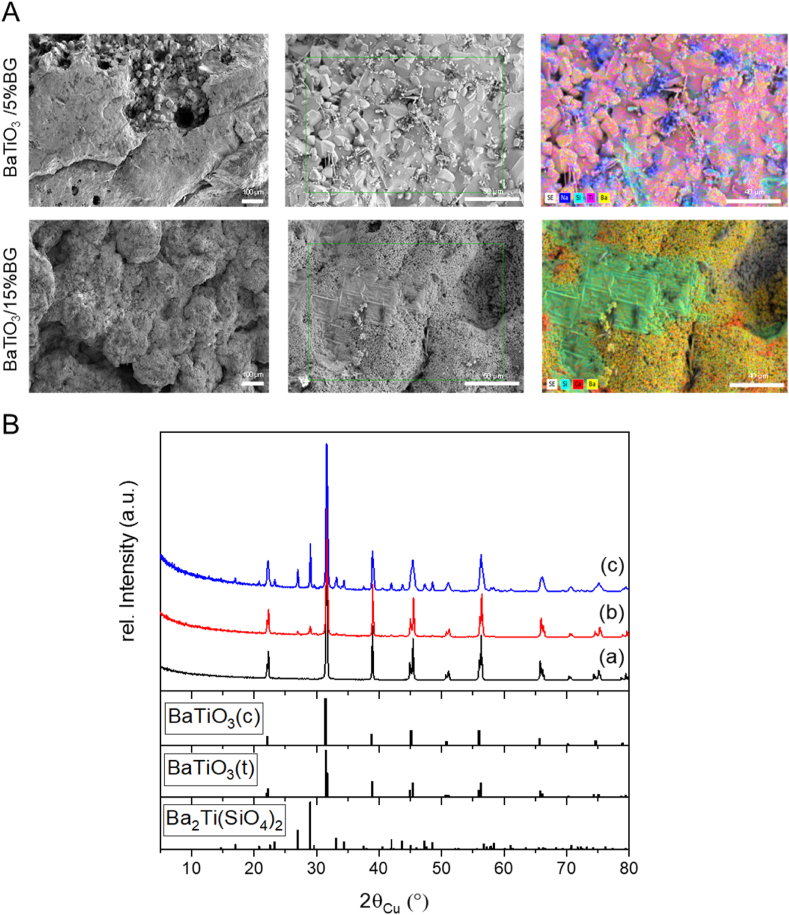
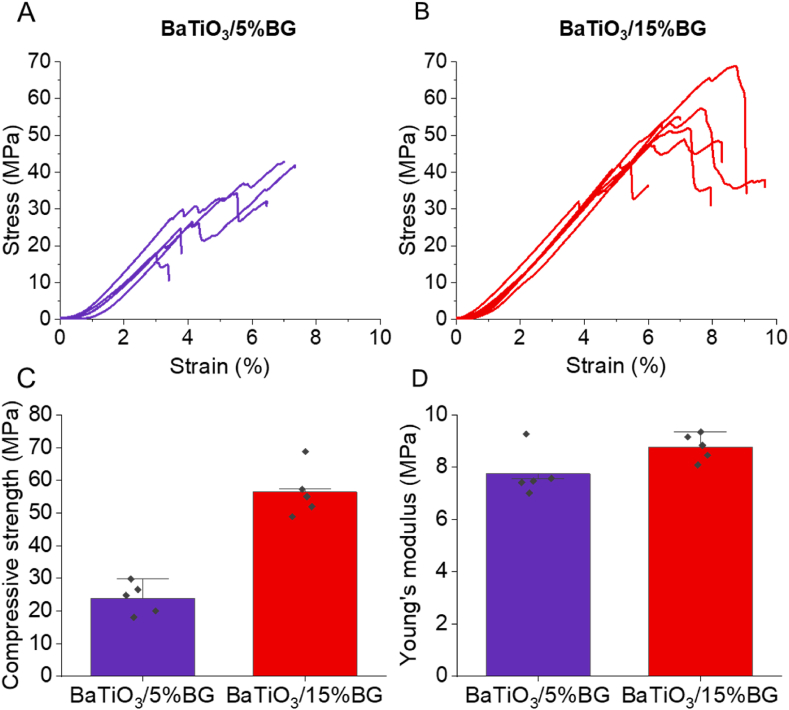
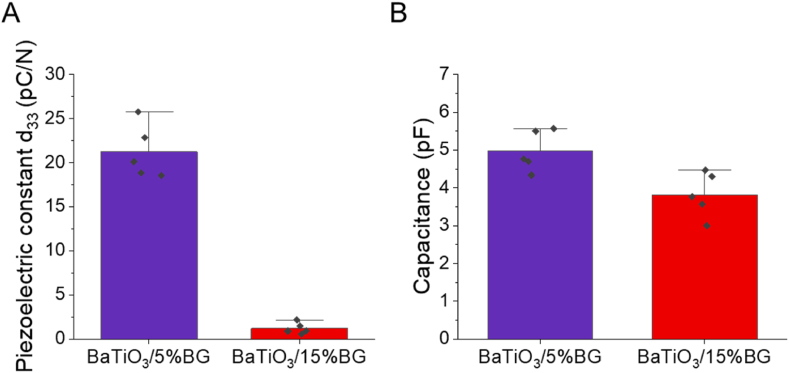
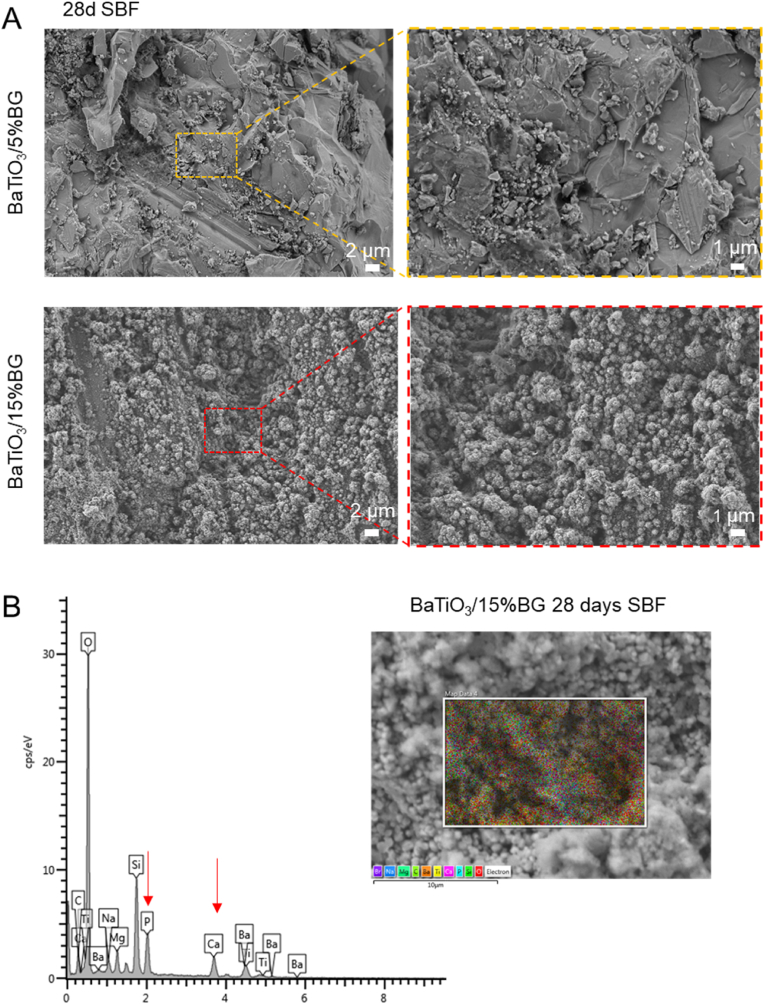
Bone healing is a complex process orchestrated by various factors, such as mechanical, chemical and electrical cues. Creating synthetic biomaterials that combine several of these factors leading to tailored and controlled tissue regeneration, is the goal of scientists worldwide. Among those factors is piezoelectricity which creates a physiological electrical microenvironment that plays an important role in stimulating bone cells and fostering bone regeneration. However, only a limited number of studies have addressed the potential of combining piezoelectric biomaterials with state-of-the-art fabrication methods to fabricate tailored scaffolds for bone tissue engineering. Here, we present an approach that takes advantage of modern additive manufacturing techniques to create macroporous biomaterial scaffolds based on a piezoelectric and bioactive ceramic-crystallised glass composite. Using binder jetting, scaffolds made of barium titanate and 45S5 bioactive glass are fabricated and extensively characterised with respect to their physical and functional properties. The 3D-printed ceramic-crystallised glass composite scaffolds show both suitable mechanical strength and bioactive behaviour, as represented by the accumulation of bone-like calcium phosphate on the surface. Piezoelectric scaffolds that mimic or even surpass bone with piezoelectric constants ranging from 1 to 21 pC/N are achieved, depending on the composition of the composite. Using MC3T3-E1 osteoblast precursor cells, the scaffolds show high cytocompatibility coupled with cell attachment and proliferation, rendering the barium titanate/45S5 ceramic-crystallised glass composites promising candidates for bone tissue engineering.
骨愈合是一个由多种因素精心编排的复杂过程,这些因素包括机械、化学和电信号。制造能够结合其中多种因素以实现定制化和可控组织再生的合成生物材料,是全球科学家的目标。这些因素中包括压电性,它能创造一个生理电微环境,在刺激骨细胞和促进骨再生方面发挥重要作用。然而,只有少数研究探讨了将压电生物材料与先进制造方法相结合,以制造用于骨组织工程的定制支架的潜力。在此,我们提出一种方法,利用现代增材制造技术,基于压电和生物活性陶瓷微晶玻璃复合材料制造大孔生物材料支架。使用粘结剂喷射法,制造出由钛酸钡和45S5生物活性玻璃制成的支架,并对其物理和功能特性进行了广泛表征。3D打印的陶瓷微晶玻璃复合支架显示出合适的机械强度和生物活性行为,表现为表面有类骨磷酸钙的积累。根据复合材料的组成,可实现压电常数在1至21 pC/N范围内的模仿甚至超越骨的压电支架。使用MC3T3-E1成骨细胞前体细胞,这些支架显示出高细胞相容性以及细胞附着和增殖能力,使钛酸钡/45S5陶瓷微晶玻璃复合材料成为骨组织工程的有前景的候选材料。